



NEWS.am STYLE

NEWS.am STYLE

NEWS.am STYLE

NEWS.am STYLE

NEWS.am STYLE

NEWS.am STYLE
NEWS.am STYLE

NEWS.am STYLE

NEWS.am STYLE

NEWS.am STYLE

The 23rd "Golden Apricot" Yerevan International Film Festival has kicked off
NEWS.am STYLE

NEWS.am STYLE

NEWS.am STYLE
NEWS.am STYLE

Nikos Vertis to perform in Armenia for the 3rd time at the invitation of “ACVA BUILDINGS”
NEWS.am STYLE

NEWS.am STYLE


The Painting Still Banned by Mark Zuckerberg: The 160-Year Scandalous History of Courbet’s "The Origin of the World"
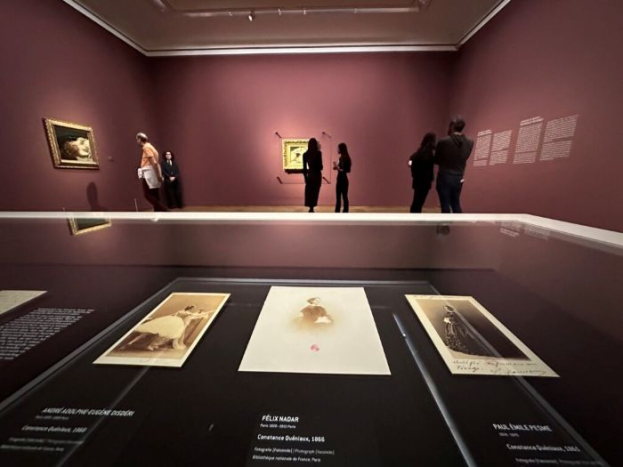
If you were to upload a photograph of one of the 19th century's most famous paintings to social media today, there is a good chance the algorithms would flag it as pornography. The artwork in question was painted nearly 160 years ago by the French artist Gustave Courbet, and it continues to ignite a fierce debate: Where does the line run between art and an affront to public decency?
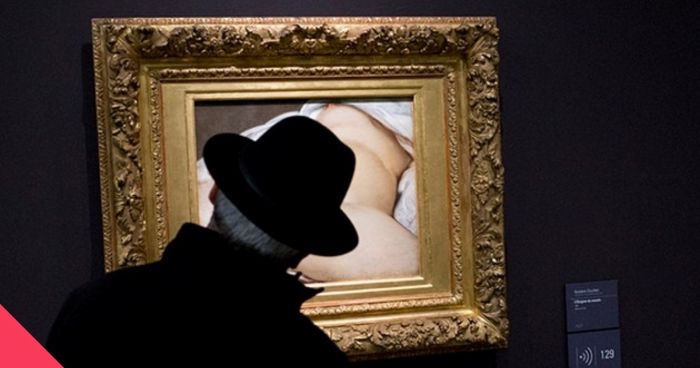
We trace the journey of a painting that has outlived its owners, survived multiple eras of censorship, and even challenged the modern internet.
Behind the Curtain of Decency
Today, The Origin of the World (L'Origine du monde) hangs in Paris’s Musée d’Orsay, where anyone can buy a ticket to see one of the most talked-about pieces in the history of art. But it wasn't always this accessible.
When Khalil Sherif Pasha, a Turkish diplomat and renowned collector of erotic art, commissioned the painting from Gustave Courbet in 1866, he had no intention of putting it on public display. The canvas was created exclusively for a private collection, accessible to only a select few. Rumor has it that the painting was hidden behind a heavy green curtain, drawn only for chosen guests. Ironically, it was these very attempts to hide the painting that ultimately cemented its legendary status.
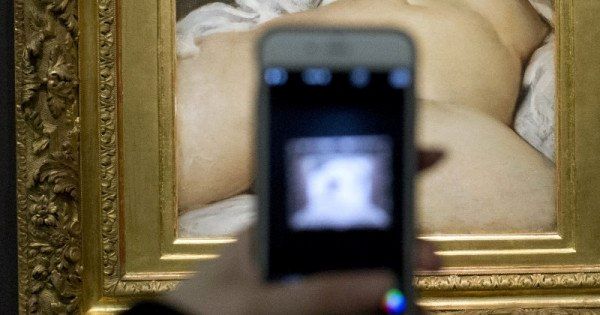
Courbet himself viewed his work through a different lens. As a leading figure of French Realism, he fiercely opposed the idealized imagery that dominated academic art. While his contemporaries masked nudity behind ancient goddesses and mythological themes, Courbet discarded these conventions, presenting the human body entirely without embellishment.
This is where the debate began—and it shows no signs of slowing down. For some, The Origin of the World was a manifesto of artistic freedom; for others, it was proof that not everything can be justified as art.
The Ghost on the Canvas
There is one striking detail that most viewers do not immediately register: the subject of the painting has no face. Courbet intentionally cropped the composition so that the viewer would never know who she was. Consequently, the identity of the model quickly became one of art history's greatest mysteries.
For decades, art historians were convinced that the Irish model Joanna Hiffernan had posed for the piece. The theory seemed logical—Courbet had painted her before, and she was a muse to several prominent artists of the era. However, there was one glaring discrepancy no one could explain: the painting clearly depicts dark pubic hair, whereas Hiffernan was famously red-headed.
The breakthrough came from an entirely unexpected source.
In 2018, French researcher Claude Schopp was studying the original correspondence between Alexandre Dumas fils (the son of the famous author) and the writer George Sand. For decades, one published letter contained a bizarre, nonsensical phrase about an "interview of Mademoiselle Quénaux."
Schopp decided to consult the original manuscript and discovered a transcription error dating back nearly a century and a half. Dumas had not written interview, but rather intérieur (interior). In 19th-century French parlance, this word was used to refer to a woman's intimate anatomy. A single misread word had hidden the identity of the world's most famous anonymous model for nearly 150 years.
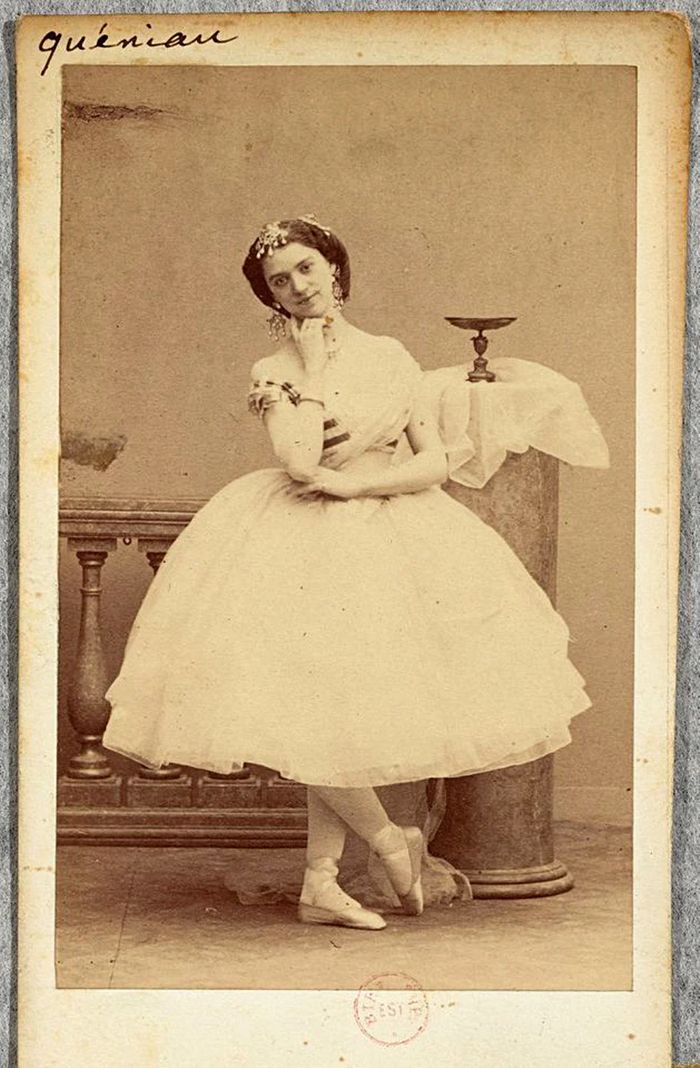
Following this discovery, most historians now agree that the model was Constance Quénaux, a former dancer at the Paris Opera and, interestingly enough, the mistress of Khalil Sherif Pasha—the very man who commissioned the painting.
Operation "Hide Courbet"
One might think that unmasking the model would bring the mysteries of The Origin of the World to a close. Instead, the painting proved to have a knack for generating new enigmas.
After Khalil Sherif Pasha, the canvas changed hands several times, almost always remaining hidden from public view. One of its most famous owners was the French psychoanalyst Jacques Lacan, under whose ownership the painting's history took a detective-novel turn.
Lacan didn’t just hang the painting on his wall. He commissioned the artist André Masson to create a custom surrealist landscape canvas that fit perfectly over Courbet’s work, acting as a mask. This "cover painting" operated on a sliding mechanism: with the press of a hidden button, it would slide away, unexpectedly revealing The Origin of the World to astonished guests.
The Face Nobody Saw
No legendary piece of art is complete without its own mythos, and Courbet's masterpiece is no exception.
In 2013, a French art collector claimed he had accidentally purchased a portrait of a young woman's face at a small Parisian antique shop. Soon after, a sensational theory emerged: when the two canvases were digitally aligned, the weave lines, brushstrokes, and anatomical proportions matched almost perfectly. The collector proposed that they were originally a single painting that had been cut into two pieces.
The story spread like wildfire through global media. Had the public been looking at only the bottom half of the famous artwork all this time?
The art world erupted into debate. While some experts claimed the coincidences were too precise to be accidental, others dismissed it as a beautiful myth. The Musée d’Orsay attempted to settle the matter by issuing a definitive statement: Courbet had intended the composition to be exactly as it is from the very beginning. No face, no identity, and no emotional distraction from the model. The focus was meant to be entirely on the concept of the birth of life itself.
Still, the museum failed to convince everyone, and the theory of the "lost head" still resurfaces in art discussions to this day.
Facebook vs. Courbet
It would be easy to assume that in the 21st century, the painting would lose its shock value. After all, the internet has accustomed audiences to far more explicit imagery... or has it?
In 2011, Frédéric Durand, a French schoolteacher, posted a reproduction of The Origin of the World on his Facebook profile. Shortly after, his account vanished. The social media network flagged the post as a violation of its terms, suspending the page for distributing pornographic content.
Refusing to accept the digital censorship, Durand took Facebook to court. He argued that the lawsuit was no longer just about his personal account, but about the right of classical art to exist without being policed by automated algorithms. The legal battle dragged on for nearly seven years. Throughout the trial, Facebook's legal team denied that Courbet's painting was the sole reason for the suspension. However, the high-profile case triggered a massive global conversation.
While the litigation was ongoing, Facebook revised its content moderation guidelines. The platform explicitly clarified that photographs of paintings, sculptures, and other artworks featuring nudity do not violate community standards. Yet, as current users know, automated algorithms still frequently struggle to distinguish artistic expression from explicit content.
A Scandal with No Expiration Date
For anyone under the impression that the drama surrounding The Origin of the World is a thing of the past, one only needs to look back to May 2024.
During an exhibition at the Center Pompidou branch in Metz, France, several activists sprayed red paint over the protective glass covering the painting and wrote "#MeToo" across it. The protest was organized by the performance artist Déborah de Robertis, who has repeatedly used Courbet's work as a backdrop for her public performances.
Thanks to the anti-vandal security glass, the original canvas remained completely unharmed. However, the act reignited the old flame of public debate: some hailed it as a vital stance against the objectification of the female body, while others condemned it as an act of vandalism designed to hijack a masterpiece for publicity.
Follow NEWS.am STYLE on Facebook, Twitter and Instagram

- AI-Generated Singer Announces Pregnancy and Quits Band — Fans Didn’t Realize She Wasn’t Real Social media users were left confused after news broke that Mity, a member of the Chinese pop group Baby Queen, had announced her pregnancy and decided to take a temporary break from the band. Many fans only then discovered that the group and its members were entirely AI-generated, the Daily Mail reports...
- Three Hours for Makeup and Household Chores: Japanese Prime Minister’s Admission Sparks Public Debate Japanese Prime Minister Sanae Takaichi has said her daily schedule is significantly more demanding than those of her male predecessors. In addition to her official duties, she spends several hours a day on makeup, bathing, cooking and other household tasks. Her remarks have sparked a heated debate about gender stereotypes and the expectations placed on Japanese women, The New York Times reports...
- “Grandparents Now Need Permission to Hug”: Controversial Ad Pulled After Backlash A controversy has erupted in Ireland over a public awareness campaign urging grandparents to ask their grandchildren for permission before hugging them. The video, created by the Dublin Rape Crisis Centre and funded by the Department of Justice, sparked accusations of absurd political correctness, disrespect toward older people and the misuse of public funds. The justice minister eventually demanded that the video be taken down...
- The Pharaohs Forgot to Sign the Paperwork: Scottish Museum Removes Mummies Over Lack of Consent A scandal worthy of a museum exhibit of its own has erupted in Scotland: ancient Egyptian remains have been removed from a Glasgow museum because people who died thousands of years ago never gave permission for their bodies to be displayed in public. Visitors are now greeted by explanatory signs instead of mummies — apparently the safest exhibit in an era when even pharaohs have suddenly been found to have personal-boundary issues...
- Hermès Steps Up Boutique Security After Riots in France French luxury house Hermès has tightened security at its stores following widespread protests in France, during which one of the brand’s boutiques in Marseille was looted. The company is also facing a new challenge: demand for its products is slowing, and sales of clothing and accessories have declined for the first time in several years, Reuters reports...




-
17:25, October 24
AI-Generated Singer Announces Pregnancy and Quits Band — Fans Didn’t Realize She Wasn’t Real -
16:34, October 24
Salma Hayek’s Daughter Tops Britain’s Most Eligible List: Billionaire Parents, Pubs and Vodka -
15:10, October 24
Timothée Chalamet Ignores Victoria’s Secret Models for Kylie Jenner — His Reaction Goes Viral -
14:20, October 24
Queen Elizabeth II Bragged About Helen Mirren to a Sheikh — But He Didn’t Recognize the Actress -
13:49, October 24
Why Did Tom Cruise Punch Jack Nicholson? -
13:15, October 24
“I Know Where You Are”: Hunter Biden Accused of Threatening Sex Worker -
12:12, October 24
Kim Kardashian Opens Up About Her Romance with Lewis Hamilton: “I’m Very, Very Happy” -
11:19, October 24
A $3 Million Rolex, a $200,000 Hermès Bag and a 7-Carat Diamond: Cardi B Spoils Herself with Lavish Birthday Gifts -
10:34, October 24
Sheer Lace and Crystal Chains: Kim Kardashian Takes Rome by Storm -
23:01, October 23
Three Hours for Makeup and Household Chores: Japanese Prime Minister’s Admission Sparks Public Debate -
22:18, October 23
J.K. Rowling: “If a Man Can Be a Woman, Then Women Do Not Exist” -
21:25, October 23
“Grandparents Now Need Permission to Hug”: Controversial Ad Pulled After Backlash
All materials

@NEWSam_STYLE
@NEWSam_STYLE
- Archive