


NEWS.am STYLE

NEWS.am STYLE

NEWS.am STYLE

NEWS.am STYLE

The 23rd "Golden Apricot" Yerevan International Film Festival has kicked off

NEWS.am STYLE

NEWS.am STYLE

NEWS.am STYLE

NEWS.am STYLE

Nikos Vertis to perform in Armenia for the 3rd time at the invitation of “ACVA BUILDINGS”

NEWS.am STYLE

NEWS.am STYLE
NEWS.am STYLE

NEWS.am STYLE

NEWS.am STYLE

NEWS.am STYLE

NEWS.am STYLE

NEWS.am STYLE



Sweden Is Going Crazy for Billionaires: How the Land of IKEA and Modesty Discovered ‘Wealth Porn’
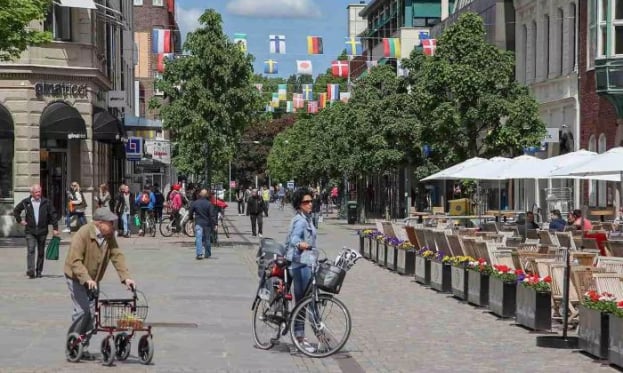
Until recently, Sweden was associated with equality, moderation and the famous principle of Jantelagen — the unspoken rule that no one should consider themselves better than anyone else. But today, the country is experiencing a genuine billionaire boom, while the mansions, fortunes and lifestyles of the ultra-rich are increasingly becoming the object of an almost obsessive fascination, The Conversation reports.
Sweden has long prided itself on being a country of equal opportunity, modesty and social democracy. Flaunting wealth is not generally encouraged, and certainly not putting oneself above others.
And yet Swedes have always had a particular fascination with the rich — especially those who know how to look like ordinary people.
A prime example is Ingvar Kamprad, the founder of IKEA. Swedes admired him for driving an old Volvo, chatting directly with employees in his stores and personally handing out Christmas presents to staff every year.
His carefully cultivated simplicity — some might call it a calculated strategy — allowed people to almost forget that Kamprad was one of the richest men on the planet. At the same time, he moved to Switzerland to avoid Sweden’s high taxes.
But times have changed.
The Wall Street Journal has written about Sweden’s unexpected “capitalist transformation,” while the Financial Times described it as a country “awash with billionaires.” Back in 2024, the BBC released the documentary podcast Super-rich Swedes, devoted to the country’s ultra-wealthy.
And the fascination is easy to understand.
For decades, Sweden was considered a country with some of the highest taxes in the world. But when it comes to wealth, the picture has changed dramatically: Sweden now has no wealth tax, inheritance tax or property tax.
The ideal of universal equality is increasingly at odds with reality, particularly when it comes to the country’s wealthiest citizens.
According to Forbes, Sweden now has more than 50 dollar billionaires — an impressive figure for a country with a population of just around 10.6 million.
What’s more, in 2025 Sweden ranked fourth in the world for the number of billionaires per capita, with 4.7 billionaires for every million residents.
Excluding microstates with populations of less than one million, only Singapore, with 9.9 billionaires per million people, Hong Kong, with 9.1, and Cyprus, with 7.3, ranked higher. Sweden edged out Switzerland, where the figure was 4.6.
For comparison, the United States has 2.7 billionaires per million residents, Germany 2.1, Canada 2.0 and the United Kingdom just 0.8.
It is difficult to say definitively whether tax reforms and the concentration of wealth have changed Sweden’s cultural norms. But there are already clear signs of a shift.
The younger generation is becoming noticeably more materialistic.
When young Swedes are asked what matters most to them in life, making money ranks second — immediately after spending time with friends — and significantly ahead of family and education.
Young and older Swedes alike dream of creating their own “money machine”: investing in stocks so they can stop working as early as possible and retire long before the traditional retirement age.
For a country whose culture was shaped for decades around the values of hard work and social responsibility, that represents a significant change.
Another sign of the shift is the rapidly growing media fascination with billionaires.
Swedish tabloids and business publications are increasingly publishing stories about their personal lives. And the wealthy themselves are now more often described not as “capitalists” but as “entrepreneurs,” “investors” and “philanthropists.”
Luxury They Both Admire and Feel Guilty About
However, it would be premature to say that wealth has completely ceased to be a sensitive subject in Sweden.
A study of coverage in one of Sweden’s leading tabloids revealed a curious phenomenon — a kind of “wealth porn.”
The Swedish version of wealth porn constantly walks a fine line between admiration for and condemnation of the luxurious lifestyles of billionaires.
On one hand, readers are shown drone photographs of enormous mansions, treated to lavish interiors and invited to peek into a world that remains inaccessible to most people.
On the other, virtually every such story reminds readers that billionaires themselves are not particularly fond of displaying their fortunes or speaking publicly about their wealth.
Moreover, their reluctance to flaunt their riches is explained not only by modesty. Articles sometimes emphasize that displaying one’s wealth can be socially sensitive and even pose a personal security risk.
As a result, readers are offered two emotions at once: the chance to dream about the life of a billionaire and the feeling that the fantasy is somehow slightly forbidden.
And this is where Jantelagen comes back into play — the Swedish notion that one should not consider oneself better than everyone else.
Breaking that rule, even in one’s imagination, becomes an additional part of the thrill.
At the same time, Swedish “wealth porn” remains focused primarily on the moral side of conspicuous consumption.
Far less attention is paid to another question: exactly how billionaires made their fortunes and what kind of political influence those enormous fortunes may give their owners.
Even in a country that has long been regarded as a model of social democracy, the origins of extreme wealth and its impact on society often remain outside the conversation.
Swedes’ relationship with money is also reflected in a recent representative survey.
Many respondents admitted that money is a major personal motivator for them. They agreed that having a large fortune is an important incentive in life.
Money also matters from a social perspective: many believe that it gives a person status and respect.
Moreover, a significant share of respondents agreed with the idea that you can never have too much money.
The result is a paradoxical picture.
Swedes clearly value wealth, and the desire to become rich is gradually becoming more socially acceptable. Yet they are still reluctant to regard the ultra-rich themselves as unequivocally positive role models.
And this is where Sweden’s central paradox emerges: wanting to become wealthy is no longer considered shameful, but openly displaying that wealth is still somewhat frowned upon.
Perhaps Jantelagen really is losing its influence — but not enough to disappear entirely.
It seems that today it dictates more how Swedes should view the rich than forbidding them from dreaming of becoming rich themselves.
And that may be the most important cultural shift in a country where, not so long ago, the ideal billionaire was someone who drove an old Volvo, flew economy class and tried to look as though there weren’t billions sitting in his bank account.
Follow NEWS.am STYLE on Facebook, Twitter and Instagram

- Sweden Is Going Crazy for Billionaires: How the Land of IKEA and Modesty Discovered ‘Wealth Porn’ Sweden has long prided itself on being a country of equal opportunity, modesty and social democracy. Flaunting wealth is not generally encouraged, and certainly not putting oneself above others...
- $28,000 Cognac Comes With Its Own Chilling Cellar: Louis XIII Unveils New Black Pearl Louis XIII has unveiled a new version of its legendary Black Pearl — an ultra-luxury cognac that comes with its own personal “chilling cellar.” Essentially, it is a sleek, high-tech mini refrigerator designed to keep the cognac at precisely 13°C — the temperature said to prevail in one of the cellars at Rémy Martin, according to Robb Report...
- British Woman Reclaims Guinness World Record by Devouring a Burrito in 30 Seconds Leah Shutkever, 36, from Birmingham, already held 42 records when she set her latest world-best time. Her previous achievements include eating a Domino’s pizza in under a minute and polishing off an entire chocolate orange in just 57 seconds...
- Nevada’s Famous Brothels Hit the Market for $33.9 Million Three of America’s most famous brothels are officially looking for a new owner...
- Hypocritical Millionaires vs. Billionaires: Hollywood’s New Trend For multimillionaire celebrities, publicly attacking billionaires has become a new way to demonstrate their supposedly “correct” political credentials, the New York Post writes...




-
23:10, September 10
Sweden Is Going Crazy for Billionaires: How the Land of IKEA and Modesty Discovered ‘Wealth Porn’ -
22:18, September 10
Your Breasts Are Paying the Price for Your Favorite Bra: 5 Signs You’re Wearing the Wrong Size -
21:36, September 10
‘The Birkin Is Dead’: Rich Women Furious at Influencers for Turning the Iconic Bag Into a Joke -
20:21, September 10
Record $1.87 Billion Divorce: South Korean Tycoon Gives Ex-Wife a Third of His Empire -
19:30, September 10
Maison Margiela Turns Fashion Into a Psychological Thriller -
16:26, September 10
$28,000 Cognac Comes With Its Own Chilling Cellar: Louis XIII Unveils New Black Pearl -
15:43, September 10
Celine and Reebok Team Up: Iconic Freestyle Lo Sneakers Get a Luxury Makeover -
15:23, September 10
Lily Collins Shows Off Her Figure in a Striking Swimsuit During French Getaway -
14:42, September 10
Cows, Gold Mines and $1: The Crazy Offers a Billionaire Is Getting for His “Island” -
14:20, September 10
“Even Dog Shit Deserves More Respect”: Elon Musk Brutally Slams Film About His Life -
13:33, September 10
“I’m Bored With It”: 68-Year-Old Sharon Stone Reveals She Has Been Living Without Sex for Years -
12:40, September 10
Sydney Sweeney Goes Naked and Covers Her Intimate Areas With Footballs — Fans Go Wild
All materials

@NEWSam_STYLE
@NEWSam_STYLE
- Archive