



NEWS.am STYLE
NEWS.am STYLE

NEWS.am STYLE

NEWS.am STYLE

NEWS.am STYLE

NEWS.am STYLE

NEWS.am STYLE

NEWS.am STYLE

NEWS.am STYLE

NEWS.am STYLE

The 23rd "Golden Apricot" Yerevan International Film Festival has kicked off

NEWS.am STYLE

NEWS.am STYLE

NEWS.am STYLE

NEWS.am STYLE

Nikos Vertis to perform in Armenia for the 3rd time at the invitation of “ACVA BUILDINGS”

NEWS.am STYLE

NEWS.am STYLE




Your Breasts Are Paying the Price for Your Favorite Bra: 5 Signs You’re Wearing the Wrong Size
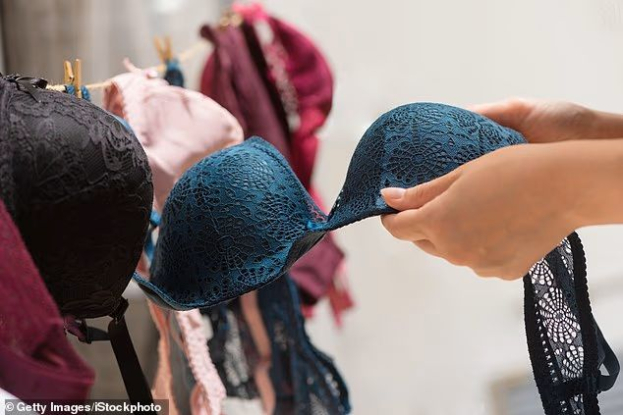
Taking off your bra after a long day is one of life’s little pleasures. But if you spend the entire day in pain or discomfort and literally count the hours until you can finally unhook it, the problem may be that you’re wearing the wrong size.
And you’re certainly not alone. Around 80% of women wear the wrong bra size, with the most common mistake being a bra that is too small, according to the Daily Mail.
According to Tara Wougt, a research fellow specializing in breast biomechanics at the University of Portsmouth, an ill-fitting bra can be linked to neck and back pain as well as persistent marks on the skin. Choosing the right size, therefore, is important not only for everyday comfort but also for your health.
Neck and Back Pain
“One of the main problems is neck and back pain,” Wougt says.
In addition to pain and discomfort, an ill-fitting bra can affect posture and even alter the way you walk.
The right bra, therefore, may help you not only feel more comfortable but literally hold your head a little higher.
Deep Strap Marks That Don’t Go Away
“Over time, deep, permanent marks can develop if the straps are tightened too much,” the specialist notes.
Wougt says she has seen women develop lasting indentations in their skin after years of wearing bras that were too tight.
The band around the ribcage should provide most of the support, rather than the straps. If the band is too loose, more of the weight is transferred to the shoulders through the straps, which can contribute further to neck and back pain.
Damage and Deformation of Breast Tissue
“If the underwire is too small, it can dig into the tissue and deform surrounding structures, including the lymph nodes,” Wougt says.
Breast tissue extends much farther than many people realize, reaching approximately into the underarm area. That is why it is particularly important to make sure the underwire is not pressing into the breast tissue.
“It’s very important that no part of the underwire is digging into the breast tissue,” the specialist emphasizes.
Breast Pain and Discomfort
The issue can be particularly significant for women with larger breasts.
“Many women with larger breasts seek breast-reduction surgery because they experience significant discomfort. In addition, many avoid physical activity because they don’t feel adequately supported or confident in a sports bra,” Wougt explains.
An ill-fitting bra can therefore become a serious obstacle to exercise and everyday physical activity.
For most women, however, checking their bra size is nowhere near the top of a long to-do list. For some, the fitting process itself can bring back awkward memories of adolescence, when they first had to learn how to choose a bra — and that embarrassment does not always disappear with age.
For those who would rather skip a formal fitting in a store, Wougt outlines a five-step guide developed by the University of Portsmouth to help women determine for themselves whether their bra fits correctly.
1. The Band
“The band should sit at the same level all the way around your body. If it is too tight, it will ride up at the back instead of sitting firmly against the body all the way around,” Wougt explains.
The band should feel snug. If you pull it away from your body, there should be roughly five centimeters of space.
When buying a bra, the specialist recommends choosing a band size that fits comfortably on the loosest hook setting. As the fabric stretches over time, you can then tighten it.
2. The Cups
Your breasts should be fully contained within the cups, with no bulging over the top or sides and no gaps.
It is important to remember that breast tissue extends much farther than it may appear to, reaching approximately into the underarm area.
“If the cup is too large, there will be a gap between the breast and the underwire,” the specialist says.
3. The Underwire
The underwire should follow the natural curve of the breast without digging into the tissue.
It should sit around the breast rather than pressing directly into it.
4. The Center Gore
The center section of the bra between the cups should sit firmly against the body.
“If it is lifted away from the chest, I would suggest that you need a larger cup size,” Wougt explains.
5. The Straps
The straps help keep the bra in place, but they should not carry most of the weight.
The left and right straps do not necessarily need to be the same length, as most women have one breast that is slightly larger than the other.
“You should be able to comfortably fit two fingers underneath the strap. It shouldn’t be so tight that it digs into the skin, but it also shouldn’t be so loose that it slips off your shoulder,” Wougt says.
According to the specialist, the straps are usually the most adjustable part of a bra, which is why they should be adjusted last.
She also recommends considering the so-called “sister sizing” principle, which can be a useful solution if the band fits perfectly but the cups are too large or too small.
Sports bras present a separate challenge. For many women, they can actually become a barrier to exercise because of chafing or inadequate support.
“People can feel self-conscious about how much the breasts move during physical activity and about the feeling of not having enough support,” Wougt notes.
Finding the right sports bra can be particularly difficult because many manufacturers offer them in standard S, M and L sizes, without separately accounting for band measurement and cup size.
An ideal sports bra should fit snugly, but the straps should not dig into the shoulders. A model that is too tight can cause chafing and put additional strain on the shoulders, while one that is too loose will fail to provide adequate support.
The bra should also stay in place rather than shifting with your body as you move. When trying one on, Wougt therefore advises women not to be shy about doing a few jumps right there in the fitting room.
“That way, you can see how the bra moves with your body,” the specialist advises.
Follow NEWS.am STYLE on Facebook, Twitter and Instagram

- Diet Soda or Water: Study Reveals Which Drink Is More Effective for Weight Loss Sugar-free soft drinks may be just as effective as plain water for weight loss, according to researchers at the University of Liverpool in the UK. Their conclusion is based on a two-year randomized trial involving nearly 500 people who were overweight or living with obesity...
- Your Smartphone Could Be Stealing Years of Your Life: Scientists Warn of the Consequences of Endless Scrolling Spending hours scrolling through social media may have far more serious consequences for health than previously thought. According to a major scientific review, excessive screen use is linked to millions of years of life lived with mental health disorders...
- Popular Weight-Loss Drugs Could Deprive the Brain of Energy, Expert Warns As GLP-1 weight-loss drugs, including Ozempic and Wegovy, continue to surge in popularity, experts are warning that losing weight too quickly and severely restricting calorie intake could deprive the brain of essential energy and nutrients...
- Just Two Spoonfuls a Day: Scientists Find an Unexpected Link Between Tomatoes and Memory A diet rich in fruits and vegetables has long been associated with better memory. Now, Spanish scientists have identified another potential link: ordinary tomatoes may influence brain function — and the key could be lycopene, a powerful antioxidant...
- Your Breasts Are Paying the Price for Your Favorite Bra: 5 Signs You’re Wearing the Wrong Size Taking off your bra after a long day is one of life’s little pleasures. But if you spend the entire day in pain or discomfort and literally count the hours until you can finally unhook it, the problem may be that you’re wearing the wrong size...




-
16:27, October 22
Is the Birkin Era Coming to an End? Hermès’ Iconic Bag Is Losing Its Appeal as Resale Prices Plunge -
15:40, October 22
“He Is Becoming More Dangerous”: Psychologist Says Trump Displays Signs of Psychopathy -
15:18, October 22
Queen Camilla Distrusted Meghan Markle From the Start and Believed She Had “Zombified” Prince Harry -
14:32, October 22
“Money Will Become Irrelevant”: Elon Musk Predicts a Currency-Free Future and Reveals What Will Happen to His Billions -
14:09, October 22
Mark Zuckerberg Threatens to Leave California and Sell His $110 Million Mansion Over Proposed Billionaires’ Tax -
13:19, October 22
Kylie Jenner’s $50 Million Fantasy Bra Set for Private Sale: Who Could Own the Most Expensive Victoria’s Secret Showpiece? -
12:35, October 22
Sydney Sweeney Models Daring Lingerie Inspired by Classic Christmas Movies -
12:16, October 22
French Looters Regret Stealing iPhones After Apple Locks Devices and Tracks Their Locations -
11:54, October 22
German Influencer and Video Game Creator Manuel Otto Dies After Allegedly Setting Himself on Fire During Livestream -
11:40, October 22
French Student Mocks Business Owners Hit by Riots, but Her Lavish Lifestyle Sparks Backlash -
11:20, October 22
Monica Lewinsky Is Preparing Another Tell-All Book About Her Sex Scandal With Bill Clinton -
10:50, October 22
Kim Kardashian Celebrates Her 46th Birthday in Style With Two Daring Looks and a Giant Cake
All materials

@NEWSam_STYLE
@NEWSam_STYLE
- Archive