


NEWS.am STYLE

NEWS.am STYLE
NEWS.am STYLE
NEWS.am STYLE

NEWS.am STYLE
NEWS.am STYLE
NEWS.am STYLE
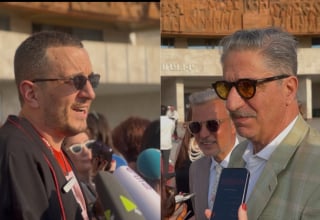
The 23rd "Golden Apricot" Yerevan International Film Festival has kicked off
NEWS.am STYLE
NEWS.am STYLE

NEWS.am STYLE
NEWS.am STYLE
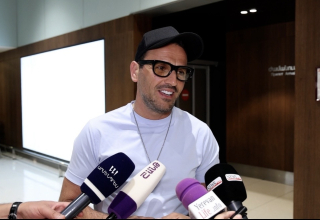
Nikos Vertis to perform in Armenia for the 3rd time at the invitation of “ACVA BUILDINGS”
NEWS.am STYLE

NEWS.am STYLE
NEWS.am STYLE
NEWS.am STYLE

NEWS.am STYLE

“We Would Be Happy to Bring Projects Here”: Filippo Innocenti on the Possibility of Zaha Hadid Architects Working in Armenia
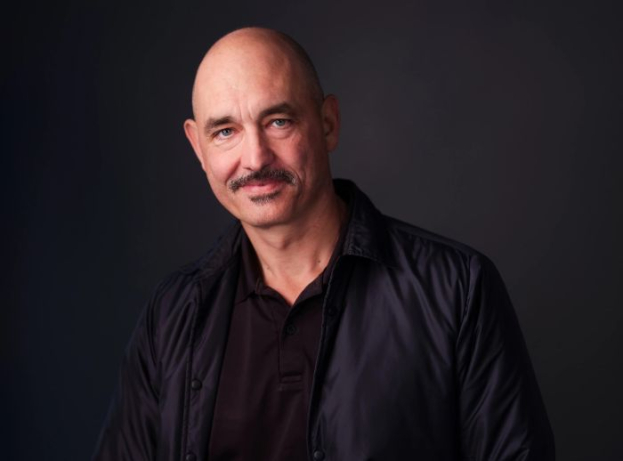
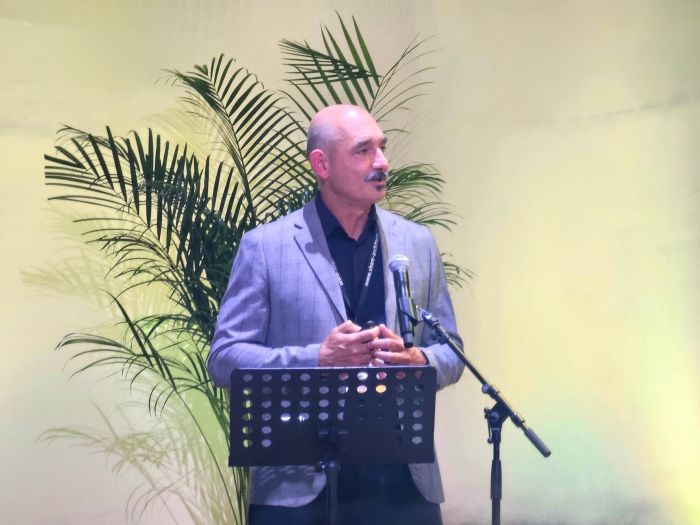
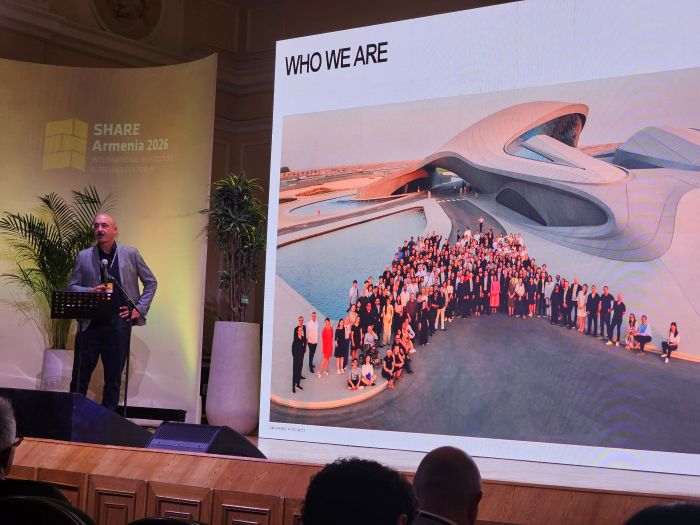
For the entire day on Thursday, September 24, Yerevan became a meeting point for architects, developers and people accustomed to looking at the city from a slightly different perspective — both literally and conceptually. At the SHARE Armenia 2026 forum, one of the key speakers was Filippo Innocenti, director of the world-renowned British architecture firm Zaha Hadid Architects.
In his presentation, Innocenti spoke not so much about beautiful buildings as about what happens around them. From his architectural perspective, a railway station is not simply a place where people board a train, an airport is not merely a terminal, and infrastructure in general should not exist separately from the city.
It can connect neighborhoods, create new public spaces and literally change people’s everyday routes.
For Yerevan, this topic sounded particularly relevant. Innocenti did not present a specific ZHA project for the Armenian capital, but several times invited the audience to look at the solutions he presented through the lens of Yerevan.
After the special panel discussion, NEWS.am STYLE had the opportunity to ask Filippo Innocenti several questions — about the future of Yerevan, the modernization of Zvartnots Airport, preserving the city’s identity, and the biggest concern facing architects in the age of artificial intelligence.
This is not your first visit to Yerevan. What impression does the city make on you today?
I was here for the first time not long ago. But, as often happens, when you visit a place for the second time, you notice its beauty even more. For example, this time I realized how beautiful some areas of the city are. We would be happy to contribute to the development of the city and bring some projects here.
During his presentation at the forum, Innocenti spoke about the possibility of Zaha Hadid Architects having a presence in Yerevan and specifically showed several projects by the firm that, in his view, could be considered in relation to the scale and context of the Armenian capital.
Among them was the new terminal in Vilnius — an example of transport architecture that not only serves passengers but also connects different parts of the city. In his presentation, Innocenti also discussed multifunctional complexes and public spaces integrated into the urban environment.
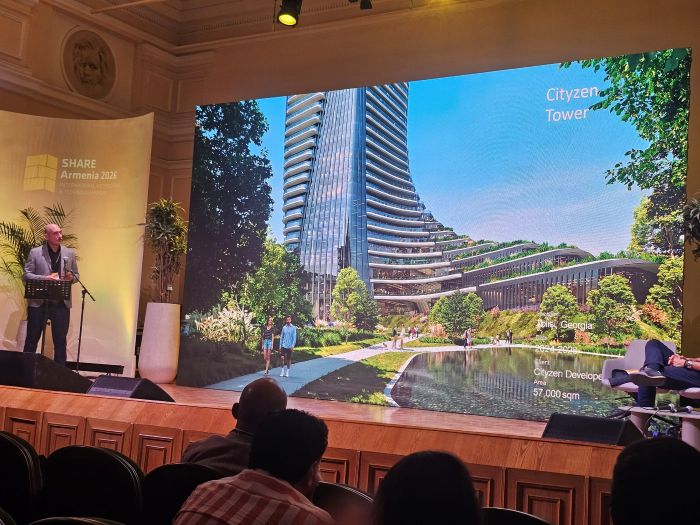
Filippo demonstrated how ZHA’s principles can be adapted to the scale, structure and character of a city such as Yerevan.
Over the past few years, more and more new buildings and architectural projects have been appearing in Armenia. Zvartnots Airport is one of the most recognizable examples of Soviet modernism in Armenia. As an architect at Zaha Hadid Architects, how would you approach the modernization of such a building? What do you see as its main strengths and challenges?
Usually, you always have to start with the technical questions. First of all, it is necessary to understand the airport’s actual needs and whether it needs to be expanded in response to the growth of the city. Based on that, you can then choose an architectural approach: whether to expand, renovate, add new elements or transform the existing building.
How can contemporary architecture preserve a city’s identity while also giving a building a future, without turning the city into an anonymous space?
This is very much in line with the way contemporary architecture has evolved over a long period of time. It is about adding new elements to existing architecture.
Today, with the growing importance of sustainability and the adaptive reuse of buildings, there are increasingly more opportunities to combine small-scale innovative interventions with the preservation and reimagining of existing architecture.
This is precisely where the conversation about architecture stops being solely a conversation about new buildings. Sometimes the future of a city begins with deciding not to demolish the past, but to learn how to work with it.
Today, we talk a lot about artificial intelligence in architecture. What do you think architecture could lose as AI develops?
In creativity, there is a moment when something suddenly emerges that you yourself could never have imagined. It is a moment of discovery, a moment of surprise.
I wonder whether the spread of artificial intelligence tools that allow us to anticipate an architectural outcome in advance could make that moment less powerful and less impressive.
For an architect who has spent decades working at the intersection of technology and creativity, the question is almost philosophical: if a machine learns to quickly show us a possible outcome, will there still be room for human spontaneity?
Today, AI in architecture is generally seen more as a partner and a tool than as an opponent. Do your colleagues share this view, or are there still skeptics among architects?
I think we are all concerned about the risk of people becoming lazier and artificial intelligence taking away our need to think for ourselves. That, in my view, is what is most frightening.
But, of course, everyone working in my field is ready to explore the possibilities that artificial intelligence opens up for creating better architecture.
Zaha Hadid was known for ideas that once seemed impossible to realize. Is there a project in your career that you consider particularly ambitious, one that many people doubted could ever actually be built?
All of them.
We always start with this approach: we try to do something that no one has done or seen before. So every such project becomes extremely challenging in terms of realization and construction.
Perhaps this is one of the most recognizable characteristics of Zaha Hadid Architects: the complexity of a project as the starting point for the entire endeavor. First comes an idea that is difficult to build. Then begins the attempt to prove that it can, in fact, be built.
After so many years in architecture, what still inspires you about this profession?
I like the fact that this profession still gives me the opportunity to remain at the forefront of technology and to be part of this process of development myself.
Liana Aghajanyan
Follow NEWS.am STYLE on Facebook, Twitter and Instagram

- “We Would Be Happy to Bring Projects Here”: Filippo Innocenti on the Possibility of Zaha Hadid Architects Working in Armenia For the entire day on Thursday, September 24, Yerevan became a meeting point for architects, developers and people accustomed to looking at the city from a slightly different perspective — both literally and conceptually. At the SHARE Armenia 2026 forum, one of the key speakers was Filippo Innocenti, director of the world-renowned British architecture firm Zaha Hadid Architects...
- 90 Years Old, 19 Titles and a Dream Physique: Japanese Bodybuilder Refuses to Grow Old “Should I take my shirt off?” Toshisuke Kanazawa, 90, asks completely calmly. Seconds later, he is shirtless from the waist up, showing off his tanned, muscular physique, defined chest and prominent veins on his arms, The Guardian reports...
- The World’s Most Expensive Bottle of Whisky Is Going Back to Auction — and Could Break Its Own Record The legendary Macallan 1926 is heading back to auction — and this time, the sale will take place at the very site where the extraordinary whisky was produced nearly 100 years ago, at the Macallan estate in Scotland’s Speyside region, according to Robb Report...
- Trousers vs. Red Silk: Melania Trump and Peng Liyuan Turned the White House into a Fashion Duel If you asked artificial intelligence to imagine two presidents with their wives and dress one couple in traditional attire and the other in a modern style, the result might look something like the defining image from Thursday night’s White House state dinner, The Washington Post writes...
- Cheese Is Fine, but Go Easy on the Butter: Scientists Reveal Which Fatty Foods Are Actually Healthy For years, we were told that fatty foods were bad for us: people were advised to replace whole milk with skimmed milk, butter with spreads, and eat cheese as rarely as possible. But new research suggests the picture is more complicated...




-
18:29, September 26
“We Would Be Happy to Bring Projects Here”: Filippo Innocenti on the Possibility of Zaha Hadid Architects Working in Armenia -
17:19, September 26
Diamond Showdown in Milan: Georgina Rodríguez and Aryna Sabalenka Compare Their Jaw-Dropping Engagement Rings -
15:22, September 26
Demna Turns the Page at Gucci: A Lavish “Store Show” in Milan Unveils a New Aesthetic -
14:14, September 26
Jay-Z Accuser Recants Rape Allegations and Says She Never Met the Rapper -
13:21, September 26
Kanye West Steps Out With Bianca Censori: She Goes Braless Again and Turns Heads in a Sheer Top -
12:36, September 26
“Welcome to America”: Trump’s 15-Year-Old Granddaughter Impresses Xi Jinping With Her Fluent Chinese -
11:18, September 26
From Gucci Sales Assistant to Fashion Star: Georgina Rodríguez Turns Heads in a Daring Mini Suit -
10:30, September 26
“When I Hear Our Song, I Cry”: Michael Schumacher’s Wife Opens Up About Her Pain for the First Time in 12 Years -
23:01, September 25
90 Years Old, 19 Titles and a Dream Physique: Japanese Bodybuilder Refuses to Grow Old -
22:17, September 25
The World’s Most Expensive Bottle of Whisky Is Going Back to Auction — and Could Break Its Own Record -
21:10, September 25
Max Mara Unveils a Collection for Women Who Have Too Much to Do -
20:22, September 25
British Scientists Discover Why Men Who Are Too Generous May Put Women Off
All materials

@NEWSam_STYLE
@NEWSam_STYLE
- Archive