



NEWS.am STYLE

NEWS.am STYLE

How Nare was welcomed at Zvartnots Airport after winning the Junior Eurovision Song Contest: the singer's emotions

NEWS.am STYLE
NEWS.am STYLE
NEWS.am STYLE
NEWS.am STYLE

NEWS.am STYLE

NEWS.am STYLE
NEWS.am STYLE

NEWS.am STYLE
NEWS.am STYLE
NEWS.am STYLE
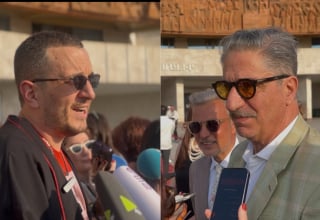
The 23rd "Golden Apricot" Yerevan International Film Festival has kicked off
NEWS.am STYLE
NEWS.am STYLE

NEWS.am STYLE
NEWS.am STYLE


“We Would Be Happy to Contribute to the Development of the City”: Filippo Innocenti on the Possibility of Zaha Hadid Architects Working in Armenia
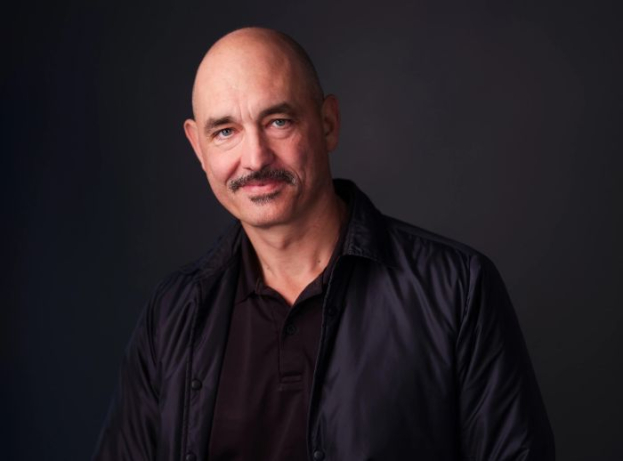
For the entire day on Thursday, September 24, Yerevan became a meeting point for architects, developers and people accustomed to looking at the city from a slightly different perspective – both literally and conceptually. At the SHARE Armenia 2026 forum, one of the key speakers was Filippo Innocenti, director of the world-renowned British architecture firm Zaha Hadid Architects.
In his presentation, Innocenti spoke not so much about beautiful buildings as about what happens around them. From his architectural perspective, a railway station is not simply a place where people board a train, an airport is not merely a terminal, and infrastructure in general should not exist separately from the city.
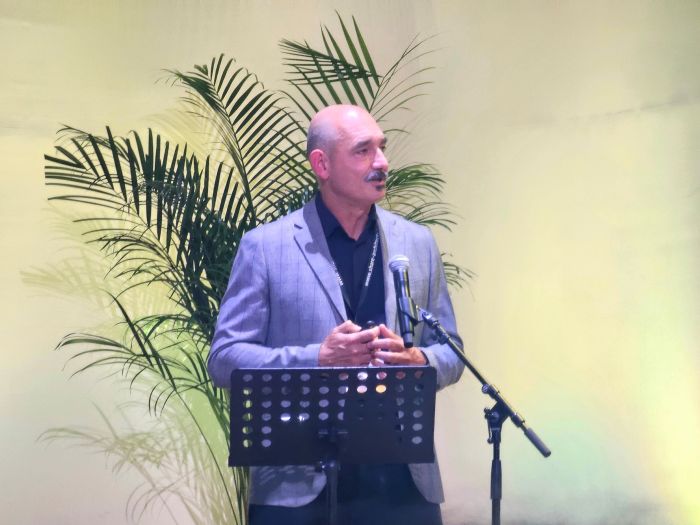
It can connect neighborhoods, create new public spaces and literally change people’s everyday routes.
For Yerevan, this topic sounded particularly relevant. Innocenti did not present a specific ZHA project for the Armenian capital, but several times invited the audience to look at the solutions he presented through the lens of Yerevan.
After the special panel discussion, NEWS.am STYLE had the opportunity to ask Filippo Innocenti several questions – about the future of Yerevan, the modernization of Zvartnots Airport, preserving the city’s identity, and the biggest concern facing architects in the age of artificial intelligence.
This is not your first visit to Yerevan. What impression does the city make on you today?
I was here for the first time not long ago. But, as often happens, when you visit a place for the second time, you notice its beauty even more. For example, this time I realized how beautiful some areas of the city are. We would be happy to contribute to the development of the city with some projects.
During his presentation at the forum, Innocenti spoke about the possibility of Zaha Hadid Architects having a presence in Yerevan and specifically showed several projects by the firm that, in his view, could be considered in relation to the scale and context of the Armenian capital.
Among them was the new terminal in Vilnius – an example of transport architecture that not only serves passengers but also connects different parts of the city. In his presentation, Innocenti also discussed multifunctional complexes and public spaces integrated into the urban environment.
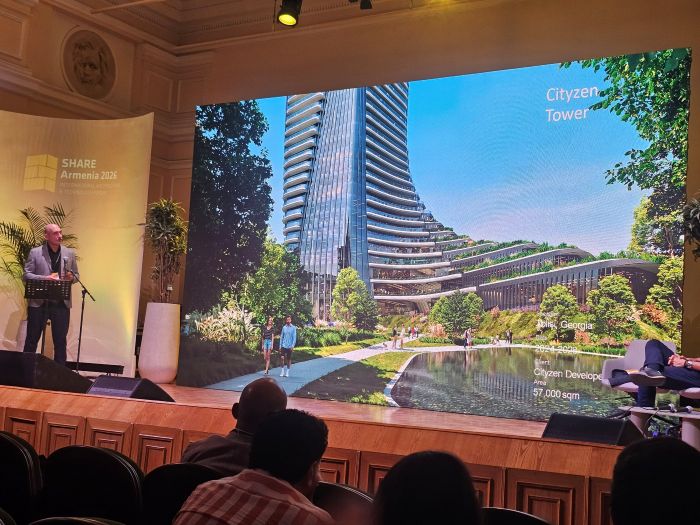
Filippo demonstrated how ZHA’s principles can be adapted to the scale, structure and character of a city such as Yerevan.
Over the past few years, more and more new buildings and architectural projects have been appearing in Armenia. Zvartnots Airport is one of the most recognizable examples of Soviet modernism in Armenia. As an architect at Zaha Hadid Architects, how would you approach the modernization of such a building? What do you see as its main strengths and challenges?
Normally, you would always start with some technical considerations. First of all, it is necessary to understand the airport’s actual needs and whether it needs to be expanded in response to the growth of the city. Based on that, you can then choose an architectural approach: whether to expand, renovate, add new parts or renew the existing building.
How can contemporary architecture preserve a city’s identity while also giving a building a future, without turning the city into an anonymous space?
This is very much in line with the way contemporary architecture has evolved over a long period of time. It is about adding new elements to existing architecture.
Today, with the growing importance of sustainability and the adaptive reuse of buildings, there are increasingly more opportunities to combine small-scale innovative interventions with the preservation and reimagining of existing architecture.
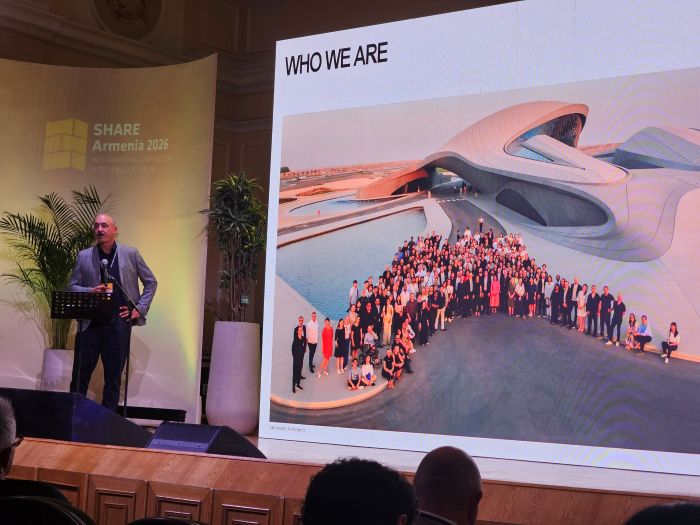
This is precisely where the conversation about architecture stops being solely a conversation about new buildings. Sometimes the future of a city begins with deciding not to demolish the past, but to learn how to work with it.
Today, we talk a lot about artificial intelligence in architecture. What do you think architecture could lose as AI develops?
In creativity, there is a moment when something suddenly emerges that you yourself could never have imagined. It is a moment of discovery, a moment of surprise.
I wonder whether the spread of artificial intelligence tools that allow us to anticipate an architectural outcome in advance could make that moment less powerful and less impressive.
For an architect who has spent decades working at the intersection of technology and creativity, the question is almost philosophical: if a machine learns to quickly show us a possible outcome, will there still be room for human spontaneity?
Today, AI in architecture is generally seen more as a partner and a tool than as an opponent. Do your colleagues share this view, or are there still skeptics among architects?
I think we all share the concern about laziness – about the idea that artificial intelligence could deprive us of the need to think. I think this is what is most frightening.
But, of course, anyone in my field is more than willing to explore the opportunities that artificial intelligence can offer for better design.
Zaha Hadid was known for ideas that once seemed impossible to realize. Is there a project in your career that you consider particularly ambitious, one that many people doubted could ever actually be built?
All of them.
We always start with this approach: we try to do something that no one has done or seen before. So every such project becomes extremely challenging in terms of realization and construction.
Perhaps this is one of the most recognizable characteristics of Zaha Hadid Architects: the complexity of a project as the starting point for the entire endeavor. First comes an idea that is difficult to build. Then begins the attempt to prove that it can, in fact, be built.
After so many years in architecture, what still inspires you about this profession?
I like that my profession has given me the opportunity to stay at the forefront of technology and to be an instrument of progress myself.
Liana Aghajanyan
Follow NEWS.am STYLE on Facebook, Twitter and Instagram

- Louis Vuitton Unveils Tambour Convergence Mirror Steel: Exceptional Scratch Resistance Meets Mirror-Like Shine Louis Vuitton has expanded its Tambour Convergence collection with the new Mirror Steel model. Its defining feature is a case made from specially developed hardened stainless steel, with a surface almost six times harder than conventional steel, reaching 1,130 Vickers. This allows the metal to retain its mirror polish for significantly longer, while minor scratches become virtually unnoticeable...
- The Scent of Winter Luxury: 10 Fragrances as Comforting as Cashmere Rich vanilla, spiced cognac, smoky woods and sensual musk — in winter, fragrance becomes as essential to an outfit as a soft cashmere coat or a favourite sweater...
- Why Rolex, Audemars Piguet and Patek Philippe Dominate 62% of the $26.6 Billion Pre-Owned Watch Market Three Swiss brands dominate the luxury pre-owned watch market, largely thanks to sustained demand for iconic models that buyers are still willing to pay well above retail prices to acquire, according to Robb Report...
- Chef Karen Torosyan’s Bozar Named Among the World’s 50 Best Restaurants Bozar, the Brussels restaurant led by Armenian-born chef Karen Torosyan, has been ranked 42nd in The World’s 50 Best Restaurants 2026, the annual ranking compiled by a panel of hundreds of industry experts, including chefs, restaurant critics and food journalists...
- A Touch That Makes You Want to Cry: What Is “Sad Nipple Syndrome”? A sudden wave of sadness, anxiety or even profound grief triggered by touching the nipples is an unusual experience reported by people around the world. Known as Sad Nipple Syndrome, the phenomenon remains poorly understood, and scientists have yet to establish exactly what causes it, The Guardian reports...




-
23:01, November 5
“The Models’ Bodies Don’t Even Look Real”: Fashion Brand Accused of Using AI to Alter Models’ Figures, Sparking Online Outrage -
22:19, November 5
Disappear to Become More Desirable: How Bottega Veneta Turned Five Years of Instagram Silence Into a Fashion Strategy -
21:21, November 5
Louis Vuitton Unveils Tambour Convergence Mirror Steel: Exceptional Scratch Resistance Meets Mirror-Like Shine -
20:33, November 5
The Scent of Winter Luxury: 10 Fragrances as Comforting as Cashmere -
19:36, November 5
“I’ve Avoided Being Called a Dictator”: Bernard Arnault Jokes About Crises, Nicknames and the Future of Luxury -
18:49, November 5
UFC Fighter Melsik Baghdasaryan to Star in New Action Film Alongside Jean-Claude Van Damme -
16:18, November 5
Jude Bellingham’s Calvin Klein Underwear Ad Brings New York Traffic to a Standstill -
15:25, November 5
Why Rolex, Audemars Piguet and Patek Philippe Dominate 62% of the $26.6 Billion Pre-Owned Watch Market -
14:31, November 5
Chef Karen Torosyan’s Bozar Named Among the World’s 50 Best Restaurants -
14:11, November 5
Johnny Depp Open to Returning to Pirates of the Caribbean: Actor Reveals One Condition for His Comeback -
13:33, November 5
Playboy Founder Hugh Hefner Tried to Make Twin Sisters Have Sex With Each Other, Former Model Claims -
12:38, November 5
Hollywood Actress Left With Permanent Facial Scarring After Dog Attack While Trying to Save Her French Bulldog
All materials

@NEWSam_STYLE
@NEWSam_STYLE
- Archive