


NEWS.am STYLE
NEWS.am STYLE
NEWS.am STYLE
NEWS.am STYLE

NEWS.am STYLE

NEWS.am STYLE
NEWS.am STYLE

NEWS.am STYLE
NEWS.am STYLE
NEWS.am STYLE
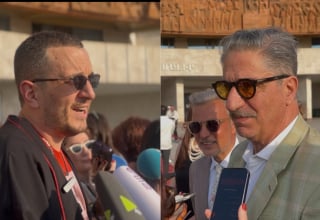
The 23rd "Golden Apricot" Yerevan International Film Festival has kicked off

NEWS.am STYLE
NEWS.am STYLE

NEWS.am STYLE
NEWS.am STYLE
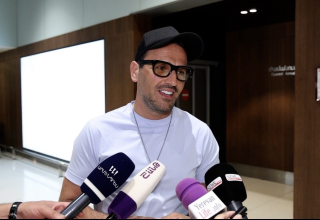
Nikos Vertis to perform in Armenia for the 3rd time at the invitation of “ACVA BUILDINGS”
NEWS.am STYLE

NEWS.am STYLE


J.K. Rowling: “If a Man Can Be a Woman, Then Women Do Not Exist”
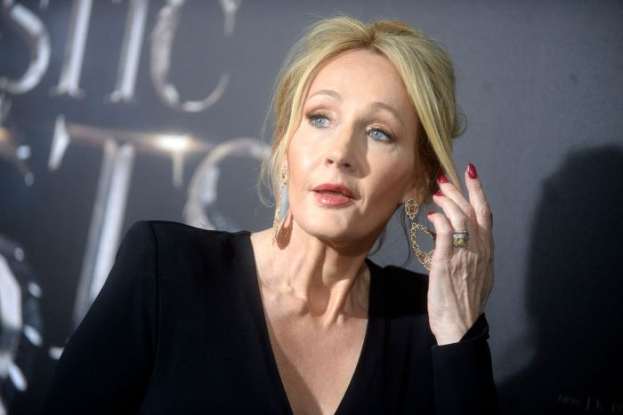
Author J.K. Rowling has published a new essay revisiting women’s rights and trans activism. Six years after making her first major statement on the issue, she says her views have not changed, but the consequences of the public debate have become far more serious. According to Rowling, the issue is no longer one of theoretical disagreement but of real-life situations in which, she believes, women’s rights are being undermined.
In recent years, the author has published a book about women opposing gender ideology in Scotland, appeared on the podcast The Witch Trials of J.K. Rowling, founded Beira’s Place, an Edinburgh crisis center offering support exclusively to female rape survivors, and established the J.K. Rowling Women’s Fund. The latter provides financial support to women in the UK and Ireland seeking to defend their rights through the courts.
Rowling says these initiatives continue her decades-long work supporting women and girls, particularly those in vulnerable circumstances. For nearly 30 years, she has funded domestic abuse shelters, crisis centers and other support services. In recent years, however, she says criticism of her has escalated into death threats because she opposes a position advocated by some trans activists: that a man who identifies as a woman should, in all circumstances, have the same rights and access to the same spaces as women.
In particular, the author opposes allowing such men into women’s changing rooms, sports teams, rape crisis centers and prisons. She also argues that this approach calls into question lesbians’ right to decide for themselves whom they wish to have relationships with.
Rowling acknowledges that transgender people can be vulnerable and may need protection. She says she does not support discrimination in housing or employment, nor does she advocate depriving anyone of human rights or personal safety. However, she insists that protecting transgender people should not override women’s rights to privacy and safety.
In her view, contemporary trans activism differs fundamentally from the civil rights, women’s rights and gay rights movements of the 20th century. Those movements, Rowling argues, united ordinary people against discrimination by powerful institutions. Today’s gender ideology, she contends, spread primarily through universities, politics, government bodies and major organizations before being imposed on society from above.
The author claims that influential lobbying organizations, including Stonewall, have persuaded many companies and public institutions that women’s spaces should no longer be exclusively for women. Meanwhile, she says, women who question such decisions are often accused of intolerance and subjected to harassment.
Rowling also focuses on the issue of safety. She argues that there is no basis for assuming that men who identify as women cannot pose the same risks as men generally. At the same time, she clarifies that she does not consider all such individuals to be criminals. In her view, separate changing rooms, toilets and crisis centers are necessary not because of hatred toward transgender people, but because women — particularly survivors of sexual violence — have specific needs.
In her essay, Rowling also describes cases in which, she says, women have faced disciplinary proceedings at work, harassment and police investigations over statements about biological sex. She argues that some employers and educational institutions have effectively deprived women and girls of their rights to safety, privacy and freedom of expression.
In 2025, the UK Supreme Court clarified that the term “woman” in the relevant legislation refers to biological sex. However, Rowling argues that the ruling alone has not undone the consequences of years of policies under which, in her view, women’s rights were sacrificed to gender ideology.
The author notes that, following the court’s decision, private companies have become less likely to face legal challenges over restrictions designed to protect women’s rights. Many, she believes, have accepted the ruling and are trying to comply with the law. Public institutions, by contrast, continue to resist its implementation. Rowling attributes this to the influence of gender ideology among political and administrative elites and criticizes trade unions for, in her view, no longer doing enough to defend the interests of working women.
Beira’s Place, the center she founded, occupies a particularly important place in the essay. According to Rowling, the organization faced telephone and online attacks almost immediately after opening, with the apparent aim of disrupting its work. Despite this, the center continues to support women. The author says some survivors had previously avoided seeking help from other services in Edinburgh because they did not want to discuss their experiences of sexual violence in the presence of men.
Rowling strongly criticizes those who dismiss such concerns as irrational or cruel. She also accuses Amnesty International, an organization she once supported, of adopting positions that, in her view, restrict freedom of speech.
The author acknowledges that she is now in a privileged position and can afford not to work. However, she points out that she previously experienced financial hardship and was herself a victim of domestic abuse and sexual assault. For that reason, she says, she finds it particularly difficult to accept criticism from women who identify as feminists but attack other women for trying to defend their rights.
Rowling says she will continue to speak openly on the issue, fund legal assistance for women and support the work of a crisis center where rape survivors receive help from female staff.
At the end of her essay, she quotes George Orwell, who wrote that freedom begins with the ability to state the obvious — for example, that two plus two equals four. Rowling sums up her position in uncompromising terms: if a man can be a woman, then the very concept of womanhood loses its meaning. This may seem insignificant to those who do not encounter such issues, she says, but it matters enormously to millions of women who cannot afford to ignore biological sex.
Follow NEWS.am STYLE on Facebook, Twitter and Instagram

- J.K. Rowling: “If a Man Can Be a Woman, Then Women Do Not Exist” Author J.K. Rowling has published a new essay revisiting women’s rights and trans activism. Six years after making her first major statement on the issue, she says her views have not changed, but the consequences of the public debate have become far more serious. According to Rowling, the issue is no longer one of theoretical disagreement but of real-life situations in which, she believes, women’s rights are being undermined...
- Cara Delevingne Opens Up About a Disastrous Date at a Lesbian Sex Party British model and actress Cara Delevingne has recalled one of the worst dates of her life. The star attended a lesbian sex party, but the atmosphere was so far from what she had expected that she quickly decided to leave...
- Billionaires Are Buying $100 Million Mansions Just to Tear Them Down as Florida’s Luxury Real Estate Market Reaches New Extremes American billionaires are willing to pay tens or even hundreds of millions of dollars for luxury mansions, only to demolish them with bulldozers. In South Florida’s most exclusive neighborhoods, the ultimate prize is no longer the house itself, but the irreplaceable oceanfront land it sits on, the New York Post reports...
- “That’s Not My Job”: NBA Star LaMelo Ball Admits He Doesn’t Change His Son’s Diapers NBA star LaMelo Ball has opened up about how parenting duties are divided in his family. The basketball player revealed that he does not change diapers for his nine-month-old son, LaOn, because he considers it his girlfriend Ana Montana’s responsibility...
- James Bond Shortlist Down to Four Actors as House of the Dragon Star Emerges as Possible Villain The search for the next James Bond has reportedly narrowed to four actors, with Amazon MGM Studios preparing for the final stage of casting. The identity of the new 007 could be announced before the end of the year...




-
23:01, October 23
Three Hours for Makeup and Household Chores: Japanese Prime Minister’s Admission Sparks Public Debate -
22:18, October 23
J.K. Rowling: “If a Man Can Be a Woman, Then Women Do Not Exist” -
21:25, October 23
“Grandparents Now Need Permission to Hug”: Controversial Ad Pulled After Backlash -
20:38, October 23
Cara Delevingne Opens Up About a Disastrous Date at a Lesbian Sex Party -
19:27, October 23
Lamborghini on Your Shoulders: Balenciaga Unveils a $9,500 Jacket and a Baseball Cap That Costs as Much as a Plane Ticket -
16:33, October 23
The Pharaohs Forgot to Sign the Paperwork: Scottish Museum Removes Mummies Over Lack of Consent -
15:44, October 23
Billionaires Are Buying $100 Million Mansions Just to Tear Them Down as Florida’s Luxury Real Estate Market Reaches New Extremes -
14:32, October 23
“That’s Not My Job”: NBA Star LaMelo Ball Admits He Doesn’t Change His Son’s Diapers -
14:15, October 23
James Bond Shortlist Down to Four Actors as House of the Dragon Star Emerges as Possible Villain -
13:16, October 23
Shooting Targeting Actor Tiger Shroff Rekindles Fear in Bollywood as Gangsters Renew Threats Against Stars -
12:29, October 23
After Facing Mockery Over Her Acting, Kim Kardashian Offered to Be Cut From a Movie -
12:07, October 23
Victoria Beckham Ditches Her Signature Manicure for a New Trend: Red Nails Look Expensive and Elegant
All materials

@NEWSam_STYLE
@NEWSam_STYLE
- Archive