



style.news.am
NEWS.am STYLE

NEWS.am STYLE

NEWS.am STYLE
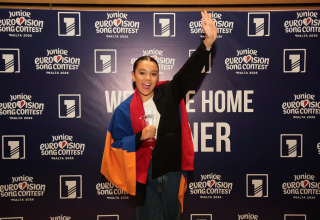
How Nare was welcomed at Zvartnots Airport after winning the Junior Eurovision Song Contest: the singer's emotions
NEWS.am STYLE
NEWS.am STYLE

NEWS.am STYLE

NEWS.am STYLE

NEWS.am STYLE

NEWS.am STYLE
NEWS.am STYLE

NEWS.am STYLE
NEWS.am STYLE
NEWS.am STYLE

The 23rd "Golden Apricot" Yerevan International Film Festival has kicked off

NEWS.am STYLE
NEWS.am STYLE

J.K. Rowling: “If a Man Can Be a Woman, Then Women Do Not Exist”
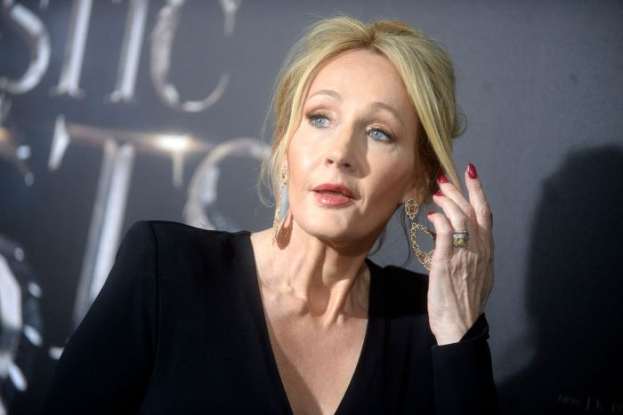
Author J.K. Rowling has published a new essay revisiting women’s rights and trans activism. Six years after making her first major statement on the issue, she says her views have not changed, but the consequences of the public debate have become far more serious. According to Rowling, the issue is no longer one of theoretical disagreement but of real-life situations in which, she believes, women’s rights are being undermined.
In recent years, the author has published a book about women opposing gender ideology in Scotland, appeared on the podcast The Witch Trials of J.K. Rowling, founded Beira’s Place, an Edinburgh crisis center offering support exclusively to female rape survivors, and established the J.K. Rowling Women’s Fund. The latter provides financial support to women in the UK and Ireland seeking to defend their rights through the courts.
Rowling says these initiatives continue her decades-long work supporting women and girls, particularly those in vulnerable circumstances. For nearly 30 years, she has funded domestic abuse shelters, crisis centers and other support services. In recent years, however, she says criticism of her has escalated into death threats because she opposes a position advocated by some trans activists: that a man who identifies as a woman should, in all circumstances, have the same rights and access to the same spaces as women.
In particular, the author opposes allowing such men into women’s changing rooms, sports teams, rape crisis centers and prisons. She also argues that this approach calls into question lesbians’ right to decide for themselves whom they wish to have relationships with.
Rowling acknowledges that transgender people can be vulnerable and may need protection. She says she does not support discrimination in housing or employment, nor does she advocate depriving anyone of human rights or personal safety. However, she insists that protecting transgender people should not override women’s rights to privacy and safety.
In her view, contemporary trans activism differs fundamentally from the civil rights, women’s rights and gay rights movements of the 20th century. Those movements, Rowling argues, united ordinary people against discrimination by powerful institutions. Today’s gender ideology, she contends, spread primarily through universities, politics, government bodies and major organizations before being imposed on society from above.
The author claims that influential lobbying organizations, including Stonewall, have persuaded many companies and public institutions that women’s spaces should no longer be exclusively for women. Meanwhile, she says, women who question such decisions are often accused of intolerance and subjected to harassment.
Rowling also focuses on the issue of safety. She argues that there is no basis for assuming that men who identify as women cannot pose the same risks as men generally. At the same time, she clarifies that she does not consider all such individuals to be criminals. In her view, separate changing rooms, toilets and crisis centers are necessary not because of hatred toward transgender people, but because women — particularly survivors of sexual violence — have specific needs.
In her essay, Rowling also describes cases in which, she says, women have faced disciplinary proceedings at work, harassment and police investigations over statements about biological sex. She argues that some employers and educational institutions have effectively deprived women and girls of their rights to safety, privacy and freedom of expression.
In 2025, the UK Supreme Court clarified that the term “woman” in the relevant legislation refers to biological sex. However, Rowling argues that the ruling alone has not undone the consequences of years of policies under which, in her view, women’s rights were sacrificed to gender ideology.
The author notes that, following the court’s decision, private companies have become less likely to face legal challenges over restrictions designed to protect women’s rights. Many, she believes, have accepted the ruling and are trying to comply with the law. Public institutions, by contrast, continue to resist its implementation. Rowling attributes this to the influence of gender ideology among political and administrative elites and criticizes trade unions for, in her view, no longer doing enough to defend the interests of working women.
Beira’s Place, the center she founded, occupies a particularly important place in the essay. According to Rowling, the organization faced telephone and online attacks almost immediately after opening, with the apparent aim of disrupting its work. Despite this, the center continues to support women. The author says some survivors had previously avoided seeking help from other services in Edinburgh because they did not want to discuss their experiences of sexual violence in the presence of men.
Rowling strongly criticizes those who dismiss such concerns as irrational or cruel. She also accuses Amnesty International, an organization she once supported, of adopting positions that, in her view, restrict freedom of speech.
The author acknowledges that she is now in a privileged position and can afford not to work. However, she points out that she previously experienced financial hardship and was herself a victim of domestic abuse and sexual assault. For that reason, she says, she finds it particularly difficult to accept criticism from women who identify as feminists but attack other women for trying to defend their rights.
Rowling says she will continue to speak openly on the issue, fund legal assistance for women and support the work of a crisis center where rape survivors receive help from female staff.
At the end of her essay, she quotes George Orwell, who wrote that freedom begins with the ability to state the obvious — for example, that two plus two equals four. Rowling sums up her position in uncompromising terms: if a man can be a woman, then the very concept of womanhood loses its meaning. This may seem insignificant to those who do not encounter such issues, she says, but it matters enormously to millions of women who cannot afford to ignore biological sex.
Follow NEWS.am STYLE on Facebook, Twitter and Instagram

- The $1 Million Jacket and a Midlife Crisis: Why Jensen Huang’s Signature Look Has Become a Target for Mockery This week, Huang stepped down as head of the tech giant amid reports of several alleged romantic relationships. Almost immediately, online attention turned to his unchanging wardrobe...
- California’s Musical Frenzy: Dua Lipa, SZA, Tame Impala and Pop Legend Madonna to Headline Coachella 2027 After months of speculation, heated discussions and rumors, organizers of one of the world’s most highly anticipated music events, Coachella 2027, have finally unveiled the lineup. Next spring, from April 9–11 and April 16–18, the Empire Polo Club in Indio, California, will host an extraordinary gathering of music superstars. Pop sensation Dua Lipa, R&B queen SZA and acclaimed Australian project Tame Impala have been announced as the festival’s headliners...
- “I’m a Piece of S*”: Inside Jensen Huang’s Final Hours as Nvidia CEO** Nvidia chief Jensen Huang reportedly struggled through his final hours at the helm of the tech giant after alleged romantic relationships triggered a major scandal and led to his resignation. According to Bloomberg, the billionaire began repeatedly saying, “I don’t care” and “I’m a piece of s***...
- Kim Kardashian Turns the Beach into a Runway: Barely-There Dress Made of Nothing but Threads Leaves Fans Speechless Kim Kardashian has once again made a bold fashion statement, showing off her figure in an unconventional beach look. The 46-year-old reality star and SKIMS founder shared a series of photos posing barefoot by the sea in a sheer mini dress that leaves very little to the imagination...
- Britney Spears Is Ready for a Fresh Start: The Singer Has Been Preparing a Surprise More Than 20 Years in the Making Britney Spears is gearing up for a new chapter in her career — this time, away from the music industry. The 44-year-old pop star has launched her own jewelry brand, BTiny, which she has reportedly been developing in secret for the past two years. The unexpected business venture comes just months after the singer's high-profile arrest on suspicion of driving under the influence of alcohol or drugs...




-
19:30, November 14
The $1 Million Jacket and a Midlife Crisis: Why Jensen Huang’s Signature Look Has Become a Target for Mockery -
18:25, November 14
California’s Musical Frenzy: Dua Lipa, SZA, Tame Impala and Pop Legend Madonna to Headline Coachella 2027 -
17:10, November 14
An $860 Bag Full of Emotion: Japanese Label doublet Turns Popular Emojis into Unusual Fashion Accessories -
16:36, November 14
“I’m a Piece of S*”: Inside Jensen Huang’s Final Hours as Nvidia CEO** -
15:14, November 14
Kim Kardashian Turns the Beach into a Runway: Barely-There Dress Made of Nothing but Threads Leaves Fans Speechless -
14:16, November 14
Britney Spears Is Ready for a Fresh Start: The Singer Has Been Preparing a Surprise More Than 20 Years in the Making -
13:37, November 14
“I Want to Try Every Armenian Dish”: Celebrity Chef Andre Rush Arrives in Armenia -
12:23, November 14
The “Naked” Truth in Paradise: Kendall Jenner Ditches Her Clothes in New Tequila Ad, Only to Surprise Fans with an Unexpected Twist -
11:53, November 14
The “Naked” Truth in Paradise: Kendall Jenner Ditches Her Clothes in New Tequila Ad, Only to Surprise Fans with an Unexpected Twist
-
11:21, November 14
Australia’s Prime Minister Caught on a Hot Mic: His Joke About His Manhood Heard Around the World -
10:30, November 14
Kim Only Skimps on Advent Calendars: The Lavish Gifts Kardashian Gives Her ‘All’s Fair’ Co-Stars -
22:21, November 13
Royal Secrets and $430,000 Pearls: The Story of a Necklace That Concealed a Family Mystery
All materials

@NEWSam_STYLE
@NEWSam_STYLE
- Archive