



NEWS.am STYLE

NEWS.am STYLE

NEWS.am STYLE

NEWS.am STYLE

NEWS.am STYLE

NEWS.am STYLE

NEWS.am STYLE

NEWS.am STYLE

NEWS.am STYLE

NEWS.am STYLE

The 23rd "Golden Apricot" Yerevan International Film Festival has kicked off

NEWS.am STYLE

NEWS.am STYLE

NEWS.am STYLE

NEWS.am STYLE

Nikos Vertis to perform in Armenia for the 3rd time at the invitation of “ACVA BUILDINGS”

NEWS.am STYLE

NEWS.am STYLE



Three Hours for Makeup and Household Chores: Japanese Prime Minister’s Admission Sparks Public Debate
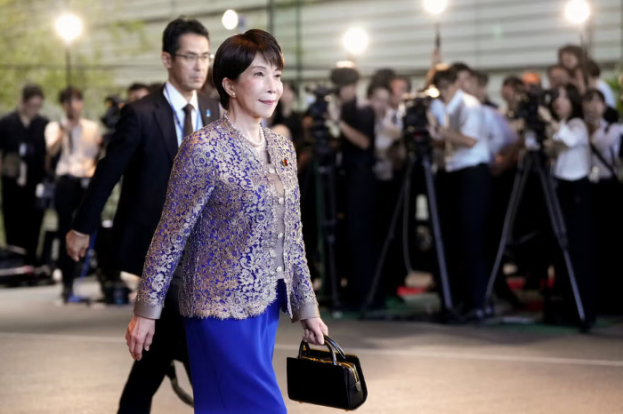
Japanese Prime Minister Sanae Takaichi has said her daily schedule is significantly more demanding than those of her male predecessors. In addition to her official duties, she spends several hours a day on makeup, bathing, cooking and other household tasks. Her remarks have sparked a heated debate about gender stereotypes and the expectations placed on Japanese women, The New York Times reports.
Speaking during parliamentary budget hearings, Takaichi explained that she struggles to find time to think carefully about strategic issues and the country’s future. According to the prime minister, everyday routines and household responsibilities take at least three hours a day, and she may spend an additional three to four hours on them compared with men who have held the same position.
Her comments came amid discussion of a report highlighting the excessive parliamentary workload of Japanese prime ministers. According to research by NXJI Research, heads of government can spend up to seven hours a day answering lawmakers’ questions. Japanese prime ministers attend parliamentary sessions for an average of around 72 days a year, compared with 50 days in the UK and 13 in Germany.
Takaichi’s supporters say she has drawn attention to the extra effort women often have to make to meet society’s expectations and succeed professionally. Conservative writer Kotoe Hashimoto even questioned whether the prime minister’s critics expected her to appear in parliament without makeup.
Other politicians, however, saw her remarks as reinforcing gender stereotypes. Opposition lawmaker Yoshiko Kira argued that such comments portray expectations surrounding women’s appearance and behavior as natural and immutable, when they should instead be reconsidered.
Japan has an unwritten standard of appearance known as midashinami, which dictates that people should look presentable in public. Women are often expected to wear makeup and high heels while avoiding skirts that are too short or necklines that are too revealing. Similar requirements exist in schools and workplaces, with women frequently facing closer scrutiny.
According to some estimates, Japanese women perform more than three-quarters of all household work. At the same time, many employees are expected to work regular overtime, averaging up to 22 additional hours a month, according to recent surveys.
Takaichi, known for her workaholic tendencies, has previously said she sleeps as little as zero to three hours a night. She has also described spending holiday weekends ironing clothes, hemming skirts and sewing loose buttons back onto jackets. After becoming prime minister, she pledged to “work, work, work, work and work,” emphasizing her readiness for an exhausting schedule.
Yet the head of government does not have an entire team of chefs, butlers and gardeners at her disposal. According to her husband, former lawmaker Taku Yamamoto, a cleaner comes to their official residence once a week, but they do not have a cook. The couple sometimes orders pizza, and Yamamoto makes sure to obtain the delivery driver’s name in advance so the person can pass the strict security checks.
Reaction to the prime minister’s comments on the streets of Tokyo has been mixed. Rina Sumi, a 22-year-old café worker, described the remarks as inappropriate for modern society, arguing that Takaichi should not have attributed her workload to her gender. Meanwhile, Mika Okado, a 27-year-old nurse who spends about an hour a day getting ready and preparing lunch, said she was surprised by how much time the prime minister devoted to daily routines but appreciated her candor.
Takaichi rose to power in a political system traditionally dominated by men, yet some of her own policies have drawn criticism from women’s rights advocates. She supports maintaining the exclusively male line of succession to Japan’s imperial throne and opposes changing the law requiring married couples to share the same surname.
Her admission has reignited a broader debate over how much time and effort women are expected to devote to meeting society’s expectations — even when they hold the highest offices in government.
Follow NEWS.am STYLE on Facebook, Twitter and Instagram

- Three Hours for Makeup and Household Chores: Japanese Prime Minister’s Admission Sparks Public Debate Japanese Prime Minister Sanae Takaichi has said her daily schedule is significantly more demanding than those of her male predecessors. In addition to her official duties, she spends several hours a day on makeup, bathing, cooking and other household tasks. Her remarks have sparked a heated debate about gender stereotypes and the expectations placed on Japanese women, The New York Times reports...
- “Grandparents Now Need Permission to Hug”: Controversial Ad Pulled After Backlash A controversy has erupted in Ireland over a public awareness campaign urging grandparents to ask their grandchildren for permission before hugging them. The video, created by the Dublin Rape Crisis Centre and funded by the Department of Justice, sparked accusations of absurd political correctness, disrespect toward older people and the misuse of public funds. The justice minister eventually demanded that the video be taken down...
- The Pharaohs Forgot to Sign the Paperwork: Scottish Museum Removes Mummies Over Lack of Consent A scandal worthy of a museum exhibit of its own has erupted in Scotland: ancient Egyptian remains have been removed from a Glasgow museum because people who died thousands of years ago never gave permission for their bodies to be displayed in public. Visitors are now greeted by explanatory signs instead of mummies — apparently the safest exhibit in an era when even pharaohs have suddenly been found to have personal-boundary issues...
- Hermès Steps Up Boutique Security After Riots in France French luxury house Hermès has tightened security at its stores following widespread protests in France, during which one of the brand’s boutiques in Marseille was looted. The company is also facing a new challenge: demand for its products is slowing, and sales of clothing and accessories have declined for the first time in several years, Reuters reports...
- Dior at $800, Maison Francis Kurkdjian at $1,200: The Most Luxurious Advent Calendars of 2026 From thousand-dollar fragrances to high-end skincare, luxury brands have turned the countdown to the holidays into an indulgence for affluent shoppers...




-
23:01, October 23
Three Hours for Makeup and Household Chores: Japanese Prime Minister’s Admission Sparks Public Debate -
22:18, October 23
J.K. Rowling: “If a Man Can Be a Woman, Then Women Do Not Exist” -
21:25, October 23
“Grandparents Now Need Permission to Hug”: Controversial Ad Pulled After Backlash -
20:38, October 23
Cara Delevingne Opens Up About a Disastrous Date at a Lesbian Sex Party -
19:27, October 23
Lamborghini on Your Shoulders: Balenciaga Unveils a $9,500 Jacket and a Baseball Cap That Costs as Much as a Plane Ticket -
16:33, October 23
The Pharaohs Forgot to Sign the Paperwork: Scottish Museum Removes Mummies Over Lack of Consent -
15:44, October 23
Billionaires Are Buying $100 Million Mansions Just to Tear Them Down as Florida’s Luxury Real Estate Market Reaches New Extremes -
14:32, October 23
“That’s Not My Job”: NBA Star LaMelo Ball Admits He Doesn’t Change His Son’s Diapers -
14:15, October 23
James Bond Shortlist Down to Four Actors as House of the Dragon Star Emerges as Possible Villain -
13:16, October 23
Shooting Targeting Actor Tiger Shroff Rekindles Fear in Bollywood as Gangsters Renew Threats Against Stars -
12:29, October 23
After Facing Mockery Over Her Acting, Kim Kardashian Offered to Be Cut From a Movie -
12:07, October 23
Victoria Beckham Ditches Her Signature Manicure for a New Trend: Red Nails Look Expensive and Elegant
All materials

@NEWSam_STYLE
@NEWSam_STYLE
- Archive