



style.news.am

style.news.am

NEWS.am STYLE

NEWS.am STYLE

NEWS.am STYLE

How Nare was welcomed at Zvartnots Airport after winning the Junior Eurovision Song Contest: the singer's emotions

NEWS.am STYLE

NEWS.am STYLE

NEWS.am STYLE

NEWS.am STYLE

NEWS.am STYLE

NEWS.am STYLE

NEWS.am STYLE

NEWS.am STYLE

NEWS.am STYLE

NEWS.am STYLE

The 23rd "Golden Apricot" Yerevan International Film Festival has kicked off

NEWS.am STYLE


Three Hours for Makeup and Household Chores: Japanese Prime Minister’s Admission Sparks Public Debate
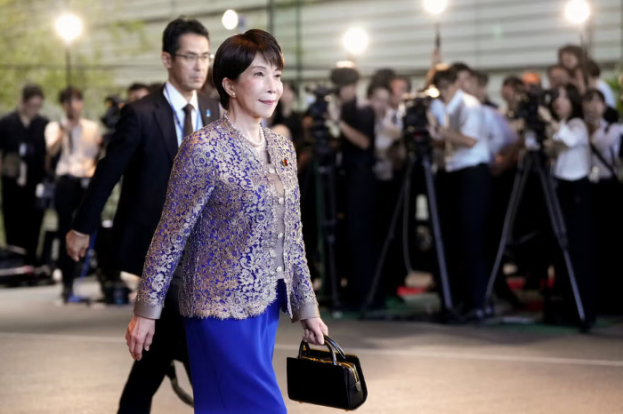
Japanese Prime Minister Sanae Takaichi has said her daily schedule is significantly more demanding than those of her male predecessors. In addition to her official duties, she spends several hours a day on makeup, bathing, cooking and other household tasks. Her remarks have sparked a heated debate about gender stereotypes and the expectations placed on Japanese women, The New York Times reports.
Speaking during parliamentary budget hearings, Takaichi explained that she struggles to find time to think carefully about strategic issues and the country’s future. According to the prime minister, everyday routines and household responsibilities take at least three hours a day, and she may spend an additional three to four hours on them compared with men who have held the same position.
Her comments came amid discussion of a report highlighting the excessive parliamentary workload of Japanese prime ministers. According to research by NXJI Research, heads of government can spend up to seven hours a day answering lawmakers’ questions. Japanese prime ministers attend parliamentary sessions for an average of around 72 days a year, compared with 50 days in the UK and 13 in Germany.
Takaichi’s supporters say she has drawn attention to the extra effort women often have to make to meet society’s expectations and succeed professionally. Conservative writer Kotoe Hashimoto even questioned whether the prime minister’s critics expected her to appear in parliament without makeup.
Other politicians, however, saw her remarks as reinforcing gender stereotypes. Opposition lawmaker Yoshiko Kira argued that such comments portray expectations surrounding women’s appearance and behavior as natural and immutable, when they should instead be reconsidered.
Japan has an unwritten standard of appearance known as midashinami, which dictates that people should look presentable in public. Women are often expected to wear makeup and high heels while avoiding skirts that are too short or necklines that are too revealing. Similar requirements exist in schools and workplaces, with women frequently facing closer scrutiny.
According to some estimates, Japanese women perform more than three-quarters of all household work. At the same time, many employees are expected to work regular overtime, averaging up to 22 additional hours a month, according to recent surveys.
Takaichi, known for her workaholic tendencies, has previously said she sleeps as little as zero to three hours a night. She has also described spending holiday weekends ironing clothes, hemming skirts and sewing loose buttons back onto jackets. After becoming prime minister, she pledged to “work, work, work, work and work,” emphasizing her readiness for an exhausting schedule.
Yet the head of government does not have an entire team of chefs, butlers and gardeners at her disposal. According to her husband, former lawmaker Taku Yamamoto, a cleaner comes to their official residence once a week, but they do not have a cook. The couple sometimes orders pizza, and Yamamoto makes sure to obtain the delivery driver’s name in advance so the person can pass the strict security checks.
Reaction to the prime minister’s comments on the streets of Tokyo has been mixed. Rina Sumi, a 22-year-old café worker, described the remarks as inappropriate for modern society, arguing that Takaichi should not have attributed her workload to her gender. Meanwhile, Mika Okado, a 27-year-old nurse who spends about an hour a day getting ready and preparing lunch, said she was surprised by how much time the prime minister devoted to daily routines but appreciated her candor.
Takaichi rose to power in a political system traditionally dominated by men, yet some of her own policies have drawn criticism from women’s rights advocates. She supports maintaining the exclusively male line of succession to Japan’s imperial throne and opposes changing the law requiring married couples to share the same surname.
Her admission has reignited a broader debate over how much time and effort women are expected to devote to meeting society’s expectations — even when they hold the highest offices in government.
Follow NEWS.am STYLE on Facebook, Twitter and Instagram

- Champagne, £3,000 Dior Bags and Theft from Lovers: Glamorous Con Artist Spent Years Swindling London’s Elite She turned up at London's trendiest venues with perfectly styled hair, expensive Dior and Chanel handbags, and the air of a woman who never needed to check the prices on a menu. Wealthy men competed to buy her champagne, while affluent female friends trusted her with their bank cards. But behind the image of a glamorous socialite, it emerged, was a woman accused of multiple thefts and financial scams...
- The Billionaires’ Boys’ Club: Why Jensen Huang Was Forgiven for Something That Would Have Gotten a Woman Fired Jensen Huang’s return as CEO of Nvidia has become a striking example of how a different set of rules appears to apply to powerful men in the worlds of technology and politics. While female executives face severe consequences for professional misconduct, billionaires seem able to count on the support of their peers — and even the intervention of the US president. That is the conclusion reached by Emma Hinchliffe, editor of Fortune’s Most Powerful Women section....
- George Harrison’s Wedding Coat to Fetch Up to $500,000 at Auction: He Wore It During The Beatles’ Iconic Rooftop Concert George Harrison’s famous black coat, worn by the musician when he married model Pattie Boyd and, three years later, during The Beatles’ legendary rooftop performance in London, is set to go under the hammer at Sotheby’s. The unique piece of music and fashion history is expected to fetch up to $500,000...
- Yerevan Welcomes the Spirit of the Emirates: Celebrating 55 Years of the UAE The warmth of Eastern hospitality, the delicate aroma of Arabic coffee, exquisite traditional cuisine and music rooted in centuries-old traditions — for one evening, the atmosphere of the United Arab Emirates came to Yerevan. Against a backdrop of culture, history and national customs, guests were introduced to the distinctive elegance of Emirati hospitality...
- The Scent of Love: Scientists Discover Why Your Partner’s Natural Smell Becomes More Attractive Over Time It turns out that when it comes to a lasting relationship, perfume may matter less than the natural scent of the person you love. According to a study by researchers at the Netherlands’ Radboud University, the longer people are in a romantic relationship, the more sexually arousing they may find their partner’s natural scent...




-
23:01, November 26
Champagne, £3,000 Dior Bags and Theft from Lovers: Glamorous Con Artist Spent Years Swindling London’s Elite -
22:24, November 26
The Billionaires’ Boys’ Club: Why Jensen Huang Was Forgiven for Something That Would Have Gotten a Woman Fired -
21:31, November 26
George Harrison’s Wedding Coat to Fetch Up to $500,000 at Auction: He Wore It During The Beatles’ Iconic Rooftop Concert -
20:27, November 26
Bernard Arnault Could Remain at the Helm of His Family Empire Until 95: Billionaire Tightens Grip on LVMH -
19:31, November 26
“I Prayed to God to Kill Me”: Transgender Model Grace Hyland Reveals Why She Regrets Gender-Affirming Surgery -
16:22, November 26
PETA Targets Nvidia CEO’s Iconic Leather Jacket: Billionaire Offered an $875 Olive-Based Alternative -
15:29, November 26
Downing Street Scandal Escalates: Another Influencer Dances to ‘Low Budget Vagina’ Outside the Prime Minister’s Residence -
15:05, November 26
A Small Role in GTA 6 Made Her a Star: Actress Who Played a Bikini-Clad Woman Wakes Up Famous -
14:25, November 26
“We F***ed Up Our Faces”: Kim and Khloé Kardashian Regret Korean Beauty Treatment Experiment -
14:14, November 26
‘Magnificent Century’ Star Deniz Çakır Detained in Turkey in Drug and Prostitution Probe -
12:35, November 26
Sofía Vergara Meets Her 7.5-Metre Bronze Doppelgänger: Fans Divided Over Actress’s Statue -
12:12, November 26
Gordon Ramsay Trades the Kitchen for the Race Track: Celebrity Chef to Front Top Gear Reboot
All materials

@NEWSam_STYLE
@NEWSam_STYLE
- Archive