


style.news.am

style.news.am
NEWS.am STYLE

NEWS.am STYLE
NEWS.am STYLE
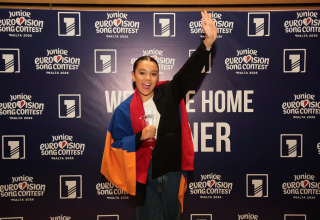
How Nare was welcomed at Zvartnots Airport after winning the Junior Eurovision Song Contest: the singer's emotions

NEWS.am STYLE
NEWS.am STYLE

NEWS.am STYLE

NEWS.am STYLE

NEWS.am STYLE

NEWS.am STYLE
NEWS.am STYLE

NEWS.am STYLE

NEWS.am STYLE
NEWS.am STYLE

The 23rd "Golden Apricot" Yerevan International Film Festival has kicked off

NEWS.am STYLE



Paris Is Losing Its Appeal Among the Wealthy: Unrest Hits Luxury Boutiques and Drives Tourists Away
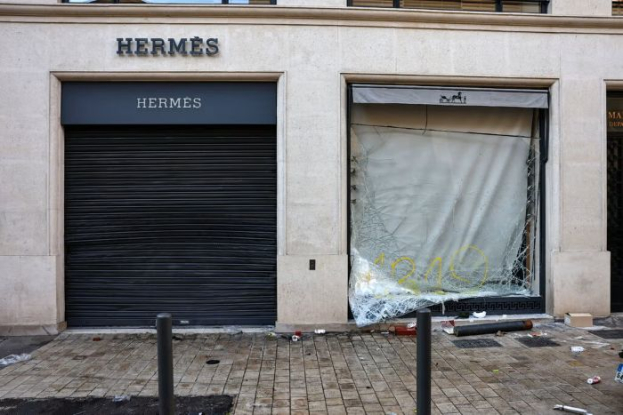
Paris, which for decades has remained one of the world's leading luxury shopping capitals, is facing serious challenges. Following widespread unrest, tourist numbers have fallen, the windows of prestigious boutiques have been boarded up, and wealthy shoppers have begun redirecting their trips to London and Milan. For the luxury industry, which is struggling to return to growth after several difficult years, the crisis has come at the worst possible time — in the middle of the crucial pre-Christmas shopping season, The Business of Fashion reports.
Six weeks have passed since France was swept by a wave of violent protests. Although the immediate threat of large-scale clashes has subsided, the aftermath of the unrest remains visible along the French capital's main shopping streets. Closed and damaged stores serve as reminders of a period of instability that could continue to undermine Paris's appeal to affluent tourists for some time.
The upcoming presidential election, scheduled for April and May, is adding to the uncertainty. Candidates from both the far right and far left are expected to play prominent roles in an increasingly polarized campaign, raising concerns about further social unrest.
The situation is particularly sensitive for luxury brands. A substantial share of global sales of high-end goods is concentrated in a handful of major cities, and Paris is among the most important. According to a 2023 Bernstein study, the world's 25 largest cities account for nearly 40% of all luxury boutiques. Paris ranks third, behind Tokyo and Seoul.
According to consulting firm Bain, the French capital accounted for 3.8% of global personal luxury spending last year, trailing only New York and London.
However, images of looted boutiques along the city's famous shopping streets have damaged its reputation. The luxury industry was already struggling to recover after several difficult years, and brands must now work to regain the confidence of international shoppers.
“In the short term, Paris is more vulnerable than many other cities because its luxury market is heavily dependent on international tourists, who come not only to shop but also to experience the city and visit its flagship boutiques. When travelers begin to have doubts, Paris feels the impact almost immediately,” said Chiara Piancatelli, a professor of luxury marketing at SDA Bocconi School of Management.
The decline in tourist numbers is already affecting the hotel industry. According to CoStar, an international real estate analytics company, hotel occupancy in Paris fell by approximately 10% in November compared with the same period last year. This interrupted several months of growth, with occupancy rates having risen every month beforehand, particularly sharply between August and October.
Bernstein analysts estimate that, assuming no further large-scale protests, the unrest may have reduced Hermès' tourist-related revenue by around 10% in October and 20% in November. Spending by international visitors is expected to remain at previous levels in December, according to their forecast.
Personal shoppers and advisers who work with wealthy clients are also feeling the effects. Isabelle Bazzani, who helps affluent customers purchase clothing and accessories from luxury labels, said many of her international clients had canceled their trips to Paris and opted for London or Milan instead.
“Even now, when things have calmed down a little, clients are still asking what is happening in the city and how much it has recovered since the height of the protests,” she said.
In response, brands are increasingly taking their services directly to customers. They are arranging private fittings in hotels and clients' homes, as well as sending items to their residences for try-ons. Bazzani nevertheless believes that Paris's reputation has not suffered irreparable damage and that wealthy travelers still want to visit the French capital.
Olivier Abtan, managing director at AlixPartners and head of the firm's French business, also does not expect serious long-term consequences if the situation remains calm.
“I don't think people will suddenly decide not to come to Paris for Christmas simply because there was unrest there two months ago,” he said.
However, the problem extends well beyond a temporary decline in tourist numbers. The unrest has once again raised questions about conspicuous consumption and social inequality at a time when the cost of living continues to rise.
According to Bain estimates, the luxury industry has lost another 15 million customers this year alone. Over the past five years, the total number of consumers who have stopped buying luxury goods has reached 85 million. Middle-class shoppers are increasingly cutting back and reconsidering their spending on expensive purchases.
Piancatelli believes that the most serious long-term consequences could affect aspiring luxury consumers — those who are still trying to gain access to the world of high-end brands.
“The main long-term impact of the unrest concerns aspirational consumers, who were already under financial pressure. The rising cost of living, one of the central causes of the protests, is also forcing this group to cut back on spending. Images of looted boutiques give them yet another reason to question whether such a purchase is appropriate, particularly if they were already unsure whether they needed it,” the expert explained.
Paris has experienced similar upheaval before. In 2018 and 2019, the Yellow Vest movement, which emerged in response to plans to increase fuel taxes, sparked mass protests and clashes. Demonstrators repeatedly targeted luxury boutiques, restaurants and banks in the capital. Sales at some high-end brands fell by more than a third. However, tourist numbers had recovered by the summer of 2019.
Luxury Flagships Under Threat
Despite the unrest and political uncertainty, luxury brands are not abandoning their investments in Paris. New and renovated flagship stores remain an important part of their strategy. One example is Gucci's new boutique on Avenue Montaigne, one of the French capital's most prestigious shopping streets.
However, the current crisis is casting doubt on one of the industry's biggest trends of recent years: the transformation of retail stores into tourist attractions in their own right.
“The unrest challenges one of the most prominent trends of recent years — retail as a destination. Brands have invested in open, spectacular spaces featuring cafés, exhibitions and restaurants, attracting visitors not just to shop but to enjoy an experience. Boarded-up windows and a visible security presence send precisely the opposite message. The main challenge is to protect the store without losing the welcoming atmosphere that makes it worth visiting,” Piancatelli said.
This week, some stores damaged during the first wave of protests were still closed for repairs. Others had removed the wooden boards covering their windows during a lull in the unrest, only to board them up again the following weekends amid fears of further clashes.
Meanwhile, Avenue Montaigne has already been decorated for Christmas. Dior's boutiques feature stars, clovers and toy soldiers, while Saint Laurent has adorned its façade with white lights and greenery arranged in the shape of a giant letter Y.
Yet the festive decorations have done little to restore the street's usual energy. Boutiques are far from crowded, and the queues behind velvet ropes that were once a familiar sight have become rare.
Paris is also facing growing competition from other European luxury hubs, particularly London and Milan. The latter, despite experiencing smaller-scale protests last month, is strengthening its position with the opening of new flagship stores. The city is also attracting wealthy international residents through its favorable flat-tax regime.
Paris is unlikely to lose its status as one of the world's leading cultural capitals and a major showcase for luxury. However, as The Business of Fashion points out, it may be some time before political and social instability fades and crowds of affluent travelers return to the French capital's famous shopping streets.
Follow NEWS.am STYLE on Facebook, Twitter and Instagram

- Paris Is Losing Its Appeal Among the Wealthy: Unrest Hits Luxury Boutiques and Drives Tourists Away Paris, which for decades has remained one of the world's leading luxury shopping capitals, is facing serious challenges. Following widespread unrest, tourist numbers have fallen, the windows of prestigious boutiques have been boarded up, and wealthy shoppers have begun redirecting their trips to London and Milan. For the luxury industry, which is struggling to return to growth after several difficult years, the crisis has come at the worst possible time — in the middle of the crucial pre-Christmas shopping season, The Business of Fashion reports...
- “Too Old to Lose Weight”: Overweight Leopard Bao Bao Becomes a Social Media Star and Is Given a Lifetime Exemption From Dieting A 19-year-old leopard named Pan Bao Bao from a zoo in the Chinese city of Panzhihua has become an internet sensation thanks to his impressive size and rounded belly. Social media users have dubbed him a body-positivity icon and compared him to the chubby cheetah Clawhauser from Disney’s Zootopia. But zoo staff have now made an unexpected decision: they will no longer try to make him lose weight, as shedding pounds at his advanced age could put his health at risk...
- Champagne, £3,000 Dior Bags and Theft from Lovers: Glamorous Con Artist Spent Years Swindling London’s Elite She turned up at London's trendiest venues with perfectly styled hair, expensive Dior and Chanel handbags, and the air of a woman who never needed to check the prices on a menu. Wealthy men competed to buy her champagne, while affluent female friends trusted her with their bank cards. But behind the image of a glamorous socialite, it emerged, was a woman accused of multiple thefts and financial scams...
- The Billionaires’ Boys’ Club: Why Jensen Huang Was Forgiven for Something That Would Have Gotten a Woman Fired Jensen Huang’s return as CEO of Nvidia has become a striking example of how a different set of rules appears to apply to powerful men in the worlds of technology and politics. While female executives face severe consequences for professional misconduct, billionaires seem able to count on the support of their peers — and even the intervention of the US president. That is the conclusion reached by Emma Hinchliffe, editor of Fortune’s Most Powerful Women section....
- George Harrison’s Wedding Coat to Fetch Up to $500,000 at Auction: He Wore It During The Beatles’ Iconic Rooftop Concert George Harrison’s famous black coat, worn by the musician when he married model Pattie Boyd and, three years later, during The Beatles’ legendary rooftop performance in London, is set to go under the hammer at Sotheby’s. The unique piece of music and fashion history is expected to fetch up to $500,000...




-
19:27, November 27
Paris Is Losing Its Appeal Among the Wealthy: Unrest Hits Luxury Boutiques and Drives Tourists Away -
16:28, November 27
Vintage Perfumes Are Back in Fashion: Five Iconic Fragrances That Make Perfect New Year Gifts -
15:46, November 27
Kanye West and Bianca Censori Are Set to Renew Their Wedding Vows -
15:21, November 27
“Too Old to Lose Weight”: Overweight Leopard Bao Bao Becomes a Social Media Star and Is Given a Lifetime Exemption From Dieting -
14:33, November 27
Alec Baldwin Claims US Authorities May Have Been Behind John F. Kennedy’s Assassination -
14:15, November 27
Brad Pitt Is Happy With Ines de Ramon but Has No Plans to Get Married -
13:12, November 27
Legendary Supermodel Veruschka Dies at 87: Icon of the 1960s Fashion Scene Passes Away -
12:44, November 27
Arnold Schwarzenegger Shops for Christmas Gifts All Year Round: The Actor Personally Picks Out Presents for His Children, Grandchildren and Girlfriend -
12:19, November 27
Travis Barker Opens Up About Married Life With Kourtney Kardashian: “I Barely See Her” -
11:38, November 27
Gérard Depardieu to Face Rape Trial Again as Actor Faces Up to 20 Years in Prison -
11:18, November 27
Five Years Without Sex and a “Lavender Marriage”: Khloe Kardashian Considers Marrying a Gay Man -
10:30, November 27
“The French President Is the Third Wheel”: Emmanuel Macron Unexpectedly Crashes Katy Perry and Justin Trudeau’s Romantic Selfie
All materials

@NEWSam_STYLE
@NEWSam_STYLE
- Archive