


style.news.am
style.news.am
NEWS.am STYLE

NEWS.am STYLE
NEWS.am STYLE
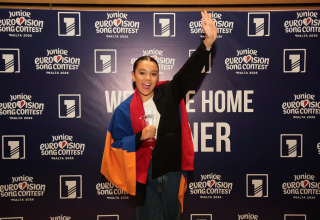
How Nare was welcomed at Zvartnots Airport after winning the Junior Eurovision Song Contest: the singer's emotions
NEWS.am STYLE
NEWS.am STYLE
NEWS.am STYLE

NEWS.am STYLE

NEWS.am STYLE

NEWS.am STYLE
NEWS.am STYLE

NEWS.am STYLE

NEWS.am STYLE
NEWS.am STYLE

The 23rd "Golden Apricot" Yerevan International Film Festival has kicked off

NEWS.am STYLE


Louis Vuitton at a Crossroads: Why the World's Most Valuable Luxury Brand Is Losing Its Appeal
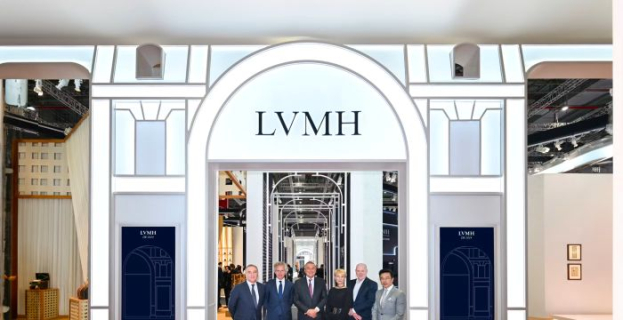
Louis Vuitton, the largest and most profitable brand in the global luxury industry, is experiencing its longest slowdown in more than 35 years. Despite its extraordinary brand recognition, iconic products and annual revenue approaching €20 billion, the fashion house has yet to return to sustained growth. To recapture consumers' attention, it may need to rethink not only its product range and marketing strategy but also its creative leadership.
As Robert Williams, The Business of Fashion's chief correspondent covering the luxury industry, observes, Louis Vuitton has reached a pivotal moment in its history. The brand still has all the resources needed to regain its momentum, but its previous formula for success can no longer guarantee growth.
The situation is further complicated by conditions in Paris. Ahead of the Christmas shopping season, the French capital has yet to regain its usual retail momentum following a series of robberies and acts of vandalism targeting luxury boutiques. Fears of further unrest are weighing on fourth-quarter sales forecasts.
A Giant at a Crossroads
On the one hand, Louis Vuitton has almost everything it needs to overcome its current downturn. It is one of the world's most recognizable and admired brands, with enormous financial resources, iconic products and virtually limitless room for expansion through its historic association with travel, a theme that has always been central to its identity.
Even after three years of declining sales, the brand's annual revenue is approaching €20 billion. Louis Vuitton also operates primarily through its own retail network and sells its products at full price. This model allows the company to maintain direct control over pricing, its product range and the way the brand is presented to customers in stores. The growing resale and vintage market is an exception, as the company has far less influence over that segment.
On the other hand, a return to growth may require significant changes to the way the business is organized, as well as to its product offering and brand positioning.
For many years, Louis Vuitton managed to maintain a consistent and instantly recognizable identity that was not dependent on the individual vision of a particular creative director. But today's fashion market values more than brand recognition: it also demands creative conviction. Collections developed by large teams of merchandising and marketing specialists no longer generate the same emotional response.
In Williams's view, the problem does not necessarily lie with the current creative leadership. Rather, Louis Vuitton needs a new creative direction — a distinctive, unified vision capable of bringing all areas of the brand together and making its products feel more unique, recognizable and emotionally resonant.
Who Could Take the Helm at Louis Vuitton?
Speculation has recently intensified over a possible senior creative appointment for Hedi Slimane at LVMH's largest brand. Williams says he has been unable to confirm whether the designer and the French luxury group have held talks. However, according to him, several credible sources suggest that some contact may have taken place, despite LVMH's official denial. Other sources insist that Slimane and his inner circle would never allow such information to leak.
Other names regularly mentioned in connection with potential changes at the top include Jonathan Anderson and Michael Rider, both of whom have already established themselves as strong creative leaders within the LVMH group.
Notably, Nicolas Ghesquière, Louis Vuitton's current creative director of womenswear, still has two years remaining on his contract. Nevertheless, the scale of speculation surrounding possible changes highlights the market's keen interest in a new creative leader.
In 2023, Louis Vuitton appointed musician, producer and entrepreneur Pharrell Williams to lead its menswear division. The move allowed the brand to continue the cultural legacy of Virgil Abloh, who had a profound influence on contemporary fashion. However, Williams argues, it also illustrated just how far the company had moved away from a model in which collections are shaped by a cohesive and authoritative designer's vision.
Another example is the brand's recent collaboration with the Keith Haring Foundation. Officially, the project was linked to Ghesquière's 2027 Cruise collection, scheduled to be presented in New York. Yet Williams believes the collaboration feels somewhat contrived and not entirely organic to the brand.
Has Louis Vuitton Reached Its Peak?
A fresh, more cohesive vision for design and brand positioning could restore Louis Vuitton's appeal and cultural influence. But how quickly would creative changes translate into improved financial performance?
The fashion industry has long operated on the assumption that companies must grow constantly or risk losing their position. However, recent years have shown that a strategy focused on endlessly expanding market share cannot guarantee Louis Vuitton sustainable success.
With operating margins approaching 50%, the brand has sufficient resources to take its time rather than rush into a relentless pursuit of higher revenue. It can now focus on renewing the foundations of its business: strengthening its unified identity, developing its core travel proposition, creating relevant and desirable products, and refining its pricing strategy. Only then should it return to growth through higher sales volumes and price increases.
The first steps are already visible. Louis Vuitton is once again placing travel at the center of its advertising campaigns and reassessing its product range. In menswear, the brand has refreshed its silhouettes through the LV Trunk Edition capsule collection. In womenswear, by contrast, it is promoting more understated handbag designs with less reliance on its signature monogram print, including the LV Express line.
Perhaps the future of Louis Vuitton lies not in becoming even bigger, but in rediscovering what makes it truly special. And that approach — prioritizing desirability and a distinctive identity over endless expansion — may prove to be the brand's most compelling way forward as it confronts the possibility that it has reached its peak.
Follow NEWS.am STYLE on Facebook, Twitter and Instagram

- Louis Vuitton at a Crossroads: Why the World's Most Valuable Luxury Brand Is Losing Its Appeal As Robert Williams, The Business of Fashion's chief correspondent covering the luxury industry, observes, Louis Vuitton has reached a pivotal moment in its history. The brand still has all the resources needed to regain its momentum, but its previous formula for success can no longer guarantee growth...
- Luxury in the Trash: Why Designers Are Selling Ripped Jeans and Dirty Shoes for Thousands of Dollars In 2026, the world of high fashion is undergoing an unexpected shift. Instead of immaculate silhouettes and perfectly polished aesthetics, designers are offering clothes marked by scuffs, stains, tears and signs of wear. What was once considered a defect or a sign of carelessness is now being celebrated as a style statement — and even a luxury in its own right, Elle reports...
- Ferrari Has Turned Car Passion into Luxury Fashion: Fans Are Now Paying $9,000 for Handbags Ferrari is turning a passion for cars into a new fashion obsession. Fans of the legendary marque are now snapping up not only sports cars priced from $250,000 but also $9,000 handbags, $3,000 leather jackets and other luxury items bearing its iconic Prancing Horse logo, The Wall Street Journal reports...
- Loewe Turns Tim Burton’s “The Nightmare Before Christmas” Into a Collection of Luxury Accessories A dark fairy tale beloved by generations is getting a new lease on life in the world of high fashion. Spanish luxury house Loewe has teamed up with Disney and filmmaker Tim Burton to unveil a holiday collection inspired by the 1993 animated classic The Nightmare Before Christmas...
- Max Mara Launches a New Everyday Fashion Brand With Prices Reaching $465 Italian fashion powerhouse Max Mara Fashion Group is expanding its empire with the launch of a new label, M-M For Mondays and More, designed to rethink the everyday wardrobe. Rather than focusing on outfits for special occasions, the brand offers understated pieces intended to work just as well at the office, on a casual outing or at an evening gathering...




-
21:30, November 27
Louis Vuitton at a Crossroads: Why the World's Most Valuable Luxury Brand Is Losing Its Appeal -
20:21, November 27
Luxury in the Trash: Why Designers Are Selling Ripped Jeans and Dirty Shoes for Thousands of Dollars -
19:27, November 27
Paris Is Losing Its Appeal Among the Wealthy: Unrest Hits Luxury Boutiques and Drives Tourists Away -
16:28, November 27
Vintage Perfumes Are Back in Fashion: Five Iconic Fragrances That Make Perfect New Year Gifts -
15:46, November 27
Kanye West and Bianca Censori Are Set to Renew Their Wedding Vows -
15:21, November 27
“Too Old to Lose Weight”: Overweight Leopard Bao Bao Becomes a Social Media Star and Is Given a Lifetime Exemption From Dieting -
14:33, November 27
Alec Baldwin Claims US Authorities May Have Been Behind John F. Kennedy’s Assassination -
14:15, November 27
Brad Pitt Is Happy With Ines de Ramon but Has No Plans to Get Married -
13:12, November 27
Legendary Supermodel Veruschka Dies at 87: Icon of the 1960s Fashion Scene Passes Away -
12:44, November 27
Arnold Schwarzenegger Shops for Christmas Gifts All Year Round: The Actor Personally Picks Out Presents for His Children, Grandchildren and Girlfriend -
12:19, November 27
Travis Barker Opens Up About Married Life With Kourtney Kardashian: “I Barely See Her” -
11:38, November 27
Gérard Depardieu to Face Rape Trial Again as Actor Faces Up to 20 Years in Prison
All materials

@NEWSam_STYLE
@NEWSam_STYLE
- Archive