


NEWS.am STYLE

NEWS.am STYLE

NEWS.am STYLE

NEWS.am STYLE
NEWS.am STYLE

NEWS.am STYLE
NEWS.am STYLE

NEWS.am STYLE

The 23rd "Golden Apricot" Yerevan International Film Festival has kicked off

NEWS.am STYLE

NEWS.am STYLE

NEWS.am STYLE
NEWS.am STYLE

Nikos Vertis to perform in Armenia for the 3rd time at the invitation of “ACVA BUILDINGS”
NEWS.am STYLE

NEWS.am STYLE

NEWS.am STYLE
NEWS.am STYLE


Skunder Boghossian: Armenian painter who influenced Ethiopia art (PHOTOS)
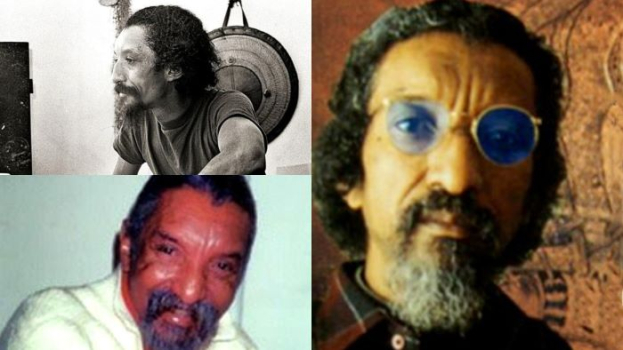
May 4 marks 20 years since the death of a painter of Ethiopian and Armenian descent, Alexander “Skunder” Boghossian.
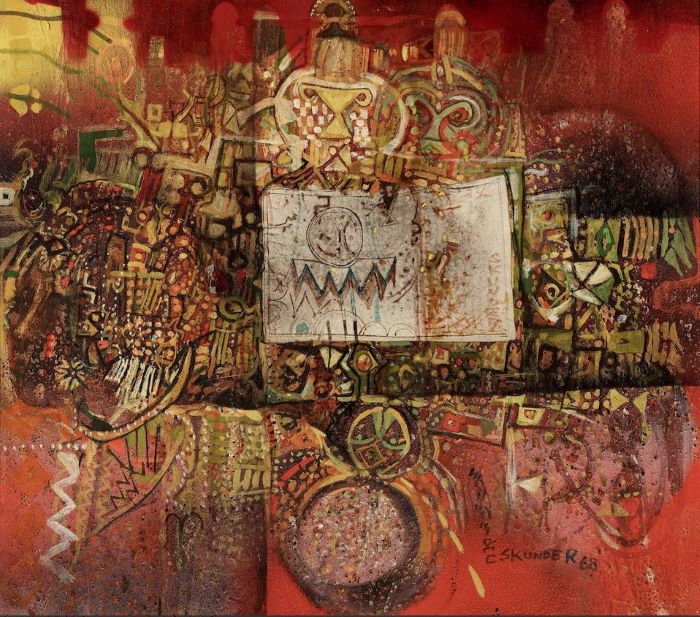
Skunder was one of Ethiopia’s best-known contemporary artists, and his work was exhibited internationally. For several decades, his art and style have defined modern Ethiopian painting. He was the recipient of many awards in Europe, Africa, and the United States, and was the first Ethiopian artist to have his work purchased by the Museum of Modern Art in New York. On the anniversary of his death, Ethiopia Observer provided a brief highlight of Skunder Boghossian’s life and legacy.
Born in Ethiopian capital Addis Ababa in 1937 to an Ethiopian mother and an Armenian father, Kosrof Boghossian, who was a colonel in the Imperial Body Guard of Haile Selassie, Skunder spent his childhood in Addis Ababa and his young adulthood in London, studying at Saint Martin’s School and Slade School of Fine Arts and in Paris studying and teaching at Grande Chaumiere.
The artist’s real name was Eskunder (Alexander) Boghossian, but he used the shortened form of the name, Skunder, which became his name.
Where do you find inspiration? Some look to the supernatural
— The Metropolitan Museum of Art (@metmuseum) January 20, 2022
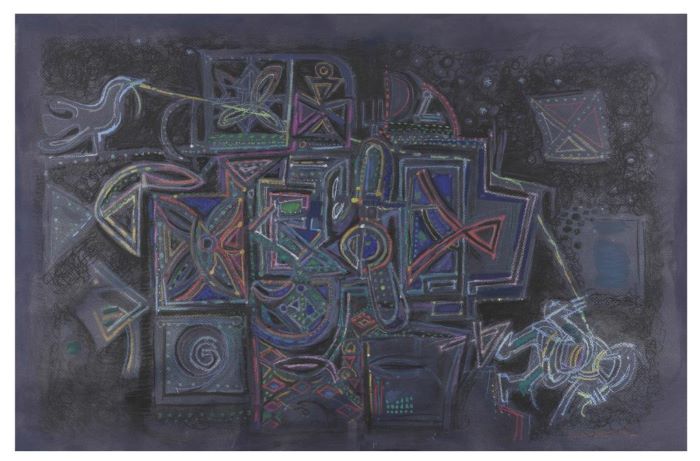
Skunder Boghossian discovered #Surrealism while living in Paris and London, and through the cultural leaders of the Black self-affirmation movements of Négritude and Pan-Africanism.
© 2022 Skunder Boghossian pic.twitter.com/wa58exJ9Wp
Although the artist who died two decades ago taught at the School of Fine Arts in Addis Ababa for only three years (1966–1969), he exercised an immense influence both on his peers and younger generations of artists. According to the Dictionary of African Biography (2012) edited by Henry Louis Gates and Emmanuel Akyeampong, Skunder “enjoyed experimenting with a variety of materials and techniques and had in common with his Surrealist colleagues an interest in the subconscious mind, dreams, hallucinations, and creative flights of fancy occasioned by intentionally orchestrated “accidents” on the canvas or other painting surface.”
The New York Times described his work as combining “European media like oil paint, crayon and ink with bark and animal skins.” “Often hallucinatory in quality and filled with intricately detailed figures and patterning, his work was influenced by Paul Klee, Max Ernst and the Cuban artist Wifredo Lam, but more strongly by Coptic and West African art,” the Times said in its May 18, 2003 obituary of the artist.
One of the most heartfelt tributes came from Elizabeth W. Giorgis, the former director of the Institute of Ethiopian Studies and the dean of the College of Performing and Visual Art of Addis Ababa University. In her seminal book Modernist Art in Ethiopia, she renders a personal journey of discovery with this artistic figure.
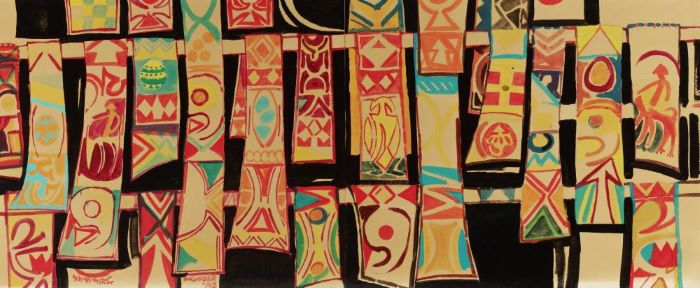
“I remember the first time I met Skunder in 1996, when I presumptuously made an unsolicited visit to his studio space (which was also his home) in Washington DC. Music was blaring and the sweet aroma of Ethiopian incense besieged the air. We listened to Ethiopian Orthodox chants (teslote etan) at first, followed by Coltrane and music from Mali. Strangely enough, the selections seemed to correspond as complementing melodies, an impression Skunder reinforced by attributing the connections of each number to every other one. For him, the cohesion between the jazz lyrics of the African American, the melodious chant of the Ethiopian Orthodox Church, and the rhythmic tune of the singer from Mali were all part of a natural reality. Each contained the other. He told me then that all his works were a ‘perpetual celebration of the varieties of blackness,’” Giorgis wrote.
Follow NEWS.am STYLE on Facebook, Twitter and Instagram

- How to Preserve the Taste of Home on the Other Side of the World: French Publisher to Release Siblings Zarzavadjian’s Book on Armenian Diaspora Cuisine From Argentina and Lebanon to Australia and Japan, Armenian cuisine has long lived far beyond Armenia’s borders, evolving under the influence of new countries, ingredients and family stories...
- Mark Zuckerberg Buys 19th-Century Irish Castle for Tens of Millions of Dollars Meta founder Mark Zuckerberg and his wife, Priscilla Chan, have purchased a Gothic castle in Ireland...
- There’s No Place Like Home: The Human Stories Behind Artsakh’s Tragedy Told in New Documentary Premiered in Yerevan “There’s no place like home” is the message at the heart of Diana Madison’s documentary, a painful retrospective of Artsakh, lost after the 44-day war...
- From Refugee to Billionaire: How Alex Manoogian Achieved the American Dream With Just $50 Alex Manoogian's story reads more like a Hollywood screenplay than a real-life biography...
- "A Rendezvous with Simon Abkarian": A Conversation About Cinema, Memory, and National Identity As part of the 23rd Golden Apricot International Film Festival, AGBU Armenia hosted "A Rendezvous with Simon Abkarian," a special conversation with the acclaimed French-Armenian actor...




-
23:01, October 15
Russell Brand Is a ‘Ruthless Sexual Predator’ Who Wanted to Sleep With 5,000 Women, Court Hears -
22:17, October 15
Diamonds, Colored Gemstones and Gold: Patek Philippe Reimagines Women’s Watchmaking Classics -
21:24, October 15
Gucci and Louis Vuitton Have Gone Too Far: Shoppers Are Flocking to Zara and Uniqlo -
20:30, October 15
At the Crossroads of Ambition and Commerce: A Look at Yerevan Fashion Week 2026 Against the Backdrop of Global Fashion -
19:19, October 15
Football Coach Goes Viral for Trying Not to Look at Sports Reporter’s Cleavage -
16:23, October 15
‘They Are Demons Disguised as Angels’: Former NASA Astronaut Claims UFOs Are Trying to Lead Humanity Away From the Truth -
15:16, October 15
‘He’s the Best Boss’: Former White House Press Secretary Reveals Trump’s Unexpected Side -
14:42, October 15
Jennifer Aniston Accused of a Humiliating Prank: Director Claims Actress Gifted Her a Rhinestone-Covered Dildo -
14:21, October 15
Women’s ‘Nighttime Erections’: Bryan Johnson’s Girlfriend Uses $15,700 ‘Techno-Tampon’ -
13:19, October 15
‘Disastrous Nonsense’: Fans Slam Trailer for Greta Gerwig’s New ‘Narnia’ Film
-
12:36, October 15
Celine Dion Becomes a Barbie Doll: Her Iconic 1998 Oscars Look Recreated With a ‘Titanic’-Inspired Necklace -
12:13, October 15
Victoria Beckham Takes a Tequila Shot on Live TV and Jokes About David’s ‘Big Cucumber’
All materials

@NEWSam_STYLE
@NEWSam_STYLE
- Archive