



NEWS.am STYLE

NEWS.am STYLE

NEWS.am STYLE

NEWS.am STYLE
NEWS.am STYLE

NEWS.am STYLE

NEWS.am STYLE

NEWS.am STYLE

The 23rd "Golden Apricot" Yerevan International Film Festival has kicked off

NEWS.am STYLE

NEWS.am STYLE

NEWS.am STYLE

NEWS.am STYLE

Nikos Vertis to perform in Armenia for the 3rd time at the invitation of “ACVA BUILDINGS”

NEWS.am STYLE

NEWS.am STYLE

NEWS.am STYLE

NEWS.am STYLE




Harpers: Armenia’s thriving wine industry faces uphill battle to establish itself on world stage
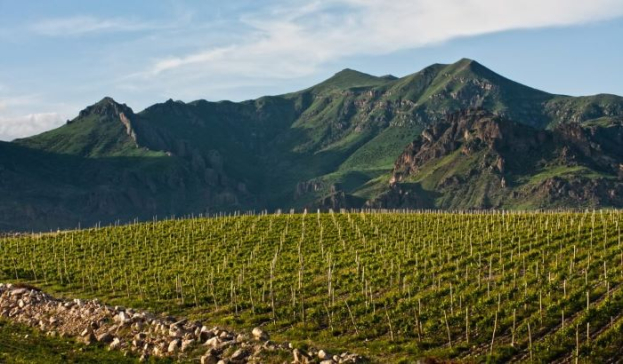
Armenia has a thriving wine industry, but faces an uphill battle to establish itself on the world stage, Jacopo Mazzeo wrote in his article for Harpers.
“The Vayots Dzor [Province of Armenia] is a must-visit region for any wine lover. Winding roads ascend into the region, revealing a tapestry of undulating hills and soaring peaks reaching up to 1,800 metres, the canopies of its vineyards punctuating the otherwise rugged crags, cloaked in hues of earthy greys and muted browns that dominate the landscape. It’s in this stunningly beautiful region that, just over a decade ago, archaeologists unearthed an exceptionally well-preserved winery, proving that humans were making wine here as early as 6,100 years ago.
Despite such rich winemaking heritage, Armenia is still relatively unknown to the British wine industry, especially when compared to neighbouring Georgia. But this isn’t incidental. During Soviet rule, wine production was assigned to Georgia, leaving brandy making responsibilities to Armenia. By the time the country had gained independence from the USSR in the 1990s, it had lost much of its historical winemaking expertise. In recent years however, Armenia’s wine sector experienced a remarkable resurgence thanks to the collective efforts, substantial investments and patriotic enthusiasm of its abundant diaspora and migrant community – a group that substantially exceeds the Armenian population residing within its borders.
Wine production has surged by over 68% since 2016, reaching an impressive 12,641hl in 2022. The sector now comprises 161 registered wine companie[s] and counting, as nearly 100 entrepreneurs joined the game in the past two years. Such a noticeable growth in production aligns with a significant increase in domestic wine consumption, which rose by an impressive 110% over six years – although, admittedly, by a modest base of 2 litres per capita annually. Over the same period, exports have increased substantially too, by 150% in volume and nearly 200% in value, climbing from £4.7m to a noteworthy £13.8m.
The Armenian wine sector’s dynamic nature is undeniably playing a key role within such remarkable growth. Indeed, while restarting from scratch might have posed some obstacles, it also injected the sector with a forward-looking attitude more commonly associated with New World regions. Likely aided by a certain regulatory vacuum, Armenia radiates a palpable sense of experimentation, an environment where vinous possibilities seem endless.
Noa winery’s exuberant young winemaker Pavel Vartanyan perfectly encapsulates such an attitude: “The management here pushes me to experiment,” he says. “If you are a painter, people should never take the paintbrush away from you because, unless you keep experimenting, you’ll never get better.”
While exciting, widespread experimentation does have some downsides. The country does have a bunch of signature grapes with enormous potential – the flagship red Areni and white Voskehat, or the teinturier (red flesh and pulp grape) Haghtanak to name a few – but interpretations vary widely. Delicious, delicately perfumed, vibrant, pale Arenis, for instance, coexist with more extracted, powerful reds with noticeable oak character, and simpler, clean, fruit-driven expressions. In competitive export markets such as the UK, such stylistic heterogeneity can pose considerable challenges in conveying a clear regional image to both professionals and consumers.
Additional challenges arise from Armenia’s delicate geopolitical situation. The country is landlocked; two of its four borders, namely Turkey and Azerbaijan, are presently closed; and a third, that with Iran, is of negligible significance. Given Armenian wine’s dependency on imports for all but the grapes themselves, this has a direct impact on pushing wine prices toward the higher end of the scale.
The current geopolitical situation also poses direct obstacles to the development of the Armenian wine industry. Artsakh (Nagorno-Karabakh) was home to the Armenian cooperage industry and hosted numerous wineries too, all of which disappeared when Azerbaijan assumed control in September this year. Stock of good-quality Armenian barriques are running low, and European ones are significantly more expensive. Some winemakers hope that the northern region of Tavush might eventually replace Artsakh as a source for wood and barrels, but should this transition ever occur, it will undoubtedly take time to establish.
Despite the challenges, Armenia’s wine industry is showing positive signs of cultural recovery, a crucial process for establishing its reputation on international markets.
The legacy of decades under Soviet rule took a toll on the craft of karas-making (traditional clay vessels), leaving no artisans with the necessary expertise to craft them. But individual efforts of proactive wineries like Zorah and Tushpa are making significant contributions to salvaging this heritage. Meanwhile, producers such as Voskevaz and Gevorkian are exploring a historical grape-drying technique reminiscent of Italy’s Amarone.
Further positive developments are underway, including a gradual consolidation of Armenia’s still highly fragmented 13,000 ha of vineyards, a deepening understanding of its enviable indigenous ampelographic wealth (some 350 varieties), a rapidly expanding enotourism sector and efforts toward establishing the country’s geographical indication system.
Over time, this positive trajectory is poised to enhance the country’s reputation and increase international awareness of its wines, but right now, the combination of innovative spirit, overall remarkable wine quality, and rich cultural heritage, certainly represent Armenia’s greatest strengths,” Mazzeo added in his article.
Follow NEWS.am STYLE on Facebook, Twitter and Instagram

- 30,000 Bottles of Fine Wine Worth £4 Million Stolen in Italy in Suspected Biggest Winery Heist in the Country’s History Italy has been hit by what is believed to be the biggest winery heist in the country’s history, with a gang of professional thieves making off with around 30,000 bottles of fine wine worth an estimated £4 million...
- Can Garlic Help You Win a Woman Over? Scientists Explore How Food Affects Dating Before a first date, it is worth thinking about more than just what to wear — what you eat may also make a difference. Researchers have found that diet can influence first impressions, affecting everything from skin tone and body odor to facial flushing and even pupil size...
- Private Maldives Island Listed for $72 Million — and Buyers Can Pay in Cryptocurrency An extraordinary piece of luxury real estate has hit the market in the Maldives: a private island featuring four fully furnished villas, its own beach and a coral reef. Part of the new Baccarat Maldives resort development, the island is listed for $72 million. What makes the deal particularly unusual is that buyers can pay not only with traditional currency but also with stablecoins — digital assets pegged to the value of the US dollar, Robb Report reports...
- Why Do Billionaires Have So Many Children If They Aren’t Prepared to Raise Them Themselves? Kim Kardashian’s admission that five nannies help care for her four children has sparked an uproar. But among the ultrawealthy, there are far more extreme approaches to parenthood, The Guardian reports...
- Silicon Valley Billionaires Want to Reverse Aging: First Human Trial Offers Encouraging Signs Jeff Bezos, Peter Thiel, Yuri Milner and Sam Altman are investing in one of the most ambitious areas of modern biotechnology: cellular reprogramming. Scientists hope the technology will allow aging cells to return to a more youthful state and, eventually, help combat a wide range of age-related diseases. The first clinical trial of the approach in humans is now underway, and preliminary findings look promising, Business Insider reports...




-
19:19, October 10
Meghan Markle Wants to Flee Prince Harry as Reports Claim Their Marriage Is on the Brink of Collapse -
18:20, October 10
30,000 Bottles of Fine Wine Worth £4 Million Stolen in Italy in Suspected Biggest Winery Heist in the Country’s History -
17:33, October 10
Can Garlic Help You Win a Woman Over? Scientists Explore How Food Affects Dating -
16:30, October 10
Private Maldives Island Listed for $72 Million — and Buyers Can Pay in Cryptocurrency -
15:24, October 10
Donald Trump’s Granddaughter Kai Criticized Over Luxury Apartment and $531 Sephora Haul: ‘Spoiled Heiress’ -
14:14, October 10
Megan Fox Launches Her Own OnlyFans Rival With Subscriptions Starting at $20 a Month -
13:33, October 10
Prince Harry Reportedly Earned $100,000 for Opening Up About Depression and the Death of Princess Diana -
12:17, October 10
“A Victim Who Enjoys Being Stalked”: Trump’s Niece Weighs In on His Unusual Relationship With His Young Aide -
11:22, October 10
“He Saw It as the Death of a Child”: Elon Musk’s Ex-Wife Opens Up About His Reaction to His Daughter’s Transition -
10:30, October 10
Amal Clooney Gets Ahead of the Trends in a Glamorous Gucci Gown -
23:01, October 9
Why Do Billionaires Have So Many Children If They Aren’t Prepared to Raise Them Themselves? -
22:21, October 9
Silicon Valley Billionaires Want to Reverse Aging: First Human Trial Offers Encouraging Signs
All materials

@NEWSam_STYLE
@NEWSam_STYLE
- Archive