


NEWS.am STYLE

NEWS.am STYLE

NEWS.am STYLE

NEWS.am STYLE
NEWS.am STYLE

NEWS.am STYLE

NEWS.am STYLE
NEWS.am STYLE

The 23rd "Golden Apricot" Yerevan International Film Festival has kicked off

NEWS.am STYLE
NEWS.am STYLE

NEWS.am STYLE

NEWS.am STYLE

Nikos Vertis to perform in Armenia for the 3rd time at the invitation of “ACVA BUILDINGS”

NEWS.am STYLE

NEWS.am STYLE

NEWS.am STYLE

NEWS.am STYLE


When the First Lady’s outfit fails the nation: How diplomatic style turns into a misstep

In high-level politics, there is no such thing as neutral clothing. Every official appearance is instantly captured by the media, becomes part of the news cycle, and contributes to the visual identity of a country. This means that every color, hemline, shoulder line, and even the degree of exposed skin is perceived as a diplomatic statement, even if the wearer herself considers it simply personal style or self-expression.
A diplomatic wardrobe is built on principles that are independent of trends or personal whims. Its purpose is not to look fashionable but to uphold the seriousness and stability of the institution of power. At this point, the spouse of a head of state ceases to be a private individual and becomes part of the foreign policy process, where her image continues and visually reinforces the official stance of the country.
Cultural Appropriation: Respect vs. Stylization
The issue of cultural appropriation becomes especially important in this context. In sociology, the term refers to using elements of one culture by members of another without a deep understanding of their history, meaning, or symbolism. In diplomacy, such superficiality can create international embarrassment if the line between respectful borrowing and mere stylization is blurred.
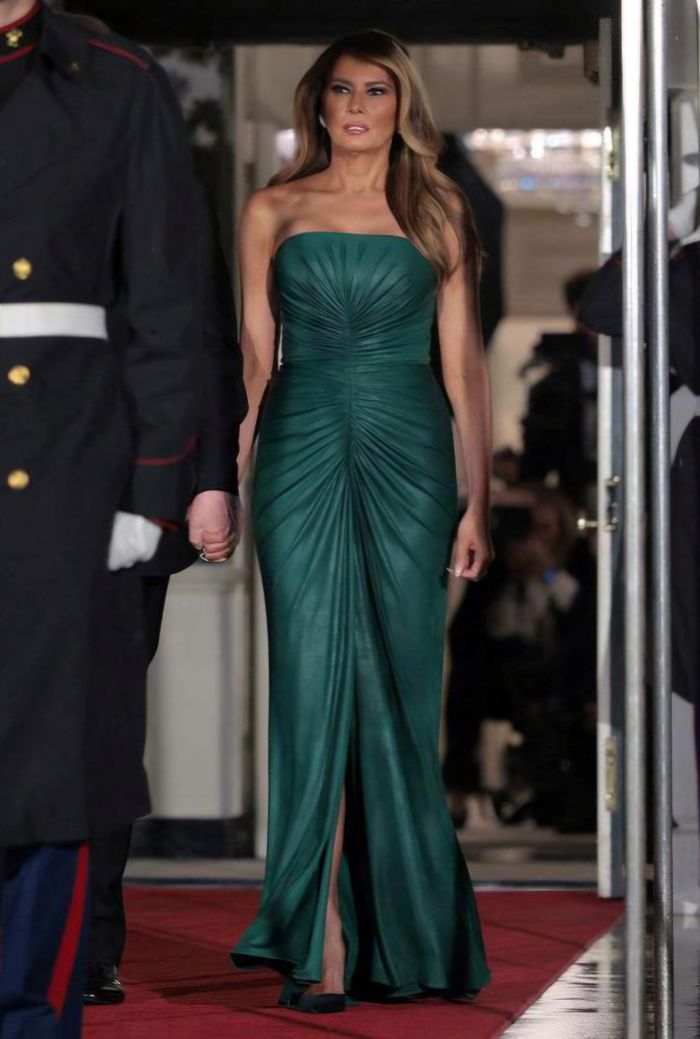
A notable example is Melania Trump at a reception for the Crown Prince of Saudi Arabia. Her emerald Elie Saab gown exemplified how color can function as a diplomatic signal without literally replicating the national costume of the host country. Green is directly associated with the Saudi flag and Islamic tradition, making the choice of shade deliberate and symbolically precise.
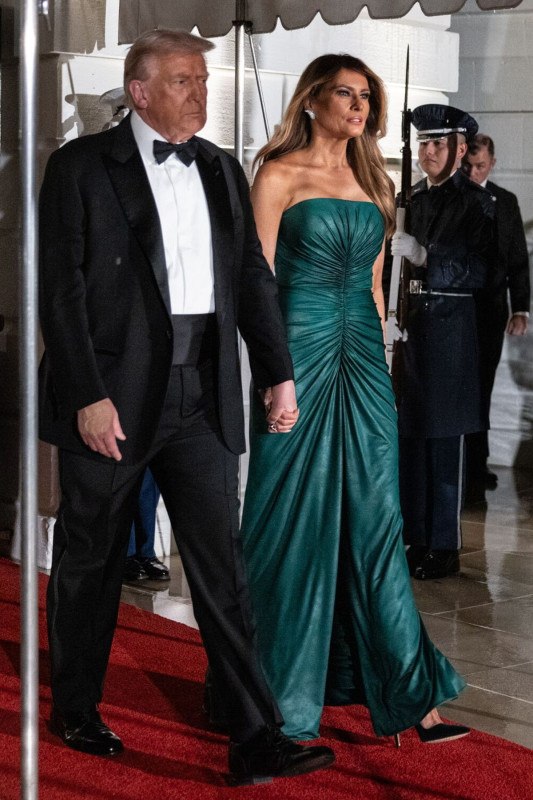
The silhouette, however, remained Western and evening-appropriate, with draping that subtly shaped the figure, minimal accessories that did not distract, and exposed shoulders suitable for a formal dinner — all without breaching protocol. Fashion critics hailed this as a model of conscious “fashion diplomacy,” where a cultural nod is incorporated while maintaining status and formality.

A similar approach was demonstrated by Ursula von der Leyen during her visit to India. A Banarasi silk brocade bandhgala jacket was carefully integrated into a European structured silhouette. The dense fabric, high collar, and closed shoulder lines conveyed formality, while the precise tailoring preserved distance and authority.
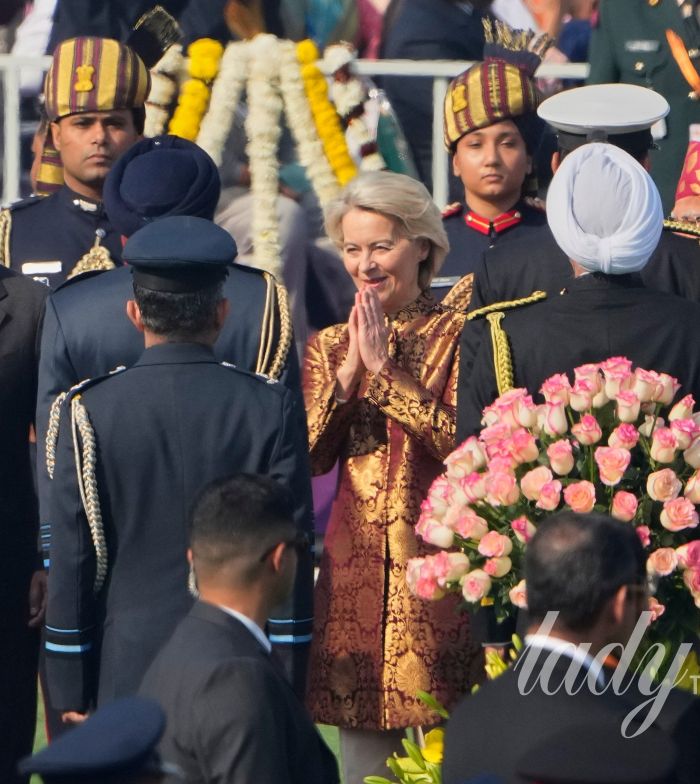
In this case, respect for Indian textile tradition appeared as a thoughtful adaptation, not an attempt to become part of another cultural code. In such instances, the wardrobe functions as a system in which every element serves status and diplomatic purpose, rather than personal whim.
When It Goes Wrong: Anna Akopyan in a White Qipao in China
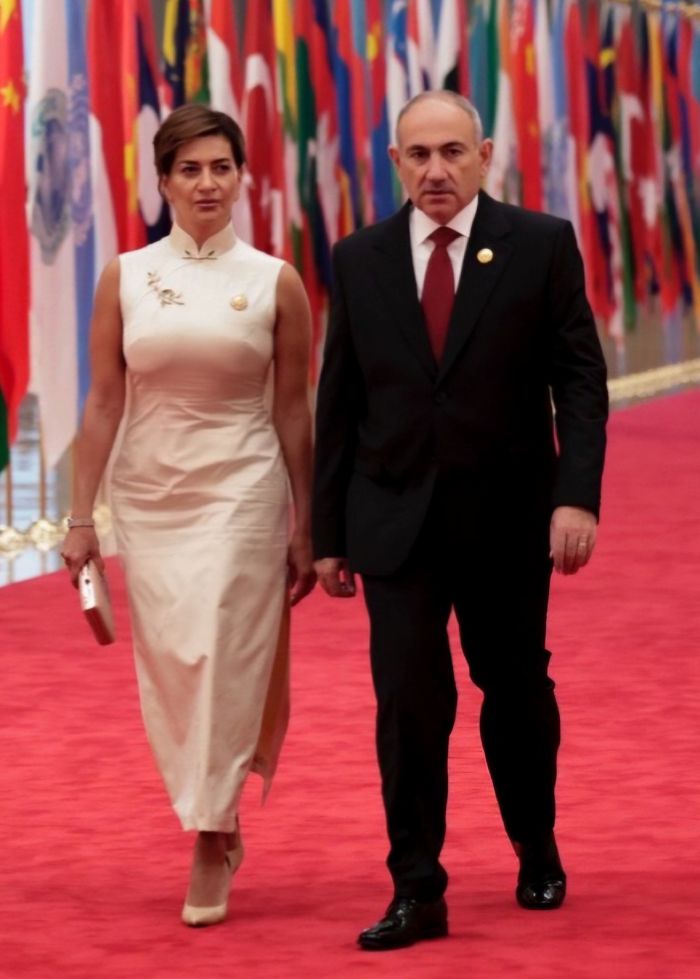
By contrast, Anna Akopyan’s appearance in a white qipao at a ceremony welcoming foreign delegations in China was perceived not as a diplomatic gesture but as a total failure to emulate one. While wearing traditional Chinese attire could theoretically signal respect, international protocol dictates that one does not don the host country’s national costume head to toe. Instead, elements should be carefully incorporated into one’s own formal attire to maintain distance and authority.
Color compounded the problem: white in Chinese culture is associated with mourning, worn by relatives of the deceased and used in ceremonial envelopes at funerals. For celebratory occasions, red historically symbolizes luck. The very possibility of this cultural association arising at a high-level official ceremony already signals poor consideration.
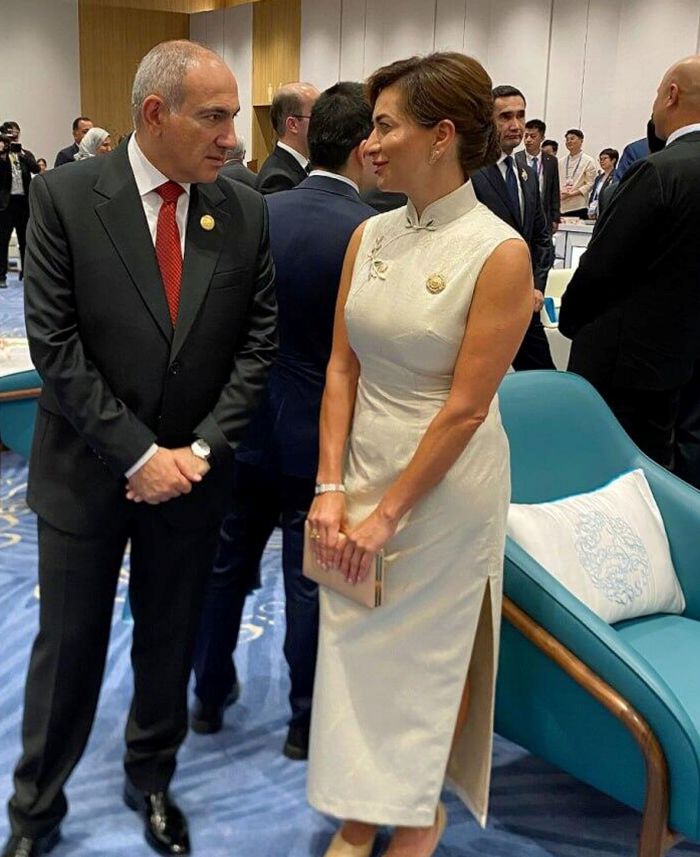
Finally, the cut exacerbated the issue: exposed arms, a figure-accentuating silhouette, and overt body contours provoked ridicule and vulgar commentary. If the goal had been to evoke Chinese cultural elements, a tailored suit with subtle local textile details or a conservative jacket with traditional motifs would have been far more appropriate than this obvious stylistic misstep, which shifted attention from the purpose of the visit to the figure — and the first lady’s undergarments.
State Reception, High School-Level Styling
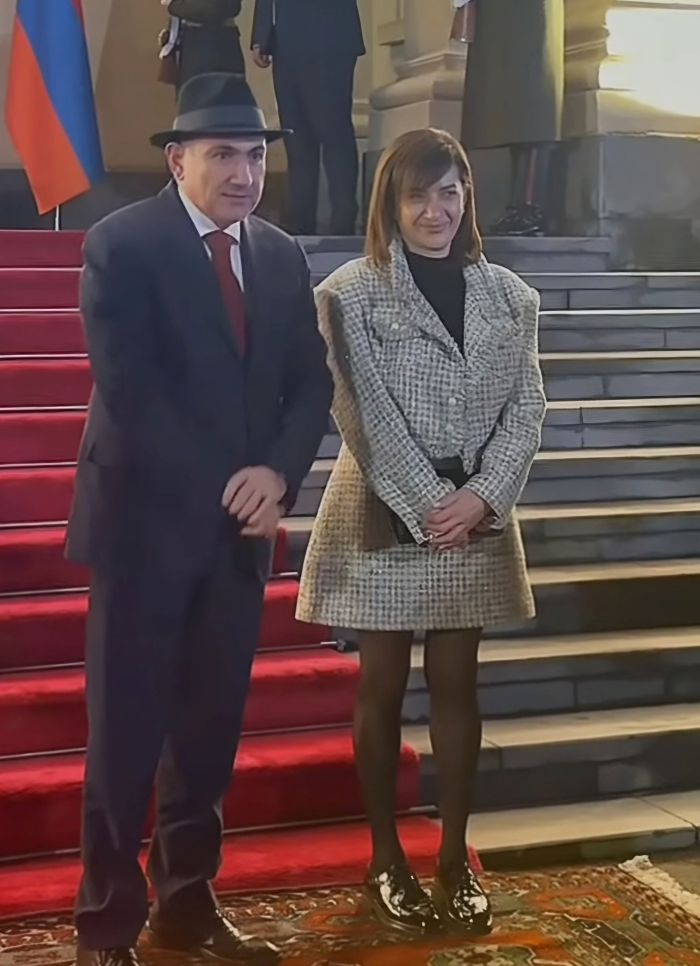
Anna Akopyan’s most recent official outing sparked immediate debate and criticism, and not without reason. The occasion was serious: a visit of the U.S. Vice President with his wife on February 9. Akopyan chose a tweed set, supposedly channeling Chanel, but executed poorly — a mini skirt with patent loafers. The skirt’s length alone violates basic rules for formal daytime events, where knee-length or midi is expected. Flat shoes shorten the vertical line, diminishing a silhouette already lost among prominent, taller guests, which is unacceptable for a diplomatic reception.
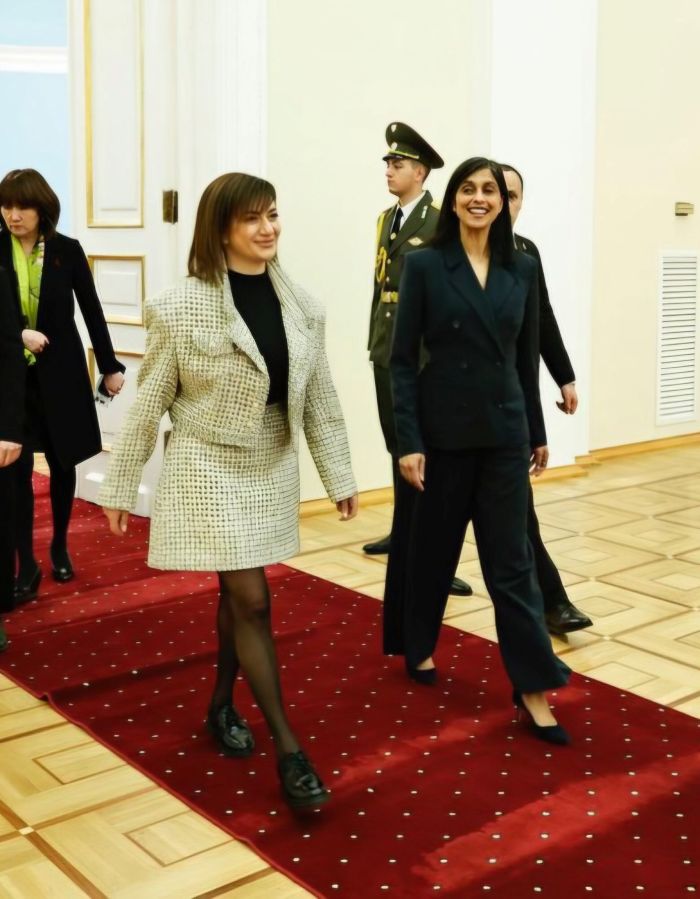
The contrast with Usha Vance was stark: dark, tailored suit, sharp shoulder lines, simple shoes. One side projected classic formality, the other a dangerously oversimplified version.
Business Protocol vs. Casual
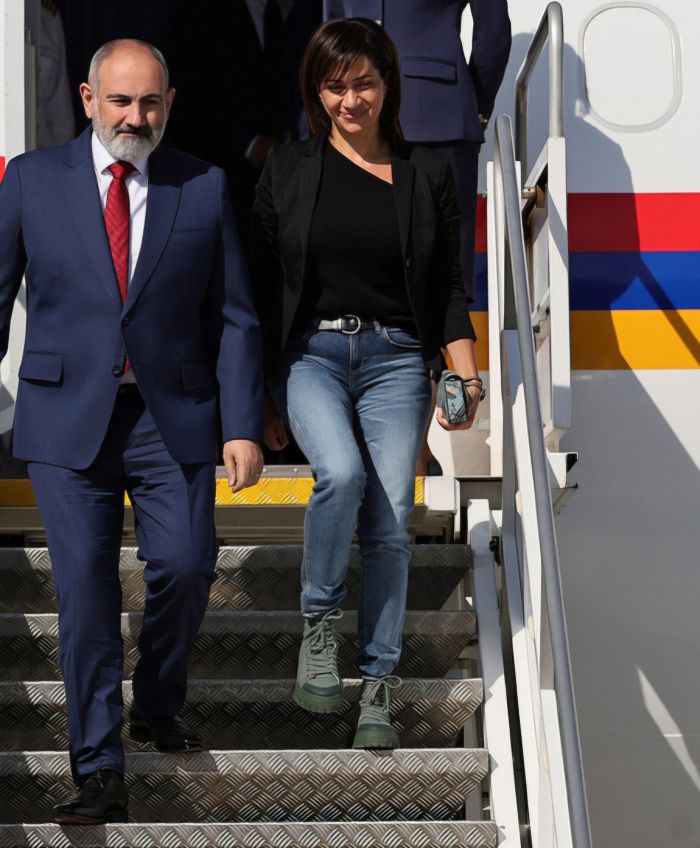
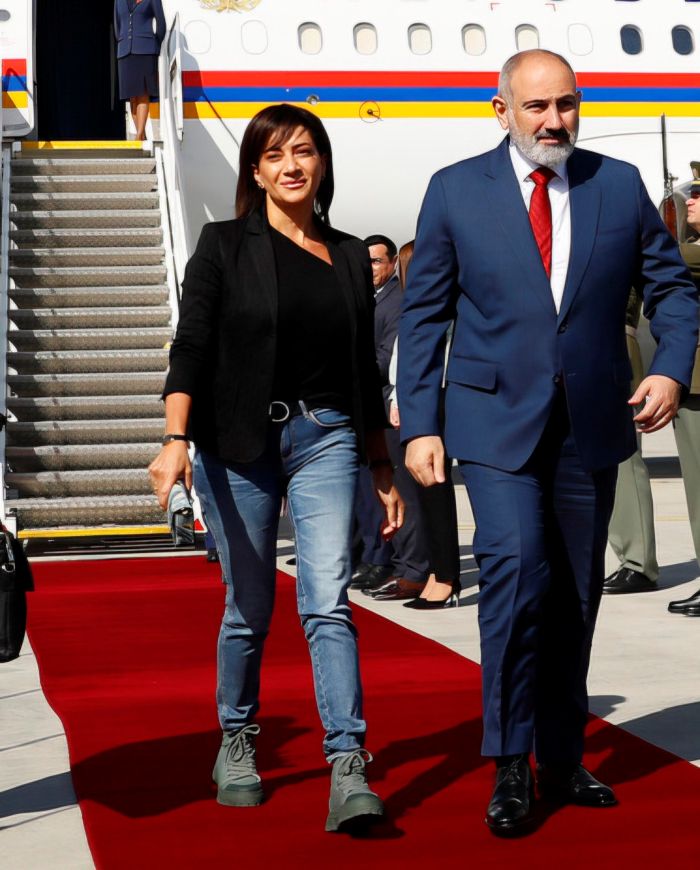
A separate issue arose with Akopyan’s casual approach during the official visit to the Czech Republic in May 2023. Wearing jeans and everyday clothing alongside a head of state traditionally lowers the perceived formality of an event. In international practice, casual appearances demand careful curation, because any visual negligence can be interpreted as a lack of respect for the host or a devaluation of the occasion.
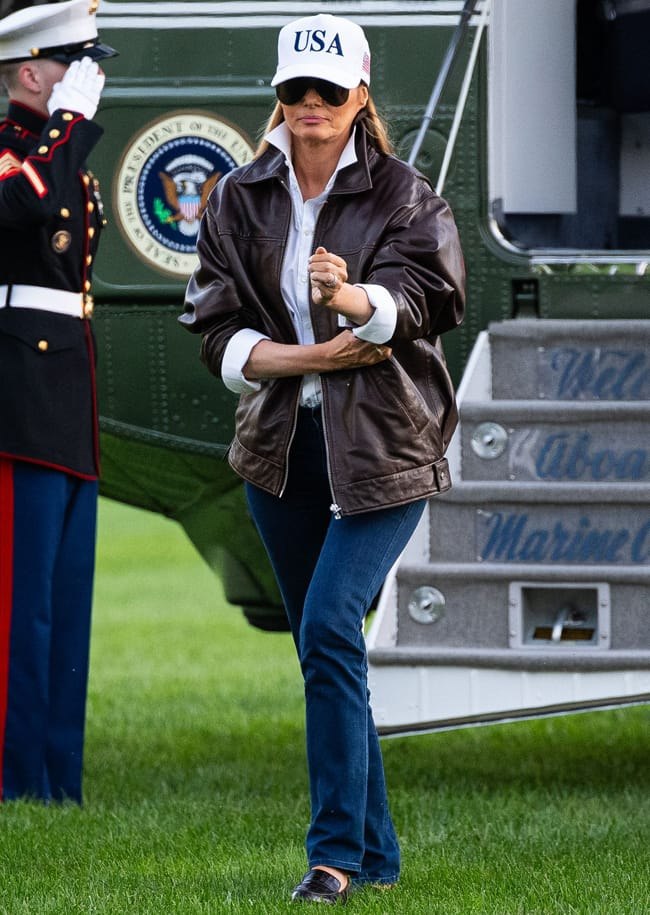
Melania Trump, for example, rarely allows this level of informality outside clearly defined settings. Even her jeans look at the U.S. Navy’s 250th anniversary event were carefully styled: dark, tailored jeans; a structured shirt; a jacket with sharp shoulder lines; and formal shoes, preserving a sleek silhouette and composure.
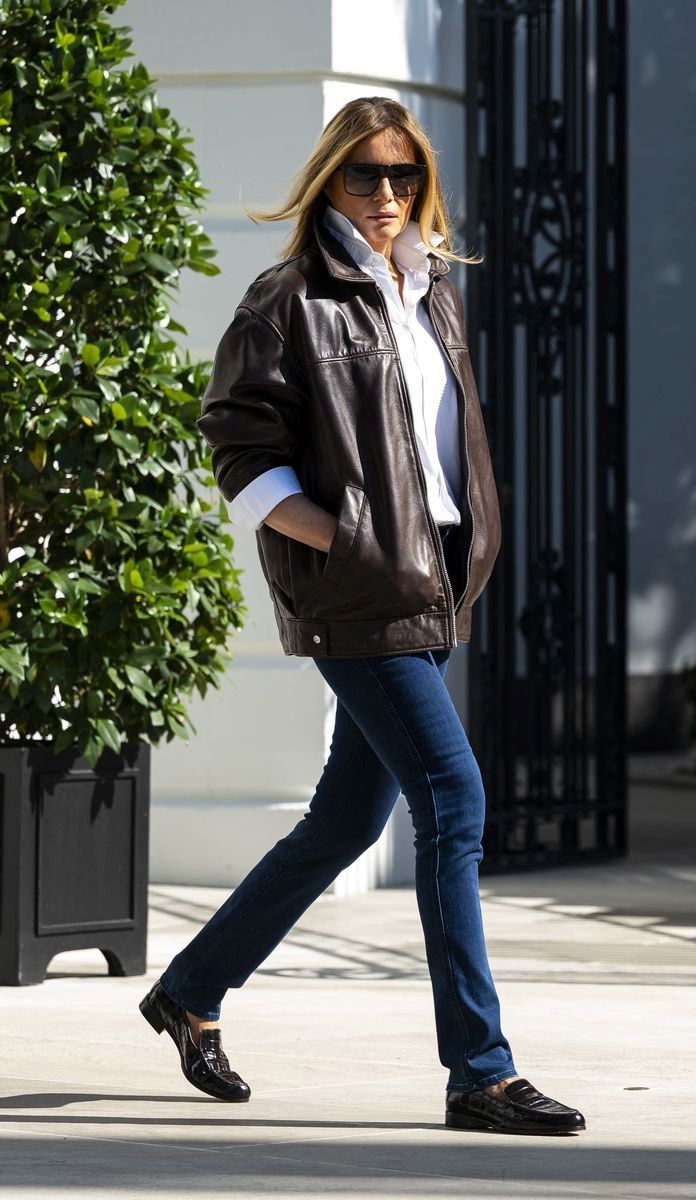
Casualness did not undermine her status.
By contrast, Akopyan’s light jeans, basic T-shirt, soft unstructured jacket, and bulky sneakers created no sense of visual composition or focus, failing to support the event’s formality. The result: an outfit that read as personal and everyday rather than official and state-level — inevitably impacting the perception of the country’s representation in the international context.
Follow NEWS.am STYLE on Facebook, Twitter and Instagram

- ‘Doomsday’ Set for November 13, 2026: Scientists Predicted the Apocalypse 66 Years Ago There is just one month to go until the predicted end of the world — at least according to a scientific paper published 66 years ago. In 1960, a study in the prestigious journal Science forecast that Doomsday would arrive on Friday, November 13, 2026, The Independent reports...
- Luxury French Riviera Hotel Declares War on Influencers: Phone Photography Faces a Ban The legendary Hotel du Cap-Eden-Roc on the French Riviera, a longtime retreat for famous politicians, writers and members of royal families, is introducing strict restrictions on photography. The move comes as influencers increasingly turn one of France’s most prestigious hotels into a backdrop for social media content...
- A $30,000 Porsche-Inspired Sofa: Chinese Brand Turns a Sports Car Into a Luxury Armchair With a Fridge and Sound System Design brand Arkadia-Life has unveiled the P01 Classic Sofa, an unusual single-seat armchair styled after a vintage sports car. Behind its striking exterior lies an array of high-tech features, including a built-in refrigerator, a wine compartment, a powerful sound system and wireless charging. Prices for this collectible design piece start at $30,000...
- School Uniforms Have Become a Sexual Fantasy: British Teenagers Demand Ban on School Uniforms in Pornography A group of British schoolgirls has spoken out against the sexualization of school uniforms in the adult entertainment industry, launching a petition calling for their use in pornographic videos to be banned. The initiative has already attracted more than 28,000 signatures, and the teenagers have also received support from members of the British Parliament...
- Five Mistakes That Can Quietly Destroy a Marriage The secret to a happy, lasting marriage lies not only in compatibility but also in the ability to maintain emotional intimacy. A study published in the journal Family Process found that better communication and greater emotional security are associated with higher relationship satisfaction...




-
16:21, October 13
‘Doomsday’ Set for November 13, 2026: Scientists Predicted the Apocalypse 66 Years Ago -
15:36, October 13
Luxury French Riviera Hotel Declares War on Influencers: Phone Photography Faces a Ban -
15:19, October 13
Leonardo DiCaprio Shows Off His ‘Dad Bod’ During Beach Day With Younger Girlfriend -
14:33, October 13
A $30,000 Porsche-Inspired Sofa: Chinese Brand Turns a Sports Car Into a Luxury Armchair With a Fridge and Sound System -
14:15, October 13
School Uniforms Have Become a Sexual Fantasy: British Teenagers Demand Ban on School Uniforms in Pornography -
13:23, October 13
‘40 Million Views and Monster Brows’: Woman Falls Asleep With Eyebrow Dye on Her Face and Takes TikTok by Storm -
12:31, October 13
Kim Kardashian Flaunts Sultry Looks in Tiny Lingerie, a Leather Bustier and Racy Snaps -
12:16, October 13
“Even My Pilates Class Would Be Too Much for Him”: The View Hosts Mock Pete Hegseth After Military Training Video -
11:42, October 13
Sean “Diddy” Combs Rushed to Hospital After Suffering Head Injury in Prison Fall -
11:18, October 13
Bella Hadid Celebrates Her 30th Birthday in a Red Bikini and Cowboy Boots -
10:30, October 13
Ray-Ban Heir Leonardo Del Vecchio Claims He Has Slept With More Than 2,000 Women -
23:01, October 12
Five Mistakes That Can Quietly Destroy a Marriage
All materials

@NEWSam_STYLE
@NEWSam_STYLE
- Archive