



NEWS.am STYLE
NEWS.am STYLE

NEWS.am STYLE

NEWS.am STYLE

NEWS.am STYLE

NEWS.am STYLE

NEWS.am STYLE

NEWS.am STYLE

NEWS.am STYLE

NEWS.am STYLE

The 23rd "Golden Apricot" Yerevan International Film Festival has kicked off

NEWS.am STYLE

NEWS.am STYLE

NEWS.am STYLE

NEWS.am STYLE

Nikos Vertis to perform in Armenia for the 3rd time at the invitation of “ACVA BUILDINGS”
NEWS.am STYLE

NEWS.am STYLE


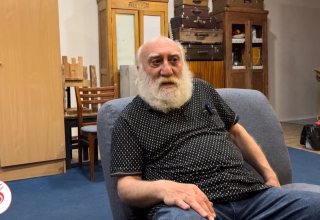
“Penelope” by Simon Abkarian in Yerevan: A play about war, a strong woman, and the price of human choice

At the Sos Sargsyan Theater “Amazgain”, Simon Abkarian’s Penelope was staged in Armenia for the first time. Previously, the play had been performed in various cities as part of festivals; now it has come to Yerevan, to an audience that knows all too well what it means to wait for someone to return from war.

The play is based on Homer’s Odyssey, modernized by Abkarian for our times. Here, Penelope is Dinah, played by Honored Artist of Armenia Narine Grigoryan. She has been waiting for her husband for twenty years, not knowing where he is, whether he is alive, and unsure whether the unknown or the truth is more terrifying. But Dinah is not a submissive shadow of expectation. She is a woman who has not been broken by years, by pressure, or by the advice of others; she is capable of going to the end, even if that end demands a cruel decision. She accepts her suffering as part of her choice, does not seek justification, and fears no judgment—acting according to her heart, even if the world around her calls it madness.


Penelope is not only about marital fidelity. It is about fidelity to one’s inner law. About holding onto one’s values even when the world offers convenient compromises. Anteus, who pursues Dinah for status and power, feels frighteningly contemporary. For him, it is not love but control—over her fate, her life, her body. He is a businessman who achieves what he wants by any means, however unscrupulous.

The play’s central figure is Elias, the Odysseus returned from war. He arrives not as a conqueror but as a man who no longer wants to kill. His pacifism collides with the harsh logic of his mother, convinced that the world must be defended by force. In this conflict, there is no simple moral answer. There is a heavy question: if you refuse violence, will your home survive? And if you choose violence, will you remain yourself?


A modern Athena also appears on stage—not the shining goddess of school illustrations, but hardened, sharp, seemingly worn down by centuries of human mistakes. She guides, reproaches, and grows angry. In her divine reprimands, one can hear exhaustion from endless wars, from repeated patterns, from humanity itself. And yet she does not leave. She continues to push humans toward choice, toward finding a way out, even if that path is not obvious.


It can safely be said that the play resonates painfully closely with the contemporary viewer. Because this story—about human greed and loyalty, about the fear of losing and the fear of knowing the truth, about how war reshapes destinies—is, unfortunately, still relevant today. Times change, sets are updated, but human nature, it seems, remains the same.
Liana Agadzhanyan
Follow NEWS.am STYLE on Facebook, Twitter and Instagram

- AI-Generated Singer Announces Pregnancy and Quits Band — Fans Didn’t Realize She Wasn’t Real Social media users were left confused after news broke that Mity, a member of the Chinese pop group Baby Queen, had announced her pregnancy and decided to take a temporary break from the band. Many fans only then discovered that the group and its members were entirely AI-generated, the Daily Mail reports...
- Three Hours for Makeup and Household Chores: Japanese Prime Minister’s Admission Sparks Public Debate Japanese Prime Minister Sanae Takaichi has said her daily schedule is significantly more demanding than those of her male predecessors. In addition to her official duties, she spends several hours a day on makeup, bathing, cooking and other household tasks. Her remarks have sparked a heated debate about gender stereotypes and the expectations placed on Japanese women, The New York Times reports...
- “Grandparents Now Need Permission to Hug”: Controversial Ad Pulled After Backlash A controversy has erupted in Ireland over a public awareness campaign urging grandparents to ask their grandchildren for permission before hugging them. The video, created by the Dublin Rape Crisis Centre and funded by the Department of Justice, sparked accusations of absurd political correctness, disrespect toward older people and the misuse of public funds. The justice minister eventually demanded that the video be taken down...
- The Pharaohs Forgot to Sign the Paperwork: Scottish Museum Removes Mummies Over Lack of Consent A scandal worthy of a museum exhibit of its own has erupted in Scotland: ancient Egyptian remains have been removed from a Glasgow museum because people who died thousands of years ago never gave permission for their bodies to be displayed in public. Visitors are now greeted by explanatory signs instead of mummies — apparently the safest exhibit in an era when even pharaohs have suddenly been found to have personal-boundary issues...
- Hermès Steps Up Boutique Security After Riots in France French luxury house Hermès has tightened security at its stores following widespread protests in France, during which one of the brand’s boutiques in Marseille was looted. The company is also facing a new challenge: demand for its products is slowing, and sales of clothing and accessories have declined for the first time in several years, Reuters reports...




-
17:25, October 24
AI-Generated Singer Announces Pregnancy and Quits Band — Fans Didn’t Realize She Wasn’t Real -
16:34, October 24
Salma Hayek’s Daughter Tops Britain’s Most Eligible List: Billionaire Parents, Pubs and Vodka -
15:10, October 24
Timothée Chalamet Ignores Victoria’s Secret Models for Kylie Jenner — His Reaction Goes Viral -
14:20, October 24
Queen Elizabeth II Bragged About Helen Mirren to a Sheikh — But He Didn’t Recognize the Actress -
13:49, October 24
Why Did Tom Cruise Punch Jack Nicholson? -
13:15, October 24
“I Know Where You Are”: Hunter Biden Accused of Threatening Sex Worker -
12:12, October 24
Kim Kardashian Opens Up About Her Romance with Lewis Hamilton: “I’m Very, Very Happy” -
11:19, October 24
A $3 Million Rolex, a $200,000 Hermès Bag and a 7-Carat Diamond: Cardi B Spoils Herself with Lavish Birthday Gifts -
10:34, October 24
Sheer Lace and Crystal Chains: Kim Kardashian Takes Rome by Storm -
23:01, October 23
Three Hours for Makeup and Household Chores: Japanese Prime Minister’s Admission Sparks Public Debate -
22:18, October 23
J.K. Rowling: “If a Man Can Be a Woman, Then Women Do Not Exist” -
21:25, October 23
“Grandparents Now Need Permission to Hug”: Controversial Ad Pulled After Backlash
All materials

@NEWSam_STYLE
@NEWSam_STYLE
- Archive