



NEWS.am STYLE

NEWS.am STYLE

NEWS.am STYLE

NEWS.am STYLE
NEWS.am STYLE

NEWS.am STYLE

NEWS.am STYLE

NEWS.am STYLE

The 23rd "Golden Apricot" Yerevan International Film Festival has kicked off

NEWS.am STYLE

NEWS.am STYLE

NEWS.am STYLE

NEWS.am STYLE

Nikos Vertis to perform in Armenia for the 3rd time at the invitation of “ACVA BUILDINGS”

NEWS.am STYLE

NEWS.am STYLE

NEWS.am STYLE

NEWS.am STYLE


The Era of TikTok Luxury: Why Everyone Is Suddenly Buying Birkin Bags
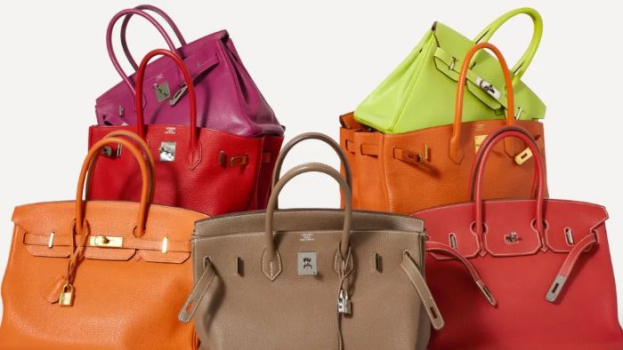
In recent weeks, several content creators in their twenties have purchased the iconic Hermès Birkin bag — both new models and vintage pieces. This surge of interest among young social media users has once again raised the question of whether the status of one of the world’s most exclusive and expensive accessories is changing, writes WWD.
Today, luxury goods for influencers in their twenties often serve a similar function to plush toys for children: they become collectible objects. Like soft toys, designer items — bags, belts, shoes, and sunglasses — are used to display status and form part of a visual “show-and-tell” culture on social media.
One of the most talked-about accessories on TikTok in recent months has been the Hermès Birkin. Depending on the model, size, and year, its price can range from around $10,000 to $300,000. And increasingly, these bags are ending up in the hands of content creators.
In March, influencer Danielle Pheloung shared an unboxing of a brown Birkin 25 after securing a coveted appointment at the Hermès boutique in Paris. And just in the past week, four New York-based influencers reported purchasing Birkins, with one of them buying two bags during a trip to Japan.
The rise in young Birkin owners — mostly from Gen Z — raises a key question: are influencers making this ultra-expensive and rare accessory more “normalized” and mainstream?
To understand this, one must go back to its origins.
The Birkin story began in 1983 on an Air France flight, when Jane Birkin accidentally spilled the contents of her bag next to a fellow passenger — Jean-Louis Dumas, then CEO of Hermès. The incident led to a discussion about the need for a more practical and functional handbag. Dumas suggested that Birkin sketch her ideal design, and two years later, with her approval, the model went into production and was named after her. The original Birkin bag owned by Jane Birkin was sold at Sotheby’s in Paris last year for $10.1 million.
According to Wendy Liebmann, CEO and chief consumer analyst at WSL Strategic Retail, in the early days of the Birkin, its audience was extremely limited. It was not defined by age, but purely by wealth and access. Owning the bag signified belonging to a very exclusive circle — people admired for their financial status, social position, or influence in fashion.
Over time, the status of the bag has remained unchanged, but perception has evolved. Today, Liebmann says, the Birkin has become a symbol of the influencer generation — an indicator of whether they can afford or access such an item. At the same time, the market has become more fluid: secondary sales and resale have become normal, as some owners are willing to part with their bags for profit.
Today, in addition to resale platforms like The RealReal and eBay, Birkins can also be found through other channels. The Kardashian family, known for their extensive Hermès collection, lists bags for sale via their own platform, Kardashian Kloset. The members-only service Vivrelle also offers Birkin rentals for around $800 per month.
Despite the expansion of access channels, the value of the bag itself has not declined. In fact, the growth of counterfeit markets has only increased demand for the original. When lookalikes are available at virtually any price point, authenticity becomes even more valuable.
Experts note that the sense of rarity has not weakened — it has intensified. In a world where everything is accessible, owning a real Birkin carries even greater symbolic weight. For young affluent consumers and influencers, it becomes a marker of entry into an exclusive world.
According to Joe Wang, Chief Revenue Officer at AI commerce platform Pop.Store, influencers buying Birkins are not diluting or cheapening its status. Instead, they are revealing the process behind access: the rules, relationships, and unwritten systems. Audiences are watching this process unfold in real time, which only increases interest.
Social media, he says, has not “flattened” the Birkin. The hunt for the bag remains as real as ever — it is simply far more visible now. And that visibility, in turn, acts as free marketing for a brand that has never had to pay for advertising.
Follow NEWS.am STYLE on Facebook, Twitter and Instagram

- Zuhair Murad Softens His Signature Glamour With Mediterranean Mood, Fringe and a Marilyn Monroe-Inspired Dress Zuhair Murad took a step away from his signature evening glamour with a lighter, more relaxed ready-to-wear collection for spring...
- Louis Vuitton Defies Gravity: Nicolas Ghesquière Unveils a Weightless Collection at the Louvre One of the most striking set designs of the fashion month framed a story about moving through a vast metropolis — a metaphor for today’s turbulent, overheated world. To counter that chaos, Ghesquière proposed clothing that was light, almost ergonomic and designed to move freely with the body...
- Matthieu Blazy Stages a Triumphant Spectacle for Chanel: Coco Chanel, Tweed and a Touch of Attitude A year ago, Matthieu Blazy made his debut on the Chanel runway, opening a new chapter in the history of the legendary fashion house. Now, 12 months later, he returned to the Grand Palais as a true triumphalist, presenting his Spring/Summer 2027 collection — both a love letter to Coco Chanel and a confident statement about the future...
- Elie Saab Revives His Iconic 2000s Aesthetic — and Teases a Major H&M Collaboration It was an Elie Saab gown worn by Halle Berry on the red carpet at the 2002 Oscars that went down in fashion history and helped turn the Lebanese designer into a global name. Now Saab is returning to the aesthetic that made him an icon in the early 2000s...
- Miu Miu and New Balance Team Up Again: Paris Gets a Glimpse of the Sneakers of the Future Miu Miu unveiled two new collaborations at Paris Fashion Week. The fifth year of its partnership with New Balance brought the debut of a new version of the RC150 — a reimagined sneaker inspired by racing footwear...




-
23:01, October 8
“I Gave Up All Other Women for You”: Ex-Husband’s List of ‘Sacrifices’ Sends Social Media Into a Frenzy -
22:38, October 8
Salma Hayek and Her Life in a Billionaire Family: Lavish Homes, $15 Billion and Love with François-Henri Pinault -
21:33, October 8
“AI Will Destroy Humanity”: Inside the Secretive World of Americans Preparing for the End of the World -
20:27, October 8
Spain’s Richest Woman Lives Modestly Despite Her Zara Billions: The Secretive Life of Sandra Ortega -
19:40, October 8
Zuhair Murad Softens His Signature Glamour With Mediterranean Mood, Fringe and a Marilyn Monroe-Inspired Dress
-
19:18, October 8
Casio Unveils Its Most Expensive G-Shock Ever: $80,000 Sapphire Watch -
16:26, October 8
Mark Zuckerberg’s Sister Reveals Her Secret Passion: She’s Been DJing for Eight Years -
15:40, October 8
Michael Douglas Opens Up About His Wild Love Life: Co-Stars, Affairs and His Own ‘Mrs. Robinson’ -
15:16, October 8
Beauty Queen Killed by Lightning Strike at 22 -
14:34, October 8
Ben Affleck Defends Jennifer Lopez and Reveals the Funny Nickname His Daughter Gave Him -
14:19, October 8
Melania Trump vs. Tom Cruise: First Lady’s Adviser Mocks Star’s Box-Office Flop by Comparing It to Melania’s Success -
13:22, October 8
How Sylvester Stallone and Richard Gere nearly fought over Princess Diana
All materials

@NEWSam_STYLE
@NEWSam_STYLE
- Archive