



NEWS.am STYLE

NEWS.am STYLE

NEWS.am STYLE

NEWS.am STYLE

The 23rd "Golden Apricot" Yerevan International Film Festival has kicked off

NEWS.am STYLE

NEWS.am STYLE

NEWS.am STYLE

NEWS.am STYLE

Nikos Vertis to perform in Armenia for the 3rd time at the invitation of “ACVA BUILDINGS”

NEWS.am STYLE

NEWS.am STYLE

NEWS.am STYLE

NEWS.am STYLE

NEWS.am STYLE

NEWS.am STYLE

NEWS.am STYLE

NEWS.am STYLE


LVMH at the peak: 25 brands that are worth more than the entire apparel sector
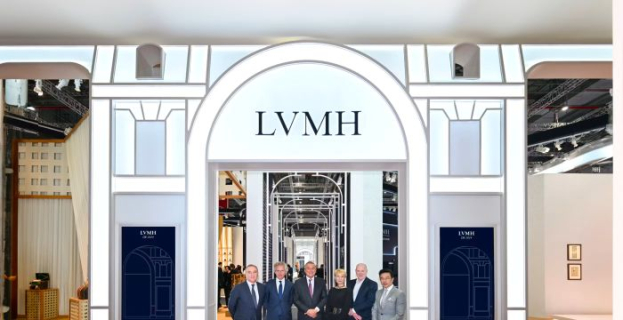
In the world of public companies, the luxury sector continues to dictate its own rules. According to an analysis by Sourcing Journal, which examined global companies in the textile, apparel, and luxury goods sectors (as classified by S&P Capital IQ), the undisputed leader of the industry is the LVMH Moët Hennessy conglomerate, WWD reports.
The market value of the luxury giant has reached an impressive $280.7 billion. Snapping at the leader's heels, Hermès International took the second spot with a market capitalization of $194.4 billion, while the Swiss group Compagnie Financière Richemont ($136 billion) rounds out the top three. The top five also includes Christian Dior SE ($94.2 billion) and sportswear giant Nike Inc. ($60.3 billion).
A colossal gap: 25 giants take it all
Market capitalization (the total value of all a company's shares on the market) helps investors assess risks and growth potential. Major players tend to demonstrate enviable stability, in contrast to the volatile mass market.
The scale of the leaders' dominance is staggering:
-
There are a total of 1,372 companies in S&P Capital IQ's textile, apparel, and luxury sector.
-
Their combined value is estimated at $1.48 trillion.
-
Yet, a mere 25 top brands account for the lion's share of this pie—$1.14 trillion.
The magic of numbers: Why Wall Street loves luxury
While regular clothing brands wage a continuous war against fast-shifting seasonal trends and fight for razor-thin margins, giants like LVMH, Hermès, and Richemont have built genuine financial fortresses.
Their secret is simple: they don't sell products; they sell status and genuine consumer desire. Customers are so loyal to these brands that the companies can regularly raise prices without losing their audience.
While smaller retailers are forced to hold aggressive sales to clear out remaining inventory, the fashion elite bets on scarcity and heritage:
-
Hermès deliberately limits the production of its famous handbags, which protects the brand from any economic crises and keeps profit margins at sky-high levels.
-
LVMH and Richemont leverage the scale of their empires to buy up the best commercial real estate in the world's capitals and spend sums on advertising that are utterly out of reach for competitors.
-
Products from these brands, whether a Cartier bracelet or a Louis Vuitton bag, are perceived by consumers as an investment rather than a temporary purchase.
Nike's strategy: Cultural code and scale
American giant Nike approaches financial dominance differently, betting on cultural presence and colossal volumes.
By investing billions of dollars into contracts with top athletes and global marketing, Nike has transformed regular sneakers into a status symbol. Furthermore, the company is actively developing direct-to-consumer (D2C) sales through its app and flagship stores. By bypassing intermediaries, it keeps all the profits within the company.
The industry's top five players have created brands so powerful and operating models so efficient that they are essentially playing in a league of their own, remaining immune to the downturns that typically devastate traditional retail.
Follow NEWS.am STYLE on Facebook, Twitter and Instagram

- A year aboard a luxury liner: £56,000 cruise spans the globe from Alaska to Zanzibar A two-week cruise may sound like the ultimate luxury. But what if you could spend an entire year at sea, waking up every day in a different corner of the planet...
- The garden’s fussy aristocrat: Essential Japanese maple care tips for a flawless red color Japanese maples (Japanese Acers) are true aristocrats of the garden — but they can be remarkably temperamental. To keep your tree displaying luxurious wine-red foliage, it needs the right care, the perfect location and one particularly important treatment...
- Buying century-old trees is the new status symbol among billionaires Today’s super-rich don’t want to spend years waiting for saplings to grow. The luxury landscaping industry is booming with a new obsession: transplanting enormous mature trees — from oaks and palms to baobabs and magnolias — directly into the estates of the wealthy, The New York Times reports...
- Jealousy over pixels: GTA 6’s ‘romantic’ features spark an online scandal The highly anticipated release of Grand Theft Auto VI — scheduled for November 19, 2026, on PlayStation 5 and Xbox Series X/S — has triggered an unexpected real-life controversy. Girlfriends, fiancées and wives around the world are reportedly threatening to boycott the game, arguing that virtual romances with its female protagonist, Lucia, amount to real-life cheating...
- Valentino Sciotti Brings the Fantini Story to Armenia Fantini Group founder Valentino Sciotti visited Armenia for the first time at the invitation of VINO&VINO. At VINO&VINO’s venue on Mashtots Avenue, he presented a selection of Fantini wines and met with Armenian wine enthusiasts, sharing the story of the brand, the principles behind his work and the regions that shape the character of its wines․․․




-
12:38, September 9
A Joke That Went Too Far: Gwyneth Paltrow Reveals How Her Viral “Vagina-Scented” Candle Came to Be -
12:17, September 9
Nicolas Cage’s $10.5 Million Luxury Malibu Mansion Nearly Swallowed by Giant Sinkhole -
11:51, September 9
Trump’s Generous Gifts to Young Female Aides: Each Received $45,000 -
11:36, September 9
Elon Musk Wanted Children “Before the Civil War” and Offered $40 Million for Silence: Shocking Claims by His Former Partner -
10:43, September 9
Deep Plunges, Sheer Looks and Barely Any Fabric: Kim Kardashian Shares Archive of Revealing Fittings -
23:01, September 8
A year aboard a luxury liner: £56,000 cruise spans the globe from Alaska to Zanzibar -
22:23, September 8
The garden’s fussy aristocrat: Essential Japanese maple care tips for a flawless red color -
21:27, September 8
Buying century-old trees is the new status symbol among billionaires -
20:30, September 8
Jealousy over pixels: GTA 6’s ‘romantic’ features spark an online scandal -
19:30, September 8
Valentino Sciotti Brings the Fantini Story to Armenia -
19:15, September 8
Blood, Bones and Dracula: Antique Vampire-Hunting Kit Sends Online Auction Into a Frenzy -
16:32, September 8
Three Berlin men are ‘marrying’ each other — but there’s no sex: “We just love each other”
All materials

@NEWSam_STYLE
@NEWSam_STYLE
- Archive