


NEWS.am STYLE

NEWS.am STYLE

NEWS.am STYLE

NEWS.am STYLE

The 23rd "Golden Apricot" Yerevan International Film Festival has kicked off
NEWS.am STYLE

NEWS.am STYLE

NEWS.am STYLE
NEWS.am STYLE

Nikos Vertis to perform in Armenia for the 3rd time at the invitation of “ACVA BUILDINGS”
NEWS.am STYLE

NEWS.am STYLE
NEWS.am STYLE

NEWS.am STYLE

NEWS.am STYLE

NEWS.am STYLE

NEWS.am STYLE

NEWS.am STYLE

Archaeologists May Have Found Jesus Christ’s Tomb After 2,000 Years
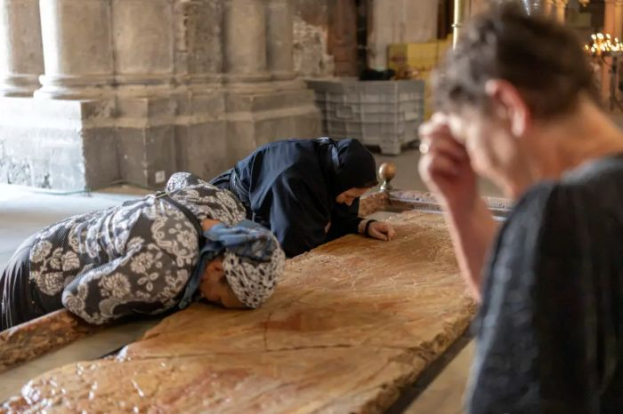
Italian archaeologists excavating beneath the Church of the Holy Sepulchre in Jerusalem have uncovered an ancient burial landscape and tomb that appear to closely match descriptions found in the Gospels.
The discovery, which researchers have spent years investigating, was detailed in a preliminary study published in the Jerusalem-based archaeological journal Liber Annuus.
“We found evidence of a unique burial landscape,” said the study’s lead archaeologist, Francesca Romana Stasolla of Sapienza University of Rome.
Researchers have been excavating beneath the Church of the Holy Sepulchre, a fourth-century Roman church built over the sacred site where millions of Christians believe Jesus Christ was crucified, buried and resurrected on Easter Sunday. The church attracts around four million pilgrims from around the world every year.
During the final stages of excavations in 2025 — work that began three years earlier as part of a floor restoration project — the team uncovered an unusual landscape:
- An abandoned quarry;
- Cultivated plots of land;
- Rock-cut tombs;
- An ancient garden.
The discovery closely echoes a passage from the Gospel of John:
“In the place where he was crucified, there was a garden, and in the garden a new tomb, in which no one had ever been laid” (John 19:41).
Although, naturally, no body was found inside the tomb, the number of apparent parallels is striking:
- The location: The Gospel of John states that the crucifixion took place near Jerusalem, while the Letter to the Hebrews says it occurred outside the city gates. That is precisely where the quarry was located during the time of Christ.
- Agricultural use: Sections of the quarry, which reached depths of up to 6 meters, were filled with soil and used for agriculture. Researchers found traces of olive trees and vineyards dating to the first century AD — around 33 AD, the approximate time of Jesus’ death.
- Rock-cut tombs: The tombs carved into the rock are consistent with descriptions found in the Gospels of Matthew, Mark and Luke.
“The Gospel mentions a green area between Golgotha and the tomb, and we have identified these cultivated fields,” Stasolla said.
From Emperor Hadrian to Constantine: the site’s historical trail
The archaeological evidence extends far beyond the biblical texts:
- In the second century AD, one of the chambers was sealed off by a Roman structure built during the reign of Emperor Hadrian.
- Around 200 years later, builders working under Emperor Constantine demolished the Roman structure and excavated the site to uncover the tomb. They separated it from the other chambers and built a Christian shrine around it for pilgrims.
While the discovery does not provide 100-percent scientific proof that Jesus himself was buried there, the extensive efforts of early Christians to preserve the site suggest that knowledge of the tomb may have been passed down from generation to generation since the first century.
“The real treasure we are uncovering is the history of the people who, through their faith, made this place what it is,” Stasolla emphasized. “Whether someone believes in the historicity of the Holy Sepulchre or not, the fact that generations of people believed in it is objective. The history of this place is the history of Jerusalem and the history of devotion to Jesus Christ.”
Follow NEWS.am STYLE on Facebook, Twitter and Instagram

- Samsung Ordered to Pay Swatch $11.6 Million for Copying Luxury Watch Designs The High Court in London has ordered South Korean technology giant Samsung to pay Swiss watchmaking group Swatch $11.6 million for allowing pirated versions of luxury watch dials to be offered for its smartwatches...
- Archaeologists May Have Found Jesus Christ’s Tomb After 2,000 Years Italian archaeologists excavating beneath the Church of the Holy Sepulchre in Jerusalem have uncovered an ancient burial landscape and tomb that appear to closely match descriptions found in the Gospels.
- Hermès Weaves Silk Threads Into the Dials of Its New Arceau Watches Hermès continues its exploration of the world of decorative arts with the launch of the Arceau Cheval Natté, a limited-edition timepiece collection that quite literally brings silk into the art of watchmaking...
- Did Frédéric Chopin Love Men? German Researcher Finds Declarations of Love in the Composer’s Letters Letters written by Frédéric Chopin to men that for decades were regarded as expressions of ordinary 19th-century male friendship may point to much deeper feelings. That is the conclusion reached by German music journalist and pianist Moritz Weber, who examined around 800 surviving letters by the composer, along with documents from Polish and Parisian archives...
- Swiss Exclusive for OpenAI: Why Sam Altman’s Watch Is Being Called the New Status Symbol Silicon Valley has no shortage of ways to flaunt wealth and status. A home overlooking San Francisco Bay, a Cybertruck — and, of course, an expensive watch, which has long been an essential accessory for influential figures across industries, the Wall Street Journal reports...




-
19:28, August 28
Samsung Ordered to Pay Swatch $11.6 Million for Copying Luxury Watch Designs -
16:16, August 28
Archaeologists May Have Found Jesus Christ’s Tomb After 2,000 Years -
15:49, August 28
Sydney Sweeney goes topless with her finger in her mouth in her most provocative lingerie ad yet -
15:21, August 28
Hermès Weaves Silk Threads Into the Dials of Its New Arceau Watches -
14:37, August 28
Kanye West has made more than $25 million this year from concerts that never happened -
14:19, August 28
‘Echoes of her 2002 breakdown’: Jennifer Lopez’s friends are sounding the alarm over her relentless work marathon -
13:17, August 28
‘That’s a dirty tactic’: Jane Fonda slams Paramount for trying to ‘silence’ Mark Ruffalo with antisemitism accusations -
12:50, August 28
Miss USA contestant reveals how she lost 170 pounds after a humiliating theme-park incident -
12:20, August 28
‘I felt like a robot’: Britney Spears reveals the devastating toll of her 14-year conservatorship -
11:38, August 28
Madonna sets her sights on Angelina Jolie’s $29.85 million mansion — the Hollywood legend could soon have a new owner -
11:18, August 28
Nicole Kidman makes her TikTok debut in a stunning Chanel gown -
10:30, August 28
Kylie Jenner bares all in her most revealing photoshoot yet — and finally addresses the controversy surrounding her ‘self-made billionaire’ status
All materials

@NEWSam_STYLE
@NEWSam_STYLE
- Archive