



NEWS.am STYLE

NEWS.am STYLE

NEWS.am STYLE

NEWS.am STYLE

NEWS.am STYLE
NEWS.am STYLE

NEWS.am STYLE
NEWS.am STYLE
NEWS.am STYLE

The 23rd "Golden Apricot" Yerevan International Film Festival has kicked off

NEWS.am STYLE

NEWS.am STYLE

NEWS.am STYLE
NEWS.am STYLE

Nikos Vertis to perform in Armenia for the 3rd time at the invitation of “ACVA BUILDINGS”
NEWS.am STYLE

NEWS.am STYLE
NEWS.am STYLE


Spas, Climbing Walls and Space for a Horse: What Doomsday Bunkers Have to Offer
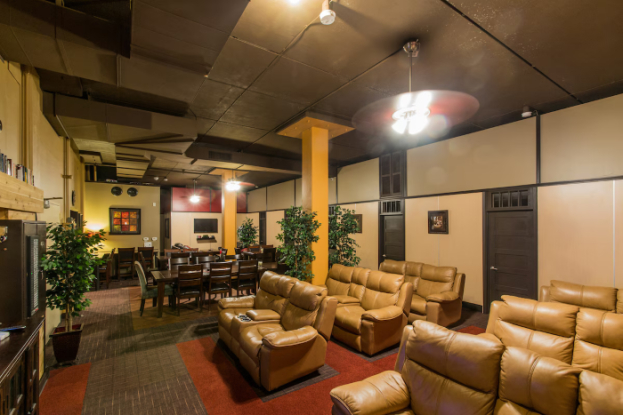
Modern underground shelters are designed to support life off the grid for extended periods, with their own power supplies, water reserves and sophisticated ventilation systems. For the wealthiest clients, however, the amenities can include spas, home theaters, swimming pools and even separate quarters for horses, The Washington Post reports.
Yet these luxurious features create serious engineering challenges. An underground swimming pool increases humidity, a shooting range requires complex ventilation to remove smoke and harmful fumes, and an indoor garden needs water, space and climate control.
Brian Camden knows these challenges firsthand. For 35 years, his company in Virginia Beach has designed hardened homes and shelters for private clients and military customers.
According to Camden, practical constraints are far more important than the flashy features often showcased in renderings of billionaires’ bunkers.
Bunkers Amid Growing Global Threats
Demand for underground shelters is rising amid increasingly alarming forecasts. In January 2026, the Bulletin of the Atomic Scientists set the hands of its symbolic Doomsday Clock at 85 seconds to midnight — closer to catastrophe than at any point since the clock was introduced in 1947. Among the threats cited were nuclear weapons, climate change, biological risks and artificial intelligence.
Some AI developers are openly preparing for worst-case scenarios. The White House has also entered the conversation. After the East Wing was demolished last fall to make way for a $600 million ballroom, U.S. President Donald Trump said the military was building a “massive complex” beneath it. The ballroom itself, he suggested, would serve as a kind of “canopy.”
If even the U.S. president considers a new underground facility necessary, it is hardly surprising that others are thinking about similar forms of insurance against disaster.
Originally, bunkers were designed primarily to protect occupants from the effects of nuclear explosions. Today, builders account for a much wider range of threats, including prolonged power outages, electromagnetic pulses, pandemics, cyberattacks and chemical or biological warfare.
“The biggest threat everywhere is a prolonged loss of electrical power,” Camden said. An extended blackout could disrupt access to food, water and other essentials, potentially leading to civil unrest and security problems.
“The power grid is vulnerable. That’s what everybody is preparing for now,” he added.
From Concrete Boxes to Underground Palaces
The market offers options for virtually every budget. Some companies sell basic structures that buyers can outfit themselves. Others build custom shelters with independent power and water supplies, air-filtration systems, medical facilities and fully equipped living quarters.
Vivos xPoint, for example, is a survival community located on a former military ammunition storage site in South Dakota. It comprises 575 concrete bunkers. An unfinished shelter measuring approximately 2,200 square feet can be leased for 99 years for about $55,000. Purchasing a bunker along with its plot of land costs roughly $75,000, with interior outfitting charged separately.
Custom construction is considerably more expensive. Camden estimates that a monolithic reinforced-concrete bunker costs between $800 and $2,400 per square foot, excluding furnishings and interior finishes. The price depends on the depth of the structure, site conditions and the level of protection required.
These projects cater to affluent clients. Camden’s company, Hardened Structures, is currently handling approximately $70 million in work across eight residential projects.
Yet even buyers who are not billionaires want their shelters to feel like home. Designs increasingly feature separate bedrooms, bathrooms, custom-fitted kitchens, hobby rooms and dedicated relaxation areas.
“In the past, people might have been satisfied with a minimalist, purely functional interior. Now they want custom kitchen cabinets, countertops and islands, a primary bedroom with an en suite bathroom, and rooms for crafts and other hobbies,” said Dante Vicino of Vivos.
Climbing Walls, Swimming Pools and Even Go-Kart Tracks
Bunkers range in scale from small shelters beneath private homes to underground complexes designed to accommodate hundreds of people.
Sharon Packer, a nuclear power specialist at Utah Shelter Systems, said her company is working on a multimillion-dollar bunker for 400 employees of a private company and their families.
SAFE, a company based in McLean, Virginia, says it has designed shelters featuring spa facilities, go-kart tracks and rooms for holding detainees. Meanwhile, Survival Condo, located in rural Kansas, features training facilities, a climbing wall and a saltwater swimming pool measuring approximately 75 feet long.
One of the most widely discussed projects is an underground shelter planned for Mark Zuckerberg’s approximately 1,400-acre property on the Hawaiian island of Kauai. According to published reports, the bunker will cover around 5,000 square feet.
However, little is known about the true scale of such projects. Owners are reluctant to disclose their bunkers’ locations, while builders operate under strict nondisclosure agreements. Companies’ claims are not always independently verifiable, and completed facilities can be difficult to distinguish from computer-generated renderings.
Architect and Yale University professor Keller Easterling argues that private bunkers reflect broader social trends, including the concentration of wealth and the growing privatization of essential resources. While urban planners debate how to make infrastructure more resilient to climate change and ensure access to basic necessities, wealthy individuals are building their own private systems of protection.
How Long Can You Survive Underground?
Even the most expensive shelters cannot guarantee safety. Some requirements — including air, water, electricity and food supplies — can be calculated with reasonable precision. But no one can predict with certainty how long people will need to remain underground or when the danger will pass.
In the event of a nuclear explosion, Packer explains to clients that the most dangerous levels of radiation from a single detonation decline sharply over approximately two weeks. In many scenarios, that period is enough to shelter through the most hazardous phase. Longer-term survival, however, depends largely on whether the surface remains habitable.
Camden generally advises private clients not to design shelters intended for stays longer than 30 days. Some customers, however, want the capacity to live independently underground for a year or more.
The longer people are expected to remain below ground, the more space is needed not only for food and equipment but also for privacy and personal comfort. Prolonged isolation can become a challenge in its own right.
Preparing for catastrophe sometimes leads to unexpected design decisions. Packer once helped design a bunker for a horse, incorporating a passage between the family's shelter and a protected area built into a hillside so the animal could move between the two.
But the specialist warns that the more complicated the systems, the harder they are to maintain during a crisis — particularly when technicians are unavailable. Drawing on her experience teaching shelter-management practices in Switzerland, she advises clients to keep designs simple. For wealthy buyers who are unaccustomed to handling everyday maintenance themselves, she has one additional practical recommendation: “Make room for your handyman.”
There is also a darker side to underground living. According to Camden, some designs include measures to guard against a potential mutiny in case security personnel or other occupants attempt to seize control of the shelter during a crisis.
An emergency exit is equally essential.
“If you don’t have one, you’ve built a tomb,” the specialist warns.
Throughout his career, Camden has watched the fears driving bunker demand evolve, from nuclear war to the Y2K bug and threats associated with artificial intelligence. In 2012, construction of one of his company’s largest projects — a shelter covering approximately 15,000 square feet — had to be accelerated because of fears surrounding the end of the Mayan calendar.
In the end, the catastrophe never came.
“The future is just a series of possible outcomes. Nobody knows what’s going to happen,” Camden concluded.
Follow NEWS.am STYLE on Facebook, Twitter and Instagram

- The First Woman to Paint Erotic Art: The Story of Renaissance Artist Lavinia Fontana During her lifetime, she was celebrated as a talented portraitist, received commissions from powerful cardinals, and saw her paintings adorn the homes of Italian nobility...
- Spas, Climbing Walls and Space for a Horse: What Doomsday Bunkers Have to Offer Modern underground shelters are designed to support life off the grid for extended periods, with their own power supplies, water reserves and sophisticated ventilation systems. For the wealthiest clients, however, the amenities can include spas, home theaters, swimming pools and even separate quarters for horses, The Washington Post reports...
- First Edition of Harry Potter Sells at Auction for $400,000 A rare copy of J.K. Rowling’s Harry Potter and the Philosopher’s Stone, published in 1997, has sold at auction for nearly $400,000...
- He Spent His Entire Salary and Traveled 1,300 Miles to Meet His Dream Woman — Only to Discover She Was an AI Bot A 49-year-old Brazilian bricklayer, Edimar Rocha Martins, who was struggling to cope with his mother's death, embarked on a long journey to meet a woman he believed he had fallen in love with. But after more than 36 hours on a bus, he was left devastated: his dream woman was a virtual character created using artificial intelligence...
- Diamonds, Colored Gemstones and Gold: Patek Philippe Reimagines Women’s Watchmaking Classics Six new Gondolo Ladies First models from Patek Philippe bring together historic design, Art Deco aesthetics and high jewelry craftsmanship. Unveiled at the Watch Art Grand Exhibition in Milan, the collection reinterprets the Swiss watchmaker’s classic line, transforming timepieces into refined accessories for everyday wear...




-
23:06, October 16
The First Woman to Paint Erotic Art: The Story of Renaissance Artist Lavinia Fontana -
21:46, October 16
Prince Harry Accused of Profiting from Princess Diana’s Death After Receiving $100,000 for Sharing Stories About His Mother -
21:15, October 16
Liam Payne’s Family Secures Removal of Graphic Photos of Singer to Protect His Son -
20:46, October 16
“I’m Not a Demon”: Kim Kardashian’s 13-Year-Old Daughter Responds to Criticism of Her Appearance -
20:09, October 16
Elon Musk Cuts Monthly Payments to the Mother of His Son to $20,000 After She Speaks Publicly About Their Relationship -
19:36, October 16
Spas, Climbing Walls and Space for a Horse: What Doomsday Bunkers Have to Offer -
17:15, October 16
First Edition of Harry Potter Sells at Auction for $400,000 -
16:22, October 16
He Spent His Entire Salary and Traveled 1,300 Miles to Meet His Dream Woman — Only to Discover She Was an AI Bot -
14:33, October 16
King Charles III Becomes a Burberry Designer: New Collection Inspired by His Watercolors -
12:32, October 16
“Those Greedy Bastards Are Going to Lose”: Ethan Hawke Blasts Hollywood Power Brokers and Predicts Revolt Against the Elite -
23:01, October 15
Russell Brand Is a ‘Ruthless Sexual Predator’ Who Wanted to Sleep With 5,000 Women, Court Hears -
22:17, October 15
Diamonds, Colored Gemstones and Gold: Patek Philippe Reimagines Women’s Watchmaking Classics
All materials

@NEWSam_STYLE
@NEWSam_STYLE
- Archive