



style.news.am
NEWS.am STYLE

NEWS.am STYLE

NEWS.am STYLE

How Nare was welcomed at Zvartnots Airport after winning the Junior Eurovision Song Contest: the singer's emotions

NEWS.am STYLE
NEWS.am STYLE

NEWS.am STYLE

NEWS.am STYLE

NEWS.am STYLE

NEWS.am STYLE
NEWS.am STYLE

NEWS.am STYLE

NEWS.am STYLE

NEWS.am STYLE
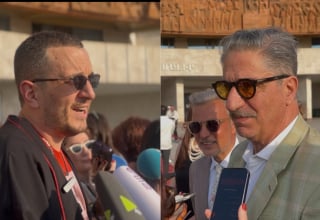
The 23rd "Golden Apricot" Yerevan International Film Festival has kicked off

NEWS.am STYLE
NEWS.am STYLE


“The Most Handsome Man in the World” at the Center of a Murder Scandal: The Dark Secret Alain Delon Took to His Grave
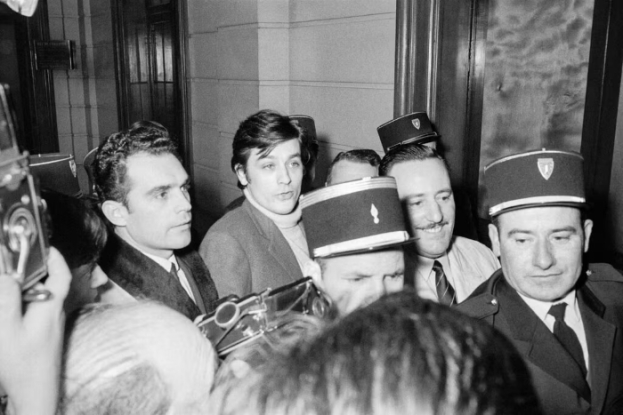
Alain Delon was hailed as “the most handsome man in the world.” Millions of women admired him, and his screen performances became emblematic of the French New Wave. Yet behind his flawless looks and movie-star aura lay a far darker story involving criminal connections, blackmail, high-society scandals and the mysterious murder of a man from the actor’s inner circle, The New York Times reports.
The story has resurfaced with the publication of British writer Edward Chisholm’s book Murder in Paris ’68: A True Story of Death and Glamour. In his review for The New York Times, Christopher Bollen describes it as a gripping investigation into one of the most notorious crimes in French history — a case whose repercussions may have reached beyond the worlds of cinema and organized crime to the corridors of presidential power.
Delon, who died in 2024 at the age of 88, was one of the most controversial figures in French cinema. President Emmanuel Macron called him “a monument of France.” But in the 1960s, the actor was known not only for his extraordinary looks and roles as mysterious criminals, killers and seducers. His name also became linked to a real-life murder that shocked French society.
The story began in October 1968, when the body of a man wrapped in plastic was discovered beside a road outside Paris. The victim was 31-year-old Stevan Marković, a Yugoslav national with a criminal record. His last registered address was Delon’s mansion on the Right Bank of the Seine.
Marković was more than just an acquaintance of the actor. He worked as his bodyguard and assistant, and was almost constantly by the star’s side. On film sets, he sometimes even stood in for Delon in certain scenes. But the relationship between the two men was apparently far from harmonious.
At the time of the murder, Delon was in Saint-Tropez filming Jacques Deray’s thriller The Swimming Pool, giving him an alibi. But shortly afterward, the victim’s brother handed police a letter Marković had written shortly before his death. In it, he asked that, if anything happened to him, the police contact Alain Delon, whom he described as being “10,000 percent” responsible for what had happened.
Investigators considered several possible motives. One theory was that Delon may have been jealous of Marković’s relationship with his wife, actress and model Nathalie Delon. Another suggested that the bodyguard had tried to blackmail his employer with photographs taken at private parties attended by members of high society. The pictures were believed to potentially feature influential figures, including France’s first lady.
An even more sensitive theory involved a possible intimate relationship between the two men. However, none of these hypotheses was ever established as the explanation for the murder.
Nearly six decades later, Chisholm revisits the case, attempting to reconstruct the atmosphere of the era and unravel the relationship between the two men. He tells the story in the style of classic film noir, with clipped sentences, sharp twists and evocative scenes of smoke-filled Parisian streets, police offices and criminal hideouts.
But the book is about more than the question of who killed Marković. The murder serves as a starting point for a broader portrait of France in the 1960s, when postwar restraint was giving way to hedonism, consumer culture and new social freedoms.
Readers are taken from the bedrooms of the prime minister and his wife to student protests at the Sorbonne, from film sets on the French Riviera to the secret hideouts of France’s organized crime underworld, known as Le Milieu. Paris at the time, the author notes, had more cinemas than any other major city in the world.
At the heart of the narrative are two men of roughly the same age, both from troubled backgrounds, who managed to escape their difficult pasts and came to Paris to make their fortunes. One became a movie god. The other ended up beaten, shot and abandoned in a roadside ditch.
As the story unfolds, Delon’s image becomes increasingly difficult to reconcile with his screen charisma. Behind the actor’s magnetic appeal, the book suggests, were traits of cruelty and vindictiveness. Marković, meanwhile, emerges as a man whose life became entangled with the worlds of fame, power and crime.
At the beginning of the investigation, police drew a parallel between the two men: one played criminals on screen, while the other, according to police records, was a criminal himself. By the end of the book, however, the line between those worlds seems far less clear.
Murder in Paris ’68 is not simply the story of an unsolved murder. It is also a portrait of an era in which beauty, power, money and crime could exist on the same side of a glamorous façade.
Follow NEWS.am STYLE on Facebook, Twitter and Instagram

- “The Most Handsome Man in the World” at the Center of a Murder Scandal: The Dark Secret Alain Delon Took to His Grave Alain Delon was hailed as “the most handsome man in the world.” Millions of women admired him, and his screen performances became emblematic of the French New Wave. Yet behind his flawless looks and movie-star aura lay a far darker story involving criminal connections, blackmail, high-society scandals and the mysterious murder of a man from the actor’s inner circle, The New York Times reports...
- “I Turned a Blind Eye to Everything for the Sake of the Children”: Kim Kardashian Opens Up About Her Relationship with Kanye West and His Wife Bianca Kim Kardashian is willing to overlook even her ex-husband Kanye West’s most hurtful actions to ensure that their four children maintain a relationship with their father. The reality star has revealed that she still invites the rapper and his current wife, Bianca Censori, to family celebrations, offers them a place to stay at her home and tries to shield the children from the controversies surrounding their father...
- A $6,000 Handbag Shaped Like an Alpine Chalet: Lauren Sánchez Bezos Turns Heads with Unusual Louis Vuitton Accessory Amazon founder Jeff Bezos's wife, Lauren Sánchez Bezos, has once again showcased her taste for unconventional luxury. During an outing in New York City, the 56-year-old entrepreneur was spotted carrying an exclusive Louis Vuitton handbag worth nearly $6,000, designed to look like a miniature mountain chalet...
- Armenian-American Producer Kai Dolbashian Named Among Hollywood’s Most Promising Young Executives by The Hollywood Reporter Armenian-American producer Kai Dolbashian has been named to The Hollywood Reporter’s annual Next Gen 2026 list, which recognizes 35 of the most promising young executives and entertainment industry professionals under the age of 35...
- “A $50,000 Bag and $20,000 Jeans Were Stolen”: Kourtney Kardashian’s Stepdaughter Turns to the FBI for Help Alabama Barker, the 20-year-old daughter of Blink-182 drummer Travis Barker and stepdaughter of Kourtney Kardashian, has accused former friends of stealing designer clothing, jewelry and home furnishings worth more than $130,000. She claims the acquaintances spent two years taking valuable items from her home and is now asking the FBI to help recover her belongings...




-
23:01, November 12
“The Most Handsome Man in the World” at the Center of a Murder Scandal: The Dark Secret Alain Delon Took to His Grave -
21:17, November 12
Money Can’t Buy You In: The Unwritten Rules of the Super-Rich -
20:30, November 12
From the Prime Minister’s Office to Katy Perry’s Embrace: Justin Trudeau’s New Life After Politics -
16:26, November 12
“I Turned a Blind Eye to Everything for the Sake of the Children”: Kim Kardashian Opens Up About Her Relationship with Kanye West and His Wife Bianca -
15:30, November 12
Loewe Turns Tim Burton’s “The Nightmare Before Christmas” Into a Collection of Luxury Accessories -
14:37, November 12
A $6,000 Handbag Shaped Like an Alpine Chalet: Lauren Sánchez Bezos Turns Heads with Unusual Louis Vuitton Accessory -
14:19, November 12
$500 Million Bet on an Ancient Legend: India’s “Ramayana” Aims to Take on Hollywood -
13:51, November 12
Armenian-American Producer Kai Dolbashian Named Among Hollywood’s Most Promising Young Executives by The Hollywood Reporter -
13:21, November 12
“You’ve Got Mail” Is Getting a Remake, but Audiences Are Already Furious: Tom Hanks and Meg Ryan’s Cult Romantic Comedy Reimagined in the AI Era -
12:28, November 12
A Watch on Your Finger: Casio Turns Its Iconic A168 Into a Miniature Ring -
12:14, November 12
“A $50,000 Bag and $20,000 Jeans Were Stolen”: Kourtney Kardashian’s Stepdaughter Turns to the FBI for Help -
11:32, November 12
“Where Are My French, Russian or Iranian Spies?”: Pavel Durov Mocks Scandal Involving Nvidia CEO’s Alleged Mistress
All materials

@NEWSam_STYLE
@NEWSam_STYLE
- Archive