


NEWS.am STYLE
NEWS.am STYLE
NEWS.am STYLE

NEWS.am STYLE
NEWS.am STYLE
NEWS.am STYLE

NEWS.am STYLE
NEWS.am STYLE
NEWS.am STYLE

The 23rd "Golden Apricot" Yerevan International Film Festival has kicked off
NEWS.am STYLE
NEWS.am STYLE

NEWS.am STYLE
NEWS.am STYLE
Nikos Vertis to perform in Armenia for the 3rd time at the invitation of “ACVA BUILDINGS”
NEWS.am STYLE

NEWS.am STYLE
NEWS.am STYLE
Echo of Artsakh: Here in body, there in spirit—A New Year in a “hometown” that feels foreign
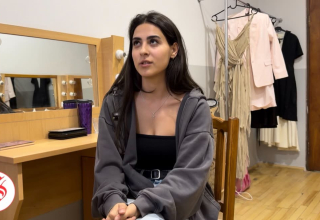
I met Ani, when I was doing my teaching practice at school. She immediately stood out for her sincerity, beautiful smile and bright eyes, which seemed to reflect both hope and sorrowful longing. We got to talking. As I listened to her story, I didn’t just see an eleventh-grade student in front of me, but a person who had experienced a lot; a child who, with fear and courage, strives to start everything from scratch in a “hometown” that feels foreign.
“We left on September 25, 2023. We traveled for two days, exactly 48 hours. Before that, I had lived in Artsakh my whole life. I was born and raised in Stepanakert. When the war began, I was at school. We spent four days in the school basement. When it calmed down a bit, my grandfather picked us up,” Ani recalls, slightly fiddling nervously with the sleeves of her sweater.

Everything inside me sank in painful anticipation: now the child would talk about something that sometimes even adults aren’t strong enough to say.
“We went to my grandmother’s house, but then they started shooting again, so we went down to the basement. Then the shooting stopped, and I was standing in the entryway. They didn’t let me go out, and the neighbors were talking, thinking about what to do. Then a neighbor came up and said: ‘We need to evacuate.’ Then I started to panic. Everyone ran to pack things. Someone said to go to the airport, someone said that there might be problems there, others thought that if we didn’t go, we wouldn’t be able to leave at all. I just stood in the entryway and couldn’t understand that this was really happening. That we had to leave. I still don’t have this awareness that we are here. Here in body, there in spirit. You still remember home, your friends.”

Ani falls silent for a second, as if she were back in that entryway, hearing the neighbors’ voices. Her gaze becomes thoughtful.

"We moved here, since we have a small apartment here. All six of us live in one room. It's a tight squeeze, but we’re not complaining. If it weren't for this house, who knows where we would be..." she laughs, looking out the window into the distance. I ask how difficult it was for her to adapt, and who helped her cope with it. "Of course, it was difficult to adapt, and it's still difficult, but I am very grateful to my new classmates. If it were not for them, everything would have been much more difficult. They are just there for you, they communicate, they support. This is very important."
She smiles, but there is sadness in her voice.

"It still feels like there are more strangers here. Yerevan used to be like a second home for me. We often came here, but now it has become somehow alien. When we lived in Stepanakert, small town, everyone knew each other. You walk down the street and say hello to everyone you meet. Here everything is different. I was very nervous before starting at a new school. I thought everyone there would be strangers and would ask: 'Who are you anyway?' It was scary. But, fortunately, everything turned out differently.”
When the conversation changed to moving here, her voice became quieter.
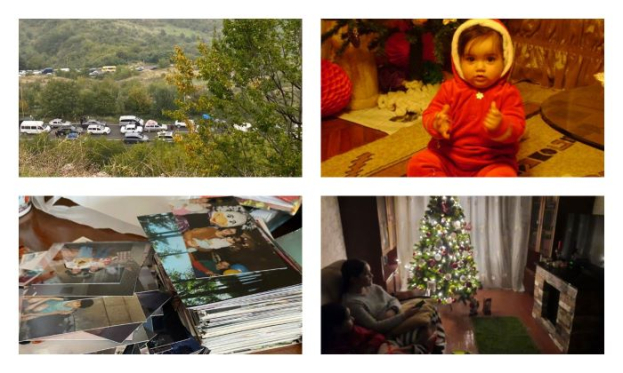
... "What I wanted to take with me... We had many photos. On the last day before leaving, we spent the night at my grandma's. Mom said: 'Go, I'll pack my things myself.' Later she admitted to me that she didn't know, back then, whether we would get out alive. She told me how she packed her things in a state when there was a veil before her eyes; she just threw everything into a bag. We brought many photos with us. I sat at the table, took out the pictures, put them away. For some reason, I really wanted to take the photos with me. My grandfather had an album from his youth. He didn't take it with him, he burned it all. You know, it's like burning bridges. It's very difficult..."

When the conversation turns to the first time in Yerevan, Ani recalls: "As soon as we entered the city, we were driving in my grandfather's car. Our things were attached to the roof. And then a car overtook us, the man rolled down the window, realized that we were from Artsakh, and asked: ‘Do you need something? Can I help you with something?’ It warmed me up so much. My heart felt warm. There are people who care. It reminded me that we are all Armenians. And it doesn’t matter where you are from – Artsakh or Yerevan.”

I asked cautiously: “This will be your second New Year in Yerevan, right?”.
“Last year, of course, we didn’t celebrate, for obvious reasons. This year, to be honest, we’re unlikely to have a celebration either. Even though it’s been almost a year and a half, somehow I can’t get used to it. It still feels like we’re there. And it’s as if no one is thinking about the future. We just live for today, and then we’ll see.”

... “If we do… We used to celebrate every year with the whole family. We had a lot of relatives, we invited everyone, and celebrated. We lived in an apartment that we rented. I remember how my sister and I were happy that we would get presents at our home, at our grandmothers’, then we would come to dad, he would also give presents, and Santa Claus would also leave presents. We were so lucky and happy,” Ani rolls her eyes dreamily, briefly finding herself back in one of those festive evenings.

“Mom and I even made a fireplace with our own hands. We turned on the lights, garlands, lanterns on the tree, and watched a movie together. Here… I don’t even know how it will be. We haven’t bought anything – no tree, no decorations. I think the day will just pass. We’ll meet, celebrate, drink champagne, and go our separate ways. Probably something like that...”

... Our conversation was ending, and I carefully asked Ani about her plans for the future. She hesitated a little: “We don’t really make plans. I don’t know yet myself. Well, I’ll probably become a lawyer. I will work and help my family.”

Her voice was quiet but confident, as if these words were not just thoughts for her, but an inner promise. Then, after a short pause, she added: “I hope that one day we'll return and celebrate New Year at home again.”
These words contained all her strength and vulnerability at the same time. The hope that keeps her afloat and the longing for the home that she will never cease to consider hers.
By Liana Aghajanyan
Follow NEWS.am STYLE on Facebook, Twitter and Instagram

- I’m Always Excited to Explore My Roots: Krikor Jabotian on Armenian Fashion and His Collaboration with Armine Harutyunyan Admiring the pieces on display, Jabotian took a moment to speak with NEWS.am STYLE about Armenia’s evolving fashion scene, his connection to his ancestral homeland and his collaboration with Armenian model Armine Harutyunyan…
- «When You Step Into an Aircraft, It Doesn’t Ask Whether You’re a Man or a Woman»: Pilot and Composer Narine Melkumyan Today, alongside her independent work as a flight instructor, Narine also represents Italian aircraft manufacturer Tecnam in the Netherlands through the British company Oriens Aviation. Her responsibilities include developing sales, expanding the brand’s presence in the Dutch market, and conducting demonstration flights in new Tecnam aircraft models...
- Michelin Guide Scandal: Prestigious Restaurant Guide Accused of Using AI to Write Reviews The prestigious Michelin Guide has found itself at the center of a controversy following an investigation by American magazine D Magazine. The publication alleges that artificial intelligence may have written most, if not all, of the new reviews of Dallas restaurants featured in the guide’s 2026 edition. Michelin has denied the allegations...
- Rolex Instead of Gold: Why Billionaires Are Investing in Watches, Rubies, and Klimt Paintings The world’s wealthiest families are increasingly putting their money into luxury collectibles, from Rolex watches and gemstone jewelry to works of art. For them, these assets offer not only a way to protect wealth against inflation and market turmoil, but also an opportunity to signal status. However, experts warn that not every expensive item makes a profitable investment, Fortune reports...
- “It’s Not a Catastrophe”: LVMH Heir Explains Why Luxury Brands Shouldn’t Panic Over the Crisis In an interview excerpt published by FashionNetwork, Arnault emphasized that the group’s strategy is built on patience, a forward-looking mindset, and working with the best talent. “Our strategy is to look ahead, remain patient, and work with the best talent,” he said...




-
15:30, October 18
I’m Always Excited to Explore My Roots: Krikor Jabotian on Armenian Fashion and His Collaboration with Armine Harutyunyan -
19:28, October 17
«When You Step Into an Aircraft, It Doesn’t Ask Whether You’re a Man or a Woman»: Pilot and Composer Narine Melkumyan -
18:18, October 17
Michelin Guide Scandal: Prestigious Restaurant Guide Accused of Using AI to Write Reviews -
17:32, October 17
Rolex Instead of Gold: Why Billionaires Are Investing in Watches, Rubies, and Klimt Paintings -
16:04, October 17
“It’s Not a Catastrophe”: LVMH Heir Explains Why Luxury Brands Shouldn’t Panic Over the Crisis -
15:29, October 17
Cher Reveals the Secret Behind Her Legendary “Naked” Met Gala Dress -
14:11, October 17
Michael Douglas Recalls Danny DeVito Swallowing All Their Joints When Police Pulled Them Over -
13:22, October 17
“You’ve Humiliated Me!” Meghan Markle Cut Ties With Designer Over Kate Middleton Blunder -
12:17, October 17
Kim Kardashian Celebrates 46th Birthday in a Dress Made Almost Entirely of Strings -
11:50, October 17
“She Showed Photos of Penises and Bragged About Her Lovers”: Scandal Surrounding Former US Ambassador to Greece Deepens -
11:12, October 17
Mike Tyson Spends Thousands on Perfume, With Each Bottle Costing Up to $6,000 -
10:30, October 17
Billionaire Heiress Spends Up to $60,000 a Year on Beauty, Including Botox Since Age 23 and $500 Manicures
All materials

@NEWSam_STYLE
@NEWSam_STYLE
- Archive