


NEWS.am STYLE

NEWS.am STYLE

NEWS.am STYLE

NEWS.am STYLE

The 23rd "Golden Apricot" Yerevan International Film Festival has kicked off

NEWS.am STYLE

NEWS.am STYLE

NEWS.am STYLE

NEWS.am STYLE

Nikos Vertis to perform in Armenia for the 3rd time at the invitation of “ACVA BUILDINGS”

NEWS.am STYLE

NEWS.am STYLE

NEWS.am STYLE

NEWS.am STYLE

NEWS.am STYLE

NEWS.am STYLE

NEWS.am STYLE

NEWS.am STYLE


“You Have an Ancient Wine History, Compared to You We’re Just Babies”: Concours Mondial de Bruxelles Ambassador Frédéric Galtier on Armenia and Its Winemaking Heritage
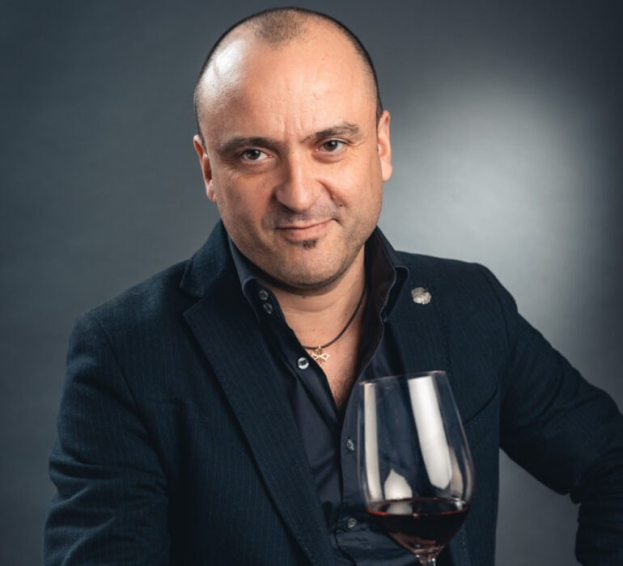
For several days, Yerevan has transformed into a global wine capital as Concours Mondial de Bruxelles, one of the world’s most prestigious wine competitions, takes place in Armenia for the first time. The event has brought together hundreds of sommeliers, experts, journalists and winemakers from dozens of countries. Among the guests is French wine journalist, consultant and Concours Mondial de Bruxelles ambassador in Spain Frédéric Galtier, who has lived in Barcelona for more than two decades and is considered one of the notable voices in the European wine industry.
Galtier oversees international relations and communications for Concours Mondial de Bruxelles, coordinates the participation of Spanish wineries in the competition and also serves as treasurer of the International Federation of Wine and Spirits Journalists and Writers (FIJEV). In an interview with NEWS.am STYLE, he spoke about why the world is increasingly choosing lighter wines, how artificial intelligence is already influencing winemaking and why Armenian wine struck him as surprisingly modern while still preserving its ancient identity.
Mr. Galtier, first of all: what makes Concours Mondial de Bruxelles such an influential and important competition in the wine world?
“I think it comes down to its history and the long journey behind it. It all started around 35 years ago in Brussels as a competition focused on the Belgian market. Gradually, it became increasingly international: the pool of tasters expanded, more wines from different countries began participating. We witnessed entire waves of winemaking development. At first, European wines dominated, then after the collapse of the Soviet Union, countries with very interesting wines started entering the competition. Today, for example, we already have a strong selection of Asian wines, especially Chinese ones.
“Brussels itself became a brand because it’s the capital of Europe, an international hub. And the competition reflects that spirit: it’s open to different wines and cultures. What’s especially important is the diversity of the tasters. Right now, we have more than 50 nationalities evaluating wines. I think that’s what truly makes us special.”
What makes a good wine truly good today?
“That’s a difficult question because there are countless styles and tastes. It’s very hard to create a wine that satisfies every consumer’s expectations. But that’s where blind tasting matters. It doesn’t matter whether a wine comes from a prestigious region or not – it still has the chance to win over the taster.
“Right now, the trend is moving toward lighter wines. People want less alcohol, less heaviness, less dense texture. A few years ago, powerful and rich wines were the ones winning competitions like this. Now things have changed. For example, we’ve noticed that oak barrel aging is no longer perceived as positively in terms of taste.
“Like every industry, the wine world has its trends, and competitions like this help reveal them. We have 50 nationalities, 50 different markets, and expectations vary everywhere. But there’s still a clear global tendency toward lighter, easier-to-drink wines – reds, whites, rosés and sparkling wines. Sparkling wines are especially popular right now. And low-alcohol wines already make up a huge category.”
What major global wine trend would you highlight today?
“People are looking for diversity. They no longer want to buy a bottle and keep it for years. They want to drink wine here and now. They’re searching for something fresh, lighter, less complicated and probably less alcoholic.”
Can artificial intelligence change the future of winemaking, or will wine always remain deeply human?
“Technology has always been extremely important for wine. Maybe today we call it artificial intelligence, but data and information have always played a key role in creating good wine. You need analysis of every process.
“I work in the wine industry myself and know how actively technology is used there. For example, here we use AI to process tasters’ comments. The system gathers information, analyzes it and creates a concise description of the wine’s main characteristics. That’s very useful because it helps quickly and clearly explain to consumers what their experience with the wine will be like. It also helps sellers and distributors better present the product.
“I wouldn’t place technology in opposition to winemaking. Winemaking itself is a technological process, and technology is necessary here. Of course, we’ll still grow grapes – without grapes, there is no wine. But technology helps us better understand how to do it more effectively. Technology isn’t the enemy, it’s a tool.”
What has Armenia revealed to you during this visit?
“It’s incredible. Your country is simply fantastic. I always dreamed of coming here and visiting this region in general. I’m French, I live in Barcelona, and we also have a long winemaking history, but compared to you we’re literally babies.
“I really like the way you describe yourselves as a new ancient country. That truly fits Armenia. And your wines align surprisingly well with modern global trends. You have your own identity, but at the same time a very contemporary style. I think Armenian winemaking has a great future.”
What do you think about Armenian wine today?
“I tried Areni. I can’t call myself an expert on grape varieties, but Areni has enormous potential because it produces light red wines. And those are exactly the kinds of reds people are looking for today.
“Red wines are going through a difficult period in the market right now. They’re no longer at the center of attention. People are choosing whites, rosés and sparkling wines. But these lighter reds – softer in color, not overly tannic, lighter on the palate – have strong prospects. And Areni is perfectly suited for that.”
What notes did you most often notice in Armenian wines?
“I haven’t tried that many Armenian wines yet, but I noticed red fruits, spices and pepper. Those spicy-fruity notes. They pair very well with your gastronomy.”
By Liana Aghajanyan
Follow NEWS.am STYLE on Facebook, Twitter and Instagram

- British Woman Reclaims Guinness World Record by Devouring a Burrito in 30 Seconds Leah Shutkever, 36, from Birmingham, already held 42 records when she set her latest world-best time. Her previous achievements include eating a Domino’s pizza in under a minute and polishing off an entire chocolate orange in just 57 seconds...
- Nevada’s Famous Brothels Hit the Market for $33.9 Million Three of America’s most famous brothels are officially looking for a new owner...
- Hypocritical Millionaires vs. Billionaires: Hollywood’s New Trend For multimillionaire celebrities, publicly attacking billionaires has become a new way to demonstrate their supposedly “correct” political credentials, the New York Post writes...
- iPhone from 1937: A Nearly 90-Year-Old Painting Sparks a Bizarre Conspiracy Theory A nearly 90-year-old painting has sparked a furious online debate and given rise to a bizarre conspiracy theory, with social media users convinced that an Indigenous man depicted in the artwork is holding a modern-day smartphone, the New York Post reports...
- The Boy Who Looks Like Boris Johnson: Why Steal Renoir at All? A robbery at the Louvre is easy enough to understand. Surely there isn’t a person alive who wouldn’t fancy hanging a Gericault or Leonardo in the guest bathroom. The same goes for the Musée d’Orsay and even the Centre Pompidou — French treasure houses crammed with extraordinary art practically begging for a daring heist. But the Renoir Museum? It is hard to imagine why anyone would bother, writes The Guardian...




-
14:20, September 10
“Even Dog Shit Deserves More Respect”: Elon Musk Brutally Slams Film About His Life -
13:33, September 10
“I’m Bored With It”: 68-Year-Old Sharon Stone Reveals She Has Been Living Without Sex for Years -
12:40, September 10
Sydney Sweeney Goes Naked and Covers Her Intimate Areas With Footballs — Fans Go Wild -
12:19, September 10
“Naked Audacity”: Bianca Censori Shocks the Public Again -
11:38, September 10
24-Year-Old Mukbang Star Dies After Extreme Eating -
11:17, September 10
He Called the Mothers of His Children “Breeders”: Elon Musk’s First Wife Opens Up About Their Marriage -
10:49, September 10
John Malkovich Cancels Israel Performance After Scandal Over Fabricated Quotes -
10:28, September 10
Nicole Kidman Sparks Plastic Surgery Debate Again: 59-Year-Old Actress Suspected of Having Breast Surgery -
23:01, September 9
British Woman Reclaims Guinness World Record by Devouring a Burrito in 30 Seconds -
22:31, September 9
Nevada’s Famous Brothels Hit the Market for $33.9 Million -
21:29, September 9
Ambani Opulence on Full Display: Radhika Merchant Stuns in a $500,000 Patek Philippe -
20:22, September 9
Hypocritical Millionaires vs. Billionaires: Hollywood’s New Trend
All materials

@NEWSam_STYLE
@NEWSam_STYLE
- Archive