


NEWS.am STYLE
NEWS.am STYLE
NEWS.am STYLE

NEWS.am STYLE

NEWS.am STYLE

NEWS.am STYLE
NEWS.am STYLE

NEWS.am STYLE

NEWS.am STYLE
NEWS.am STYLE

The 23rd "Golden Apricot" Yerevan International Film Festival has kicked off

NEWS.am STYLE

NEWS.am STYLE

NEWS.am STYLE
NEWS.am STYLE
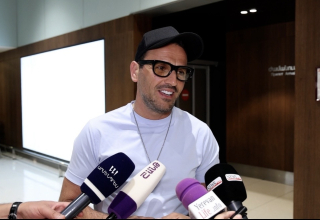
Nikos Vertis to perform in Armenia for the 3rd time at the invitation of “ACVA BUILDINGS”
NEWS.am STYLE

NEWS.am STYLE


From Miu Miu to Dior: Why Luxury Brands Are Betting on "Intellectual Influencers"
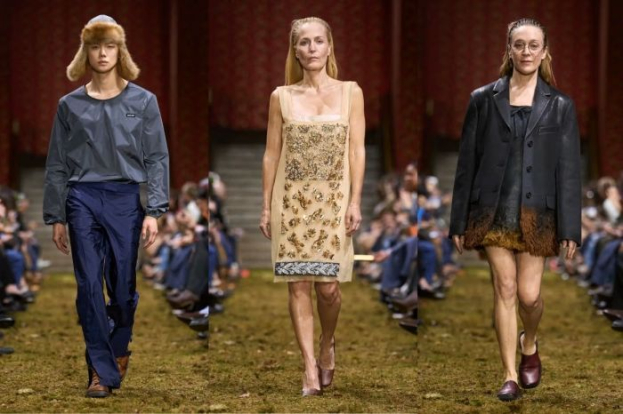
As the younger generation grows increasingly disillusioned with traditional influencers and AI-generated content, fashion houses are turning to writers, thinkers, and literary culture in search of a new level of authority, reports the FT.
Simone de Beauvoir managed to be many things in her lifetime: an existential philosopher, a writer, and a feminist. Four decades after her death, the French intellectual can add yet another role to that list — brand influencer.
De Beauvoir's work was among the topics discussed at the Miu Miu Literary Club in Shanghai late last year. The brand, which is part of the Italian group Prada, regularly hosts similar salons in Milan as well. The goal is clear: to build cultural depth that extends far beyond clothing and fleeting trends.
Intellect as a Sales Driver
Prada is far from the only luxury brand leveraging intellectual capital to boost sales:
-
J.Crew partnered with author and The New Yorker staff writer Patrick Radden Keefe.
-
Dior chose Nigerian novelist Chimamanda Ngozi Adichie.
-
Some labels take an even more literal approach: Valentino sponsored the 2024 International Booker Prize, and Coach made the unexpected move of partnering with publisher Penguin Random House to release miniature book keychains.
Although this trend is not entirely new — forecasting agency The Future Laboratory predicted the era of expert influencers three years ago (and long before them, American writer Joan Didion starred in an ad campaign for Celine sunglasses) — today, the desire to enlist intellectual authority is accelerating under the influence of several factors.
The main reason lies in the fact that Generation Z is growing up, becoming wiser, and growing increasingly skeptical of ordinary influencers — a parade of bloggers whose content has devolved into a dull formula over a decade on social media.
A new player on the field, artificial intelligence, also lacks trust and suffers from excessive homogeneity. Gen Z, much like their parents, are looking for more than just entertainment on social media: TikTok and Instagram have long served them as search engines and fact-checking tools.
The Revival of Demand for Expertise
The surge in popularity of intellectual influencers reflects a return to the value of genuine expertise and opens up vast opportunities for its monetization. One need only look at:
-
The success of events like pub discussions at Pints of Knowledge, which draw massive crowds.
-
The explosive growth of book communities BookTok and Bookstagram, which breathed new life into once-niche genres of the publishing industry.
-
The success of platforms like Substack, which has spawned a whole galaxy of star authors (especially in the health and wellness space).
-
Projects like the work of ex-monk Jay Shetty, positioned as a man who "makes wisdom go viral," who even co-founded his own agency. Substack itself reached the milestone of 5 million paid subscriptions by 2025.
Of course, intellectual influencers still occupy only a tiny fraction of the market compared to their traditional counterparts: for instance, popular book vlogger Jack Edwards boasts 1.3 million followers, while Kim Kardashian has 344 million. And yet, in an era where headlines are dominated by the achievements of artificial intelligence, it is heartening to realize that human intelligence is still playing in the major leagues.
Follow NEWS.am STYLE on Facebook, Twitter and Instagram

- Armenia wins Junior Eurovision 2026 The Junior Eurovision 2026 contest has ended in Malta, with Armenia's representative Nare being declared the winner with the song Boo…
- Armenia's Representative Nare's Performance at the Junior Eurovision Song Contest 2026 The Junior Eurovision Song Contest 2026 is underway in Malta…
- LIVE: Junior Eurovision 2026 has started in Malta. Armenia will perform under the number 8 The “Junior Eurovision” song contest is currently taking place in Malta, where Armenia is represented by Naré with the song Boo…
- AI-Generated Singer Announces Pregnancy and Quits Band — Fans Didn’t Realize She Wasn’t Real Social media users were left confused after news broke that Mity, a member of the Chinese pop group Baby Queen, had announced her pregnancy and decided to take a temporary break from the band. Many fans only then discovered that the group and its members were entirely AI-generated, the Daily Mail reports...
- Three Hours for Makeup and Household Chores: Japanese Prime Minister’s Admission Sparks Public Debate Japanese Prime Minister Sanae Takaichi has said her daily schedule is significantly more demanding than those of her male predecessors. In addition to her official duties, she spends several hours a day on makeup, bathing, cooking and other household tasks. Her remarks have sparked a heated debate about gender stereotypes and the expectations placed on Japanese women, The New York Times reports...




-
01:22, October 25
Armenia wins Junior Eurovision 2026
-
00:16, October 25
Armenia's Representative Nare's Performance at the Junior Eurovision Song Contest 2026 -
23:00, October 24
LIVE: Junior Eurovision 2026 has started in Malta. Armenia will perform under the number 8 -
19:30, October 24
“Kim Kardashian Could Become President”: Biographer Reveals Her Family Secrets, Scandalous Past and Obsession with Fame -
17:25, October 24
AI-Generated Singer Announces Pregnancy and Quits Band — Fans Didn’t Realize She Wasn’t Real -
16:34, October 24
Salma Hayek’s Daughter Tops Britain’s Most Eligible List: Billionaire Parents, Pubs and Vodka -
15:10, October 24
Timothée Chalamet Ignores Victoria’s Secret Models for Kylie Jenner — His Reaction Goes Viral -
14:20, October 24
Queen Elizabeth II Bragged About Helen Mirren to a Sheikh — But He Didn’t Recognize the Actress -
13:49, October 24
Why Did Tom Cruise Punch Jack Nicholson? -
13:15, October 24
“I Know Where You Are”: Hunter Biden Accused of Threatening Sex Worker -
12:12, October 24
Kim Kardashian Opens Up About Her Romance with Lewis Hamilton: “I’m Very, Very Happy” -
11:19, October 24
A $3 Million Rolex, a $200,000 Hermès Bag and a 7-Carat Diamond: Cardi B Spoils Herself with Lavish Birthday Gifts
All materials

@NEWSam_STYLE
@NEWSam_STYLE
- Archive