



NEWS.am STYLE

NEWS.am STYLE

NEWS.am STYLE

NEWS.am STYLE

The 23rd "Golden Apricot" Yerevan International Film Festival has kicked off

NEWS.am STYLE

NEWS.am STYLE

NEWS.am STYLE

NEWS.am STYLE

Nikos Vertis to perform in Armenia for the 3rd time at the invitation of “ACVA BUILDINGS”

NEWS.am STYLE

NEWS.am STYLE

NEWS.am STYLE

NEWS.am STYLE

NEWS.am STYLE

NEWS.am STYLE

NEWS.am STYLE

NEWS.am STYLE



The Unappetizing Truth About Sushi: Scientists Find Parasites in 96% of Tuna
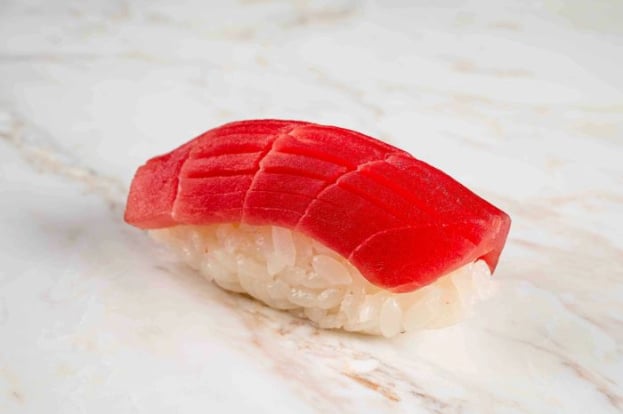
If you were planning to order a sushi platter tonight, you may want to reconsider. A new study has found that tuna can be teeming with parasitic worms.
Researchers from the Federal University of Santa Catarina in Brazil examined 53 specimens of local fish and uncovered a disturbing statistic: 96% of the samples were infected with parasites. In total, the scientists recovered more than 1,600 worms.
Even more concerning is that one of the species identified — Anisakis — poses a direct threat to human health.
“The worm can penetrate the walls of the human intestine, causing an acute, temporary infection accompanied by abdominal pain, nausea, vomiting and diarrhea,” the researchers warn.
The scientists focused their research on skipjack tuna (Katsuwonus pelamis), a species widely consumed around the world.
“Skipjack tuna has high economic value and is widely used by the fish-processing industry, primarily for the production of canned fish,” the authors of the study, published in the journal Ocean and Coastal Research, noted.
Using scanning electron microscopy, the researchers identified two main groups of parasites — Anisakis and Trypanorhyncha — in 96% of the fish examined.
Most of the worms were found in:
- The intestines — 596 parasites;
- Muscle tissue — 441 parasites;
- The stomach — 408 parasites.
Cooking the Fish Does Not Guarantee 100% Safety
The researchers emphasize that eating raw or undercooked fish containing Anisakis parasites can be extremely dangerous. Moreover, even heat treatment may not always eliminate the risks.
- “Cooking and/or freezing seafood may be insufficient to prevent hypersensitivity reactions [allergic reactions],” the researchers warn.
- The scientists also detected heat-stable allergens in the extracts, raising questions about whether fish that has contained parasites can ever be considered completely safe to eat, even after being thoroughly cooked.
Follow NEWS.am STYLE on Facebook, Twitter and Instagram

- The Unappetizing Truth About Sushi: Scientists Find Parasites in 96% of Tuna If you were planning to order a sushi platter tonight, you may want to reconsider. A new study has found that tuna can be teeming with parasitic worms...
- What Do Jeff Bezos, Shakespeare and Genghis Khan Have in Common? What does it take to become great? Being in the right place at the right time? Possessing extraordinary genius? Or does true greatness require something more? Daily Mail explores the question...
- ‘Chinese Nostradamus’ Makes Grim Predictions for 2027: Ground Invasion of Iran and Civil War in the US A professor dubbed the “Chinese Nostradamus” has issued a series of grim predictions for 2027, culminating in widespread unrest in the United States that could spiral into a second civil war...
- A Waist-Deep Wedding: Bride Walks Down the Aisle in Flooded Church A bride had a truly “soaking wet” wedding on Tuesday when she walked down the aisle through a flooded church in the Philippines, with the water rising almost to her waist — before she and her groom finally exchanged their vows...
- The 2026 Ig Nobel Prizes: How to Blow Your Nose, Why Teenagers Smell and the Mystery of Buried Underwear The annual Ig Nobel Prizes have once again been awarded, honoring scientific discoveries that “first make people laugh, and then make them think.”..




-
18:31, September 5
The Unappetizing Truth About Sushi: Scientists Find Parasites in 96% of Tuna -
17:38, September 5
What Do Jeff Bezos, Shakespeare and Genghis Khan Have in Common? -
16:07, September 5
‘Chinese Nostradamus’ Makes Grim Predictions for 2027: Ground Invasion of Iran and Civil War in the US -
15:22, September 5
Aryna Sabalenka Furious Over Marijuana Smell at US Open -
14:36, September 5
Jane Fonda Slams ‘Tech Bros, Oligarchs and Billionaires’ Who Want to Live Forever With Robots: ‘They’ll Be Their Children’ -
13:19, September 5
A Waist-Deep Wedding: Bride Walks Down the Aisle in Flooded Church -
12:25, September 5
Luxury at H&M Prices: Elie Saab Brings Couture Codes to the Mass Market -
11:17, September 5
George Clooney Rules Out Presidential Run — and Names Three Democratic Favorites for 2028 -
10:58, September 5
Petrossian Caviar Empire Head Mikael Petrossian Named One of Vanity Fair’s Best-Dressed Frenchmen -
10:30, September 5
Beyoncé Fans Accuse Singer of ‘Disgusting Greed’ Over $1,000 Empty Box -
23:01, September 4
“The Devil Wears Zara”: Anna Wintour’s Latest Met Gala Disaster -
22:30, September 4
$100 Billion Has Vanished: Is the Era of Shein and Out-of-Control Fast Fashion Finally Coming to an End?
All materials

@NEWSam_STYLE
@NEWSam_STYLE
- Archive