



NEWS.am STYLE

NEWS.am STYLE

NEWS.am STYLE

NEWS.am STYLE
NEWS.am STYLE

NEWS.am STYLE

NEWS.am STYLE

NEWS.am STYLE

The 23rd "Golden Apricot" Yerevan International Film Festival has kicked off

NEWS.am STYLE

NEWS.am STYLE

NEWS.am STYLE

NEWS.am STYLE

Nikos Vertis to perform in Armenia for the 3rd time at the invitation of “ACVA BUILDINGS”

NEWS.am STYLE

NEWS.am STYLE

NEWS.am STYLE

NEWS.am STYLE


The Secrets of Tbilisi: Why Houston Chefs Traveled All the Way to Georgia in Search of the World’s Best Caviar
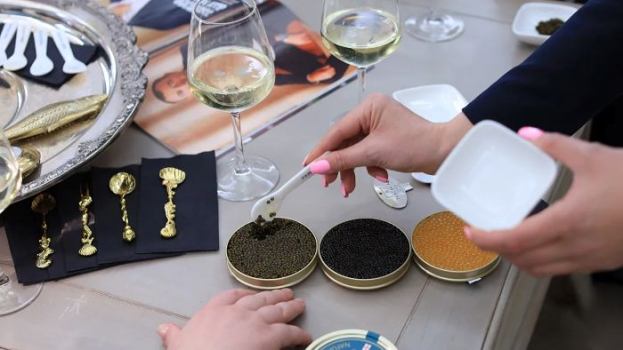
On a journey to one of the world’s leading caviar producers, chefs Felipe Riccio and Austin Waiter of Houston-based Goodnight Hospitality discovered what truly sets good caviar apart from the genuinely exceptional, writes Robb Report.
For most restaurant guests, caviar only appears at the very end of its long journey. It is served chilled and meticulously presented, often with a hint of ceremony, making it feel more like a trophy than food. Together, we have spent decades working in fine dining: tasting, selecting, and serving caviar in all its various forms. We know its rituals and the pleasure it brings, but until recently, we had never seen where it actually comes from.
Earlier this year, we decided to change that. We traveled to Tbilisi, Georgia, to visit Panchenko Caviar House—a producer widely regarded as the creator of some of the finest caviar on the market. This experience completely transformed how we buy, use, and present this ingredient in our restaurants.
As chefs, we often talk about food in terms of immediacy: What's fresh? What's seasonal? What's ready right now? But caviar forces you to think in years, not weeks.
At Panchenko, which supplies caviar for the restaurant Altima, the final product is the result of a complex and continuous cultivation process. We learned that before caviar can become an occasion for celebration, it takes decades of meticulous animal husbandry. Some sturgeon species require up to 20 years to reach maturity. The fish are raised in ponds fed by river water from the Gombori Mountains and are constantly monitored to ensure the proper development of the roe—all the way up to harvesting, salting, and packaging. Once the caviar is canned, it can be several more years before the tins are opened and tasted. Small decisions add up to years of work. This labor relies on patience, not culinary showmanship.
This often-unseen labor has now become our primary criterion when choosing caviar. It has also changed our answer to the guests' most frequent question: "Which one is the best?"
It’s a fair question, but not always the most useful one. Now that we have seen the entire process up close, we frame our answers the same way we talk about wine. The world's greatest vintages have trained consumers to think beyond a simple hierarchy. A bottle is interesting because of its origin, grape variety, producer, structure, texture, and personal preference, rather than just because it's expensive. Caviar deserves the same level of attention, even if the descriptors are different.
The species of fish matters. So do texture, salinity, richness, minerality, and the finish. Some roe is clean and bright (such as Siberian caviar); others are creamy, nutty, deeply savory, or more lingering (like Golden Sturgeon).
For us, quality begins with balance. The individual eggs should be distinct, not mushy. The finish should be clean, never muddy, metallic, or aggressively fishy. The product should feel alive while remaining true to itself. To achieve this, meticulous care is taken during the salting stage so that the eggs acquire a magnificent texture and flavor while remaining intact. It is precision work: inside the tin, there is nothing but caviar and salt, and they must work in flawless harmony.
Equally important is the producer's ability to speak clearly about their product. We need transparency regarding the fish species, origin, farming method, harvesting, aging, processing, and storage. A pretty tin means very little if the chain of care behind it is unclear.
When we talk about caviar strictly in terms of price or prestige, we reduce a complex ingredient to a conspicuous commodity (Veblen goods). But when we discuss species, producers, style, and flavor profiles, the category becomes more open, engaging, and ultimately much more inviting.
This approach now defines our work across all our restaurants.
Follow NEWS.am STYLE on Facebook, Twitter and Instagram

- £20,000 ‘Madonna bra’ sculptures burned children: unusual artwork moved out of the sun An unusual £20,000 art installation that locals compared to Madonna’s iconic cone bra has been moved into the shade after complaints that its metal structures became scorching hot in the sun and could burn children, the Daily Mail reports...
- ‘They’ll Do Anything for Likes’: Influencers Accused of Photoshoot Beside Ambulance as Patient Was Being Treated It seems the race for viral content has reached a new level of absurdity...
- Dom Pérignon Teams Up with Damien Hirst as Iconic Champagne Becomes a Work of Art Dom Pérignon has teamed up with British artist Damien Hirst to create a special limited-edition collection for the end of 2026...
- “Cinematic, Cosmopolitan and Wonderful”: Vogue France Features a Dream Wedding in Armenia What happens when Armenian wedding traditions meet the cultures of Vietnam, Cambodia and China? Sara-Mae Ngo and Gevorg Ambartsumyan transformed their wedding into a cinematic story where family traditions, French fashion, the music of Charles Aznavour and Armenian culture came together. French Vogue has now chronicled their extraordinary celebration in detail...
- TikTok Star with Millions of Followers Admits She Has Never Read a Book Not so long ago, admitting that you hardly ever read would have been embarrassing. Today, however, a lack of interest in books seems to have become almost fashionable among some members of the younger generation — at least judging by the surprising confession of popular influencer Alix Earle...




-
17:34, October 3
Daniel Roseberry returns to Schiaparelli’s roots with daring collection featuring golden accents and bare breasts
-
16:14, October 3
£20,000 ‘Madonna bra’ sculptures burned children: unusual artwork moved out of the sun -
15:21, October 3
‘They’ll Do Anything for Likes’: Influencers Accused of Photoshoot Beside Ambulance as Patient Was Being Treated -
14:22, October 3
Tiffany Trump finds herself in an awkward situation over AI -
13:03, October 3
Kathleen Turner finally reacts to Michael Douglas’s confession about their secret affair: “What a fuss over something that happened 40 years ago!” -
12:18, October 3
Ben Affleck was reportedly set up with Shakira: actor says he is not looking for a new romance -
11:27, October 3
Ex-husband dismembered influencer’s body and boiled it with vegetables to mask the smell: shocking details of Abby Choi’s murder -
10:30, October 3
Elon Musk leaves the mother of four of his children: Shivon Zilis admits their split came as a shock -
23:01, October 2
Popular Weight-Loss Drugs Could Deprive the Brain of Energy, Expert Warns -
22:31, October 2
Erling Haaland Sues Airline Over His Famous Hairstyle -
21:22, October 2
Audemars Piguet Turns the Legendary Royal Oak into Luxurious Jewelry with Diamonds, Sapphires and Emeralds -
20:14, October 2
Pierpaolo Piccioli Reimagines Balenciaga with Couture Techniques, Bold Color and New Lightness
All materials

@NEWSam_STYLE
@NEWSam_STYLE
- Archive