



style.news.am

style.news.am

NEWS.am STYLE

NEWS.am STYLE

NEWS.am STYLE

How Nare was welcomed at Zvartnots Airport after winning the Junior Eurovision Song Contest: the singer's emotions

NEWS.am STYLE

NEWS.am STYLE

NEWS.am STYLE

NEWS.am STYLE

NEWS.am STYLE

NEWS.am STYLE
NEWS.am STYLE

NEWS.am STYLE

NEWS.am STYLE

NEWS.am STYLE

The 23rd "Golden Apricot" Yerevan International Film Festival has kicked off

NEWS.am STYLE




Japanese Ice at $1.50 a Cube: The New Luxury Status Symbol at the World’s Best Bars
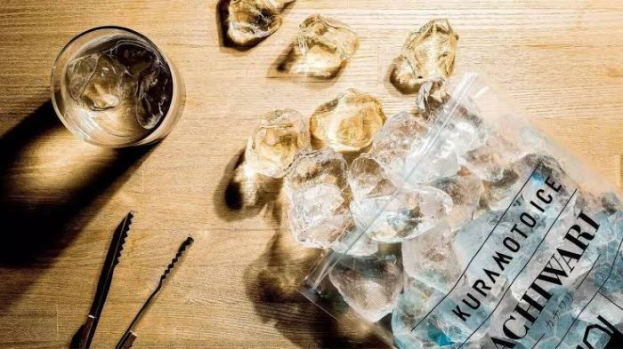
In the historic Japanese city of Kanazawa, craftsmen carefully shape and carve enormous blocks of ice destined to chill Negronis in some of the world’s most fashionable bars, AFP reports.
These specialists work for Kuramoto Ice, a century-old company based in Ishikawa Prefecture on the coast of the Sea of Japan. It is one of dozens of Japanese businesses producing premium ice of exceptional clarity.
Today, this seemingly ordinary product has become a genuine luxury accessory for cocktails. The ice is believed to melt more slowly than regular ice, making it increasingly popular in Japan’s cocktail culture. But the craze for expensive ice has already spread far beyond the country: bars in the United States, Australia and elsewhere are willing to pay up to 200 yen — around $1.30 — for a single cube.
Kuramoto Ice is one of the few Japanese companies exporting this type of ice overseas. Since it began international shipments in 2019, its overall sales have more than doubled.
“We don’t rush anything. We freeze the water slowly while constantly keeping it moving. That’s how you make good ice,” the company’s fifth-generation head told AFP at the Kanazawa factory.
“My heart literally skips a beat with joy when I see ice that looks like a precious gemstone,” the 41-year-old entrepreneur said as he poured chilled hojicha tea into a glass containing a perfectly clear sphere of ice.
The technology, originally developed in the United States, has been transformed into something approaching an art form in Japan. Specialized producers freeze water for 48 to 72 hours — far longer than the roughly 30 minutes needed to make ordinary ice at home or in commercial ice machines.
As water begins to freeze, crystallization progresses from the outer walls toward the center. Various impurities are gradually pushed inward. The Japanese method involves removing this concentrated, impure water and replacing it with fresh water.
Constant agitation also helps eliminate air bubbles. The result is almost perfectly transparent ice, known in Japan as junpyo.
Although there is little conclusive scientific evidence to support the claim, the technique is believed to produce colder, denser ice that chills a cocktail without diluting it with excess water.
Japan’s Crystal-Clear Ice Goes Global
The popularity of Japanese ice is rapidly growing overseas.
Take Native, the fashionable Singapore bar that made this year’s list of Asia’s 50 Best Bars. It imports around 900 kilograms of Kuramoto ice every year.
“Local ice is cheaper, but Kuramoto Ice is clearer, denser and melts more slowly,” co-owner Yong Wei said.
Back in Kanazawa, workers in protective clothing manually move enormous blocks of ice around the factory before beginning the painstaking work of carving them into perfectly even spheres, cubes and rectangular blocks with beveled edges.
The ice can even be made to precisely fit the dimensions of a particular glass at a customer’s request.
Finished pieces are packaged and stored in a dedicated room kept at –10°C before being shipped to customers around the world.
Kuramoto acknowledges the environmental cost of transporting ice thousands of miles, but believes that the relatively small volume of the product means its overall environmental impact is comparatively limited.
His dream of entering the US market dates back more than a decade, when he visited Las Vegas and noticed an apparent paradox: expensive cocktails were being served with poor-quality ice that melted quickly and diluted the drinks.
Meanwhile, the labor-intensive ice-making technique that is still widely used in Japan to produce a higher-quality product has all but disappeared in the United States.
At a Hilton hotel near Tokyo, bartender Shingo Miyachi prepares a Negroni using one of Kuramoto Ice’s large, crystal-clear cubes.
The cube fits the glass perfectly and, thanks to its remarkable transparency, becomes almost invisible.
“Ice really has an enormous impact on the taste of a cocktail,” Miyachi explains.
According to him, the difference becomes particularly noticeable in the drink’s aftertaste as the ice begins to melt.
Working with ice is considered one of the most important skills for Japanese bartenders. Many begin their training by learning how to break and shape ice with precision and care.
“When you look at the ice and see how much attention has gone into every detail, you can almost immediately tell how seriously the bartender takes the taste of the cocktail and how much care they have put into it,” Miyachi says. “A cocktail is truly born only when the glass, the ice and the liquid become one.”
Follow NEWS.am STYLE on Facebook, Twitter and Instagram

- Brunei’s Sultan at the Controls of a $600 Million Boeing: Did the 80-Year-Old Billionaire Personally Land His Flying Palace During a Moscow Snowstorm? Brunei's 80-year-old Sultan Hassanal Bolkiah has once again attracted attention for his extraordinary passion for aviation. The monarch, renowned for his love of luxury aircraft and his habit of personally piloting planes, arrived in Moscow aboard his private Boeing 747-8, valued at approximately $600 million. The aircraft landed amid heavy snowfall, prompting speculation that the sultan himself may have been at the controls of the giant jet...
- ‘Take Over the World After a Couple of Drinks’: MIT Professor Reveals Alleged Private Conversations Among Employees of Claude’s Creator Employees of US artificial intelligence company Anthropic allegedly discuss overthrowing the US government and establishing global domination in informal settings. The conversations become particularly candid after a few alcoholic drinks, according to physicist and Massachusetts Institute of Technology (MIT) professor Max Tegmark, the New York Post reports....
- ‘I Wanted to Become a Father to Millions’: Dolce & Gabbana Model Caught in Sperm Donation Scandal Italian model Federico Massaro, 32, who has worked with fashion house Dolce & Gabbana and appeared on the Italian version of Big Brother, has become the defendant in an unusual lawsuit in Los Angeles. A 47-year-old woman is accusing him of breaching an exclusive sperm donation agreement and claims that his decision deprived her of her last chance to become a mother, the New York Post reports...
- ‘What Is Wrong with You?’ Donald Trump Jr. Slams Netflix Over Lesbian Kissing Scene Posted on Thanksgiving Netflix has found itself at the centre of a controversy after sharing a provocative clip from its series The Hunting Wives on Thanksgiving. The video, featuring an intimate kiss between two women, sparked a wave of outrage on social media. Among those voicing their disapproval was Donald Trump Jr., the eldest son of the US president...
- What Billionaires Read Before Bed What do Bill Gates, Bill Ackman and the heads of some of the world's largest companies have in common? In 2026, their reading choices have proved to be far removed from conventional self-help and motivational books. Instead, billionaires are delving into stock market disasters, corporate scandals, artificial intelligence and the stories of people shaping the world, CEOWORLD Magazine reports...




-
19:27, November 28
“In Armenia, We Love to Make a Grand Entrance. Subtlety Isn’t Really Our Thing”: Anna Satyan on Perfume, Armenian Fragrances and the Culture of Wearing Scent for Yourself -
18:30, November 28
Brunei’s Sultan at the Controls of a $600 Million Boeing: Did the 80-Year-Old Billionaire Personally Land His Flying Palace During a Moscow Snowstorm? -
17:33, November 28
‘You Should All Have Sex with Each Other’: Rob Lowe Reveals How Oscar-Winning Director Encouraged Cast Romances on Set -
16:28, November 28
‘Take Over the World After a Couple of Drinks’: MIT Professor Reveals Alleged Private Conversations Among Employees of Claude’s Creator -
15:14, November 28
Monica Bellucci Challenged Hollywood’s Ageism at 50: The Oldest Bond Woman Opens Up About Nude Scenes and Working with Mel Gibson -
14:22, November 28
‘I Wanted to Become a Father to Millions’: Dolce & Gabbana Model Caught in Sperm Donation Scandal -
13:07, November 28
A Bathtub Overlooking Europe, Champagne and a $105,000 Private Carriage: Katy Perry and Justin Trudeau Embark on a Lavish Romantic Journey Aboard the Orient Express -
12:12, November 28
Nicole Scherzinger Calls Off Engagement After Seven Years Together — Who Initiated the Split? -
11:20, November 28
‘What Is Wrong with You?’ Donald Trump Jr. Slams Netflix Over Lesbian Kissing Scene Posted on Thanksgiving -
10:30, November 28
Simon Abkarian to Take the Helm of Paris’s Legendary Théâtre du Soleil -
23:01, November 27
Neymar Swaps the Football Pitch for the Fragrance Business: Brazilian Star to Create a Perfume for Dubai-Based Brand -
22:19, November 27
What Billionaires Read Before Bed
All materials

@NEWSam_STYLE
@NEWSam_STYLE
- Archive