


NEWS.am STYLE

NEWS.am STYLE

NEWS.am STYLE

NEWS.am STYLE
NEWS.am STYLE

NEWS.am STYLE

NEWS.am STYLE

NEWS.am STYLE

The 23rd "Golden Apricot" Yerevan International Film Festival has kicked off

NEWS.am STYLE
NEWS.am STYLE

NEWS.am STYLE
NEWS.am STYLE

Nikos Vertis to perform in Armenia for the 3rd time at the invitation of “ACVA BUILDINGS”
NEWS.am STYLE

NEWS.am STYLE
NEWS.am STYLE
NEWS.am STYLE

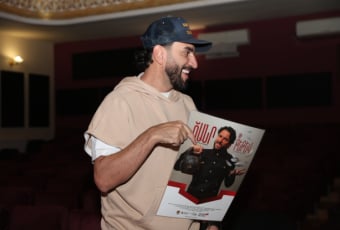
Sexy Werewolves, Mafia Boys and Homeless Billionaires: Welcome to the World of Microdramas

Just a few years ago, the idea of making short-form shows specifically for smartphones seemed doomed to fail. In 2020, entrepreneur Jeffrey Katzenberg launched Quibi, a platform built around short videos, but it shut down just eight months later. Now, a similar concept is experiencing a genuine boom: microdramas have become one of the fastest-growing forms of streaming entertainment in the world, according to The New York Times.
Microdramas, also known as vertical dramas, are created specifically for viewing on a phone. Episodes typically run no more than two minutes, while the plot follows the logic of a soap opera: every episode opens with a hook and ends with an unexpected twist. Popular storylines include secret billionaires, mafia families, fake marriages, werewolves, love triangles and enemies-to-lovers romances.
The format emerged in China around 2018 and is already generating more revenue there than the traditional film industry. In the United States, the microdrama market is expected to generate around $1.5 billion in 2026, according to the article’s author. The American market was initially dominated almost entirely by Chinese companies, but major Hollywood players are now joining the race.
One of the leaders is ReelShort. Its shows attract hundreds of millions of views, while actors who were virtually unknown until recently are becoming internet stars with hundreds of thousands of followers. Tall, muscular men are particularly in demand, as women make up the core audience for many of the early microdramas.
The author spent several days on the set of ReelShort’s Bound by Love and discovered an industry operating at extraordinary speed and minimal cost. A series with roughly the running time of a feature film can be shot in about 11 days, while creators are often less concerned about the quality of episodes placed behind a paywall. Locations are chosen primarily based on cost, and small crews are forced to work under extremely tight conditions.
The plots, meanwhile, are deliberately pushed to absurd extremes. In Bound by Honor, a young woman from a Chicago mafia family is forced to marry the head of a New York crime clan. After the wedding, the groom’s family demands proof of her virginity, so the hero stages the evidence by cutting his own hand. Stories like these are built less around logic than around the constant need to make viewers watch the next episode — and eventually pay for access.
Audience behavior is what ultimately determines the content. If a particular scene drives up viewership, platforms demand more scenes like it. As a result, shows feature artificial love triangles, violence and other emotional provocations even when they have little relevance to the actual plot.
At the same time, microdramas have become a lifeline for many actors and entertainment workers. Amid cutbacks in traditional Hollywood production and the fallout from the pandemic and industry strikes, actors who had gone years without major roles are finally finding steady work. For women, however, the situation is considerably worse: they are often paid less and subjected to a disproportionate amount of on-screen violence.
Microdramas have become so firmly embedded in the industry that traditional entertainment companies are now developing their own projects. Fox Entertainment has invested in the platform Holywater, Disney+ and Paramount+ are preparing microdramas, and Peacock is licensing popular ReelShort titles. ReelShort itself reported 34 million views for its new series Breathe in its first 24 hours alone. Even Jeffrey Katzenberg, who once became a symbol of the failure of short-form mobile television, has invested in the market again.
But success has brought a new threat: artificial intelligence. Industry participants say China has already begun mass-producing microdramas with the help of AI. In January 2026, Chinese platforms were releasing an average of around 470 AI-generated microdramas every day. COL Group has said it plans to use AI to replace up to 75 percent of actors in projects produced in China.
For microdramas, this represents a particularly significant shift. The format is already built around speed, repetition and minimal costs. Many storylines are almost interchangeable, while scripts are often translated from Chinese using AI and then only lightly adapted for American audiences. The technology could therefore make production even cheaper.
The author compares the current boom to the emergence of VHS in the 1980s: the market grows rapidly, countless companies appear and, eventually, consolidation is likely to follow. But unlike traditional television, microdramas are perfectly suited to the way people consume content on smartphones. Viewers do not necessarily choose to watch them deliberately — social media algorithms simply serve up the next video.
And that is the central question: will microdramas become a new form of television, or will they turn out to be another digital bubble? For now, Hollywood clearly has no intention of waiting for the answer. An industry that once dismissed vertical dramas as cheap entertainment now sees them as a way to reach an audience that prefers watching short videos on their phones.
But the author sees a more troubling trend beneath the boom. As AI makes video production cheaper and easier, there is less need to pay actors, directors, cinematographers, designers and other professionals. Even mediocre microdramas still have one significant advantage: real people are currently making them — and getting paid for their work.
That, the author argues, may ultimately become the most important question facing the future of entertainment: could the drive to produce content faster and more cheaply gradually destroy the human element that makes film and television what they are?
Follow NEWS.am STYLE on Facebook, Twitter and Instagram

- Sexy Werewolves, Mafia Boys and Homeless Billionaires: Welcome to the World of Microdramas Microdramas, also known as vertical dramas, are created specifically for viewing on a phone. Episodes typically run no more than two minutes, while the plot follows the logic of a soap opera: every episode opens with a hook and ends with an unexpected twist. Popular storylines include secret billionaires, mafia families, fake marriages, werewolves, love triangles and enemies-to-lovers romances...
- Dior Bag Bought for Just £80 at a Charity Shop Sells for Nearly £8,000 at Auction A rare Christian Dior bag discovered by chance in a charity shop in the Cotswolds has sold at auction for an impressive £7,870, thanks to its exceptional collector’s value...
- “STAMBUl’25”: Viktor Soghomonyan Continues His Geopolitical Saga About a Russian Diplomat Filming for the new season has already begun in Istanbul and the Moscow region...
- Kim Kardashian Is Hooked on a ‘Longevity Capsule,’ but Doctors Sound the Alarm Kim Kardashian is betting on more than just maintaining a perfect figure — she is now focusing on longevity as well. One of the star’s latest obsessions is hyperbaric oxygen therapy, a treatment popular among celebrities and professional athletes. Doctors, however, warn that its ability to extend the lifespan of healthy people has yet to be proven, and that some devices can be dangerous, according to the New York Post...
- Napoleon’s Secret Revealed After 217 Years: AI Cracks the Emperor’s Mysterious Code More than 200 years later, a coded letter written during the Napoleonic Wars has finally been deciphered, according to the New York Post...




-
20:22, October 7
Billionaire in Retirement: Warren Buffett Is Hooked on Glenn Close, 1950s Commercials and Uzbek TV Shows -
19:36, October 7
Sexy Werewolves, Mafia Boys and Homeless Billionaires: Welcome to the World of Microdramas -
16:32, October 7
Dior Bag Bought for Just £80 at a Charity Shop Sells for Nearly £8,000 at Auction -
15:39, October 7
Louis Vuitton Defies Gravity: Nicolas Ghesquière Unveils a Weightless Collection at the Louvre
-
15:21, October 7
Michael Douglas Recalls Wild Party with Bob Dylan, George Harrison and a Dog Devouring Caviar -
14:50, October 7
“STAMBUl’25”: Viktor Soghomonyan Continues His Geopolitical Saga About a Russian Diplomat -
14:43, October 7
‘30,000 Sad Men Paid for This Party’: Scandalous Joke Rocks OnlyFans Star’s Wedding -
14:17, October 7
A Kiss by the Eiffel Tower and Family Drama: Brooklyn Beckham and Nicola Peltz Put on a Romantic Show in Paris -
13:27, October 7
‘Satan’ and an ‘Ugly Heart’: Meghan Markle Fans ‘Terrorize’ British Priests Over Chocolate Advent Calendar -
12:36, October 7
Kim Kardashian Is Hooked on a ‘Longevity Capsule,’ but Doctors Sound the Alarm -
11:40, October 7
Robert De Niro Has 18 Dogs: Woody Harrelson Reveals a Surprising Side of the Star’s Life -
11:19, October 7
Tom Cruise Isn’t What He Used to Be: ‘Digger’ Flop Revives Memories of His Box-Office Misfires
All materials

@NEWSam_STYLE
@NEWSam_STYLE
- Archive