


NEWS.am STYLE
NEWS.am STYLE
NEWS.am STYLE
NEWS.am STYLE

NEWS.am STYLE
NEWS.am STYLE
NEWS.am STYLE

NEWS.am STYLE
NEWS.am STYLE
NEWS.am STYLE
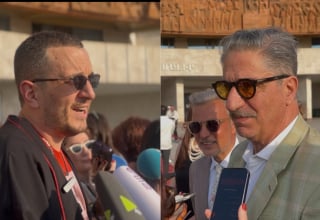
The 23rd "Golden Apricot" Yerevan International Film Festival has kicked off
NEWS.am STYLE
NEWS.am STYLE
NEWS.am STYLE
NEWS.am STYLE
Nikos Vertis to perform in Armenia for the 3rd time at the invitation of “ACVA BUILDINGS”
NEWS.am STYLE

NEWS.am STYLE
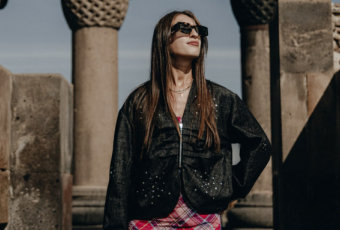
“Fashion Can Be a Way to Introduce Armenia to the World”: Stella Manferdini, Fashion Editor at Harper’s Bazaar Italia and ELLE Italia
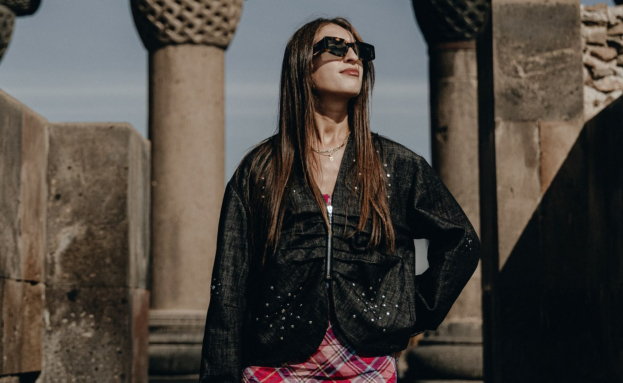
A week has passed since Yerevan Fashion Week 2026 came to a close. The event offered several days of opportunities not only to discover the work of Armenian designers, but also to see the local fashion scene through the eyes of international industry professionals. Among the guests from abroad was Stella Manferdini, a renowned Italian fashion journalist and fashion editor at Harper’s Bazaar Italia and ELLE Italia, both part of Hearst Italia. In her work, she explores fashion through the lens of literature, cinema, classical and contemporary art, and covers shows by leading fashion houses, including Saint Laurent, Valentino, Schiaparelli and Chanel.
In an interview with NEWS.am STYLE, Manferdini shared her impressions of her first visit to Armenia, discussed the Armenian designers and collections that caught her attention, and spoke about cultural heritage, international recognition and what Yerevan Fashion Week needs to develop further.
You spent several days in Armenia, and I’m very curious to hear how the experience looked from your perspective. Was this your first visit? What were your first impressions of the country and Yerevan Fashion Week 2026, and what surprised you most?
Yes, it was my first time in Armenia, and I’m very happy that my work allows me to discover new cultures and meet new people.
My first impressions began to take shape on the very first day, when we joined other international guests on a tour of historical landmarks. We had a guide who told us about the ancient history of the region and Yerevan. We also visited the Temple of Garni and the Symphony of Stones. I didn’t know much about Armenia’s history before arriving, so my introduction to the country began with its historical heritage.
I always prefer a fashion week to have something like a historical preface. It allows you to look at the collections and designers from a broader perspective, within a richer context. Once you learn about a place and its history, you inevitably start noticing echoes of the past in the collections. I was genuinely surprised to discover some of these references in the work presented during the fashion week. They are details you might easily overlook if you don’t know the country’s history and culture. But after learning even a little about Armenia, I already felt a connection to what I was seeing.
It’s wonderful that history became a kind of key to understanding the collections for you. Could you tell us more about them? Which designers stood out to you most, and what caught your attention from a professional point of view?
I would like to highlight two brands that presented on the runway, two brands from the showrooms, and one more that presented its collection in a presentation format. There were more designers worth mentioning, but these are the ones that genuinely caught my attention.
On the runway, they were DUNESI and Themis. They stood out for their ability to tell stories with a strong, distinctive identity that ran consistently through their clothes. I also sensed a genuine desire to engage with the press and show their work. That is exactly what we as journalists look for: stories worth telling and people who can communicate them to an audience. You don’t want to have to drag the words out of designers, if you know what I mean.
Among the showroom brands, I would highlight Sunrise and iBird Studio, for similar reasons. They have a distinct character, their designs are beautifully executed, and they know how to explain the ideas behind their clothes.
Among the presentations, I would mention Reza Nadimi. I was impressed by his craftsmanship, hand-printing techniques, meticulous work and textiles. And once again, it also comes down to the person himself, his warmth and genuine spirit. Nadimi also lent several pieces to members of the press. That is a very smart move for a designer: his clothes literally go out into the city, are seen on people and become a conversation starter.
You speak so warmly about the people behind the collections. What did you think of the fashion week as a whole? What do you see as its greatest strength, and what could still be improved?
Its greatest advantage is its scale. Because the fashion week is relatively small, it has the freedom to experiment, move beyond familiar conventions, make room for unconventional ideas and, of course, give young designers a platform. Trends can be left to other fashion weeks. The second important factor is Armenia’s exceptionally rich and multifaceted cultural heritage, which gives the local industry enormous room to grow.
As for its development, I don’t think the fashion week should be forced into a single identity. There are familiar, simplified perceptions: London means experimentation, New York means minimalism and commercial fashion, and Paris means haute couture. But in practice, these definitions no longer hold. Fashion is becoming more flexible and diverse, so Yerevan doesn’t need to try to fit into a category defined in advance.
The one thing I would improve is the organisation. The schedule should be more compact and carefully planned, with the shows grouped more effectively. There should also be dedicated time and space for street style.
For journalists, travelling to a fashion week means taking on a double workload. We come to cover the shows, but we still have our regular jobs back home. We had to work at night to keep up with everything, leaving us with almost no time to discover the country, its landmarks or people outside the fashion world. Visa Fashion Week in Tashkent and Almaty could serve as useful examples. They are wonderful events and two good case studies worth looking at.
Those are certainly valuable examples. What do you think Yerevan itself needs to become more visible on the international fashion map and strengthen its position?
First of all, time and a broader network of contacts, which develops gradually. More Armenian designers need to be invited as guests to other international fashion weeks. It is important to develop partnerships, work with social media, and build relationships with universities, international platforms and professional trade fairs. Much of this is already happening. Now the main task is to give these connections time to take root and turn individual encounters into long-term relationships.
I really like your point that Yerevan doesn’t need to force itself into predefined categories. Still, I’d like to ask specifically about Armenian fashion. Did you manage to get a sense of its character during your visit? Do you see a recognisable creative signature among local designers?
I wouldn’t claim that I identified one defining characteristic. Today, that is becoming increasingly difficult for any fashion week. Still, I noticed several recurring motifs: references to local landmarks and places distinctive to Armenia, very good work with sleepwear, and the authenticity of locally sourced materials.
I believe every brand should shape its own identity. A designer doesn’t necessarily have to declare, “I’m an Armenian designer” or “I’m an Italian designer.” It is much more important to be able to say, “I’m a designer who creates this.” There may not be one defining characteristic shared by the entire scene, and that isn’t necessarily important.
Let’s leave the runway for a moment and head out onto the streets of Yerevan. You mentioned that there was hardly any time for street style, but perhaps something still caught your eye. How would you describe the way women in Yerevan dress? Were there any details or combinations that particularly stayed with you?
There wasn’t much time to explore the city, and there was no dedicated street-style area where photographers could capture looks for us to observe. From what I did manage to see, I noticed layering and a lot of colours, though not bright, loud ones. There were plenty of prints, but not in the Scandinavian, Copenhagen style.
Scandinavia is known for its love of layering, but here it looks different: more elegant and structured, with natural, earthy shades predominating. I also noticed the jewellery: very expressive, large and bold pieces.
Armenia has an incredibly rich visual culture, and I’m interested in how you think designers can work with it. How can they draw on this heritage while keeping fashion contemporary and connected to their roots, without becoming confined to traditional motifs? And where do you think the balance lies between cultural identity and the universal language of haute couture?
I don’t believe a designer is obliged to maintain a connection with their roots if they don’t feel that those roots are part of who they are. The main thing is to develop an identity that feels authentic to you and in which other people can also recognise something familiar. After all, at the end of the day, it has to attract customers, however romantically we may think about fashion.
There is no single formula for finding that balance. You can immerse yourself deeply in cultural heritage and build a small but devoted audience. You can move towards more commercial fashion and a broader audience, or find a position somewhere in between. Neither approach is inherently better than the other.
I feel that fashion is becoming increasingly simplified, adapting itself to algorithms and trends. The international language of fashion is becoming monotonous, with many people speaking it in exactly the same way. So the main challenge is to create something new, whether it is a commercial product or work rooted in heritage. What matters is that the identity is recognisable and meaningful to two key audiences: customers and buyers.
You mentioned customers and buyers, but there is another audience designers are often eager to impress: the press. As an international fashion editor, you have a particularly interesting insider’s perspective. What makes a collection worthy of attention from publications such as Harper’s Bazaar Italia or ELLE Italia?
The press is usually drawn to a story that goes beyond clichés and to a person who knows how to tell it. Shapes and silhouettes that offer something new matter, rather than yet another reinterpretation of something we have already seen. Good styling is important, too. Clothes need to come alive on the body. We want to see how they move and how they can be worn. This is particularly important for cover shoots and major fashion editorials.
And, of course, there is the human factor. We interact with people, so it matters to meet those we enjoy talking to. As a fashion editor, I’m not just looking for beautiful clothes, but for something worth writing about beyond the garments themselves. It might be a person, a particular process, an obsession with an idea or a distinctive worldview. That is what turns a collection into a story.
You look for a story in a collection, not just beautiful clothes, and that is very inspiring. Looking at the industry more broadly and at international fashion weeks, which trends do you find genuinely interesting, and which ones feel repetitive and are gradually losing their appeal?
I feel that fashion has turned into an endless race to chase trends. Everything changes so quickly that even the colour palette seems to have been reduced to a succession of beige shades.
But there is hope. I see it in maximalism: in fashion that is unafraid to make a statement, take up space and convey a message. Fashion is political, too, and to a certain extent, clothing shapes who we are. That is why I’m interested in designers who take a position rather than remaining somewhere in the middle.
I’m drawn to those who talk about materials, supply chains, techniques and the challenges of making clothes, rather than presenting finished garments as if they had appeared out of nowhere. I appreciate clothes that envelop the body and create a sense of protection, as well as creative work that is given time to develop and be considered.
This is particularly noticeable in scenes such as Yerevan’s or those in Central Asia. They don’t have enormous conglomerates that own multiple brands, or a constant turnover of designers who are never given enough time to establish themselves. That is something I value.
The most interesting trend for me is critical thinking. It can be expressed through impeccable tailoring, a black suit or an extravagant dress. I’m interested in clothes that carry a message.
What leaves me indifferent is the pursuit of “coolness”, the desire to look fashionable and fit prevailing ideas of what is current. This is especially true when historic fashion houses are turned into caricatures of themselves. I don’t like the words “cool” and “coolness”. Often, there is nothing behind them.
It’s lovely to hear you speak so warmly about fashion scenes like Yerevan’s. Let’s return to Armenia and imagine what the future might hold. What would you like to see at the next Yerevan Fashion Week, and what potential do you see for Armenian fashion on the international stage?
I would like guests to receive explanatory materials about the collections before the shows, perhaps placed on their seats. These would provide context and help people understand a collection before the models step onto the runway, because otherwise many details go unnoticed.
For example, I really appreciated that the designer behind Themis came to speak with me two days before the show and explained what I was going to see. I knew the collection was inspired by the Cascade, so I was able to recognise that idea in the garments, prints and silhouettes. It is a genuinely useful approach.
I would also reiterate the need for a more compact schedule. It would allow guests to fully enjoy the shows and conversations while leaving time to discover the city and the country.
As for its potential, Yerevan Fashion Week can grow alongside other smaller fashion weeks. It is the youngest among them, so it needs time, but it certainly has the potential to become an important platform for designers whose work is deeply rooted in the local cultural context.
Fashion is an extremely effective way to introduce people to countries and cultures. Yerevan Fashion Week can present Armenia to the international community and give people a reason to become curious about the country, and perhaps visit a place they had never previously considered travelling to. After all, curiosity is what drives us journalists to explore new places. When I received the invitation, I was genuinely intrigued, and I’m glad I came.
The organisers are doing a very good job. I enjoyed my time here. The event simply needs a little more time and more thoughtful organisation, but I see a bright future for it.
Interview by Liana Aghajanyan
Follow NEWS.am STYLE on Facebook, Twitter and Instagram

- “Fashion Can Be a Way to Introduce Armenia to the World”: Stella Manferdini, Fashion Editor at Harper’s Bazaar Italia and ELLE Italia A week has passed since Yerevan Fashion Week 2026 came to a close. The event offered several days of opportunities not only to discover the work of Armenian designers, but also to see the local fashion scene through the eyes of international industry professionals....
- Naked Corsets Take Over the Red Carpet: Which Stars Turned Nudity Into Art — and Who Went Too Far? The naked body has become fashion’s hottest accessory of 2026. Heidi Klum, Zendaya, Kim Kardashian and other celebrities are stepping out in unconventional corsets that mimic bare breasts and the contours of the human body. While some transform these provocative designs into works of art, others risk crossing the line into excessive exposure...
- Chanel, Gucci and Burberry Under Fire: What Luxury Brands Have Been Hiding From Consumers Luxury brands have long destroyed unsold goods to preserve exclusivity and prevent their collections from losing value. Now, the European Union is trying to put an end to the practice...
- I’m Always Excited to Explore My Roots: Krikor Jabotian on Armenian Fashion and His Collaboration with Armine Harutyunyan Admiring the pieces on display, Jabotian took a moment to speak with NEWS.am STYLE about Armenia’s evolving fashion scene, his connection to his ancestral homeland and his collaboration with Armenian model Armine Harutyunyan…
- King Charles III Becomes a Burberry Designer: New Collection Inspired by His Watercolors At this time of year, everyone needs a cozy sweater to lift their spirits — and the King of the United Kingdom is no exception. King Charles III has stepped into the role of designer, contributing a vibrant watercolor painting of Birkhall, his “dear-to-his-heart” residence on the Balmoral estate in Scotland, to a new Burberry collection, The Telegraph reports...




-
21:21, October 21
New York’s Most Haunted Borough: A Deadly Plague Quarantine and Mansions Haunted by Ghosts -
20:31, October 21
“Fashion Can Be a Way to Introduce Armenia to the World”: Stella Manferdini, Fashion Editor at Harper’s Bazaar Italia and ELLE Italia -
19:28, October 21
The World’s “Most Beautiful Village” Has Turned Into Disneyland: Tourists Picnic in Private Gardens and Walk Into Homes Uninvited -
16:32, October 21
Naked Corsets Take Over the Red Carpet: Which Stars Turned Nudity Into Art — and Who Went Too Far? -
15:28, October 21
Queen Camilla Declares War on New York Over Winnie-the-Pooh -
14:41, October 21
Wealth Has Become a Curse: Why Warren Buffett’s Heirs Don’t Know What to Do With $150 Billion -
14:15, October 21
“Meghan Is Taking Away His Last Hope”: Prince Harry Reportedly Devastated by Wife’s Decision to Spend Christmas in the US -
13:22, October 21
Sam Altman’s Sister Accused the Billionaire of Childhood Sexual Abuse — Court Dismisses Her Lawsuit -
12:50, October 21
Kate Middleton Stuns in Elie Saab Gown and Favorite Tiara at King Charles III’s State Banquet -
12:33, October 21
Dwayne Johnson Is Unrecognizable on the Set of His New Movie -
11:52, October 21
“It’s Not Reconciliation, It’s a Challenge”: Prince Harry Accused of Making His Rift With the Royal Family Even Worse -
10:49, October 21
Andrew Scott Could Make Oscar History With Two Best Actor Nominations in the Same Year
All materials

@NEWSam_STYLE
@NEWSam_STYLE
- Archive