



NEWS.am STYLE

NEWS.am STYLE

NEWS.am STYLE

NEWS.am STYLE
NEWS.am STYLE

NEWS.am STYLE
NEWS.am STYLE
NEWS.am STYLE

The 23rd "Golden Apricot" Yerevan International Film Festival has kicked off

NEWS.am STYLE
NEWS.am STYLE

NEWS.am STYLE

NEWS.am STYLE

Nikos Vertis to perform in Armenia for the 3rd time at the invitation of “ACVA BUILDINGS”

NEWS.am STYLE

NEWS.am STYLE
NEWS.am STYLE

NEWS.am STYLE

From Chanel to Gucci: War puts Middle East luxury market growth at risk
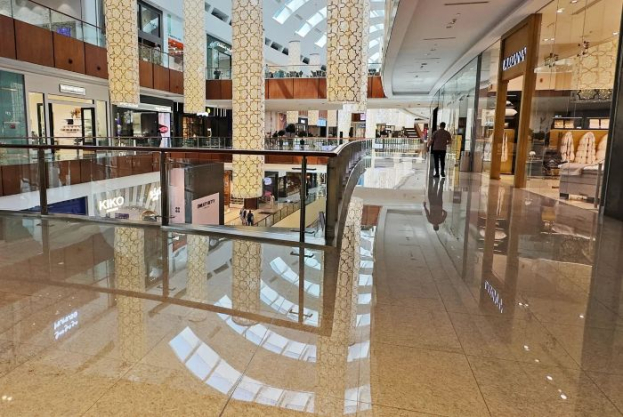
As conflict destabilizes parts of the Middle East, its ripple effects are already hitting the region’s luxury sector, which has become a key growth engine for an otherwise struggling global industry, reports Vogue Business.
Since U.S. and Israeli strikes on Iran, subsequent attacks in the region have caused casualties, closed airspace, canceled flights, and travel advisories urging visitors to leave. While most luxury brands are declining to comment on the situation—including the operational status of their stores—Dubai Mall, the region’s premier luxury shopping destination, remains open, hosting brands such as Alaïa, Gucci, and Zegna.
In Dubai, where shopping is a central social activity, authorities are reassuring residents and tourists about safety. Crown Prince Sheikh Hamdan bin Mohammed Al Maktoum even visited the mall last week. In other countries, such as Bahrain, most stores closed temporarily after the first attacks. City Center Bahrain, the country’s largest luxury mall, reopened after a brief shutdown.
Chalhoub Group, the Middle East’s leading luxury retailer with more than 950 stores, says its risk and crisis management committee remains “fully activated” to monitor developments.
Luxury Growth Before the Crisis
Before the conflict, the Middle East was “one of the few growth regions for luxury globally,” says Achim Berg, founder of independent think tank FashionSights. However, current conditions are hardly encouraging consumers to shop. “Any disruptions we’re seeing will be negative for luxury brands,” he adds.
According to Thomas Chauvet, head of luxury goods research at Citi, the Middle East accounts for roughly 5–6% of global luxury spending. While this may seem modest in the global context, some brands rely heavily on the region: Richemont generates about 9% of its revenue from the Middle East, while Swatch Group counts on it for around 10%. Watches and jewelry typically account for a larger share of luxury spending in the region.
LVMH and Kering do not report Middle East-specific figures, but LVMH’s 2025 annual report notes that 14% of its revenue came from “other markets,” including the Middle East, compared with 18% from Europe (excluding France). Kering reported that 9% of its 2025 revenue came from the “rest of the world,” including the Middle East, with sales “stable and slightly up in the region.”
“Over the past few years, the region has been the standout growth market for the sector, in sharp contrast to slowdowns in China, Japan, and much of Europe,” Chauvet says. “This resilience reflects strong demand from both local clients and tourists, who we estimate account for over a third of luxury sales in the Middle East.”
Tourism and Supply Chain Concerns
With the U.S. advising citizens in countries such as Bahrain and the UAE to “strongly consider leaving the region,” and the EU issuing a conflict zone warning for the Middle East and Persian Gulf airspace, tourism is not currently a reliable source of revenue.
Both the UAE and Bahrain have taken measures to ensure citizens can safely return from abroad. The UAE will also waive overstay fines for visitors forced to remain until travel resumes.
The conflict coinciding with Ramadan—a peak shopping period known as “Ramadan rush”—further disrupts the region’s usual economic and social rhythms. According to a 2025 Visa report, clothing retailers saw 2.6 times more transactions in the 10 days leading up to Eid al-Fitr (March 19 this year) as consumers prepared outfits and gifts.
Even for those willing to spend on luxury, supply chain issues remain. The Strait of Hormuz, a key trade route largely controlled by Iran, has been affected by strikes, forcing companies to reroute shipments. Delays are likely, and in some cases, goods may not reach the region at all if brands decide it’s too risky.
Long-Term Market Outlook
For a region many brands had relied on for growth, this is a particularly challenging moment. Chalhoub Group reported in May 2025 that the personal luxury goods market in Gulf Cooperation Council (GCC) countries—Bahrain, Kuwait, Oman, Qatar, Saudi Arabia, and the UAE—reached nearly $13 billion in 2024, growing 6% despite a global slowdown. Fashion accounted for 43% of the market.
Chalhoub projects that Middle East personal luxury spending could reach $15 billion by 2027, growing 6% annually. Key drivers include a favorable macroeconomic environment, high willingness to spend, stable tourism, retail expansion, and e-commerce growth. However, all these factors are now in question.
Luca Solca, managing director of luxury goods at Bernstein, adds that the Middle East has become “as important as Japan,” primarily relying on resident spending even in tourist-heavy hubs like Dubai. He notes that the impact of what he calls a “Third Gulf War” on Q1 2026 results is “likely to be negative.”
“In rough terms, we could see the market shrink by half in March,” Solca says, with global demand potentially dropping up to 8%.
Much depends on what happens next. “If the crisis lasts only a few weeks before stability returns, it will still affect the sales season,” Berg says. “If it drags on or escalates into instability, like a civil war, the damage will be far greater.”
Most analysts are cautious about making long-term predictions, as the situation remains fluid. Solca, however, believes any economic impact could be limited: “Our current view is that Israeli and U.S. forces will contain the Iranian attack quickly, preventing broader economic disruption beyond March. Last week, energy and defense stocks stopped surging while luxury shares stabilized, which seems to confirm the market’s outlook.”
Follow NEWS.am STYLE on Facebook, Twitter and Instagram

- £20,000 ‘Madonna bra’ sculptures burned children: unusual artwork moved out of the sun An unusual £20,000 art installation that locals compared to Madonna’s iconic cone bra has been moved into the shade after complaints that its metal structures became scorching hot in the sun and could burn children, the Daily Mail reports...
- ‘They’ll Do Anything for Likes’: Influencers Accused of Photoshoot Beside Ambulance as Patient Was Being Treated It seems the race for viral content has reached a new level of absurdity...
- Dom Pérignon Teams Up with Damien Hirst as Iconic Champagne Becomes a Work of Art Dom Pérignon has teamed up with British artist Damien Hirst to create a special limited-edition collection for the end of 2026...
- “Cinematic, Cosmopolitan and Wonderful”: Vogue France Features a Dream Wedding in Armenia What happens when Armenian wedding traditions meet the cultures of Vietnam, Cambodia and China? Sara-Mae Ngo and Gevorg Ambartsumyan transformed their wedding into a cinematic story where family traditions, French fashion, the music of Charles Aznavour and Armenian culture came together. French Vogue has now chronicled their extraordinary celebration in detail...
- TikTok Star with Millions of Followers Admits She Has Never Read a Book Not so long ago, admitting that you hardly ever read would have been embarrassing. Today, however, a lack of interest in books seems to have become almost fashionable among some members of the younger generation — at least judging by the surprising confession of popular influencer Alix Earle...




-
17:34, October 3
Daniel Roseberry returns to Schiaparelli’s roots with daring collection featuring golden accents and bare breasts
-
16:14, October 3
£20,000 ‘Madonna bra’ sculptures burned children: unusual artwork moved out of the sun -
15:21, October 3
‘They’ll Do Anything for Likes’: Influencers Accused of Photoshoot Beside Ambulance as Patient Was Being Treated -
14:22, October 3
Tiffany Trump finds herself in an awkward situation over AI -
13:03, October 3
Kathleen Turner finally reacts to Michael Douglas’s confession about their secret affair: “What a fuss over something that happened 40 years ago!” -
12:18, October 3
Ben Affleck was reportedly set up with Shakira: actor says he is not looking for a new romance -
11:27, October 3
Ex-husband dismembered influencer’s body and boiled it with vegetables to mask the smell: shocking details of Abby Choi’s murder -
10:30, October 3
Elon Musk leaves the mother of four of his children: Shivon Zilis admits their split came as a shock -
23:01, October 2
Popular Weight-Loss Drugs Could Deprive the Brain of Energy, Expert Warns -
22:31, October 2
Erling Haaland Sues Airline Over His Famous Hairstyle -
21:22, October 2
Audemars Piguet Turns the Legendary Royal Oak into Luxurious Jewelry with Diamonds, Sapphires and Emeralds -
20:14, October 2
Pierpaolo Piccioli Reimagines Balenciaga with Couture Techniques, Bold Color and New Lightness
All materials

@NEWSam_STYLE
@NEWSam_STYLE
- Archive