


NEWS.am STYLE

NEWS.am STYLE

NEWS.am STYLE

NEWS.am STYLE

The 23rd "Golden Apricot" Yerevan International Film Festival has kicked off

NEWS.am STYLE

NEWS.am STYLE

NEWS.am STYLE

NEWS.am STYLE

Nikos Vertis to perform in Armenia for the 3rd time at the invitation of “ACVA BUILDINGS”

NEWS.am STYLE

NEWS.am STYLE

NEWS.am STYLE

NEWS.am STYLE

NEWS.am STYLE

NEWS.am STYLE

NEWS.am STYLE

NEWS.am STYLE
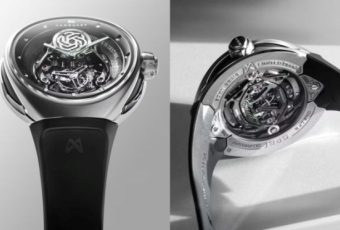
Gold Rush: Why Premium Vintage Swiss Watches Are Being Sent to Melting Furnaces en Masse
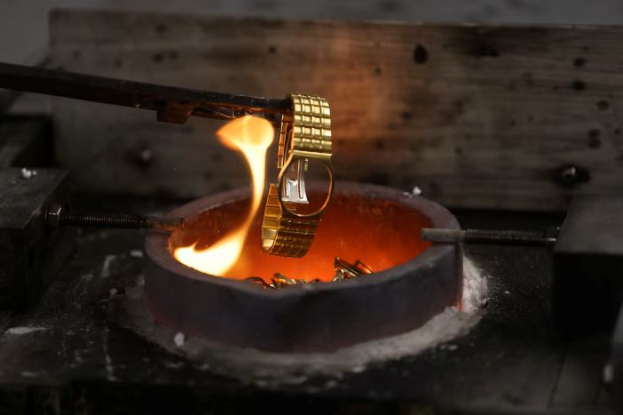
The scrap value of gold in watches has begun to outpace their market price on the secondary market. Prices for the precious metal have doubled compared to 2024 averages, leaving iconic mid-tier luxury models (such as Omega and TAG Heuer) facing the threat of destruction, Reuters reports.
For years, the Omega Constellation has shined in advertising campaigns, Hollywood films, and on the Met Gala red carpet on the wrists of stars like George Clooney and Nicole Kidman, firmly cementing its status as a symbol of luxury and glamour.
Today, however, as gold prices hover near the historic highs recorded in January, these classic timepieces are being ruthlessly sent to the melting pot. The reason is simple: the value of the precious metal contained within them exceeds their actual market value on resale platforms.
According to a Reuters survey of more than a dozen traders, watch industry experts, and investment advisors, this trend has hit pre-owned, mid-tier luxury models hardest—specifically brands like Omega (owned by the Swatch Group) and TAG Heuer (part of the LVMH conglomerate).
British dealer John White, head of Gold Traders, personally sent a 1970s 18-karat gold Constellation in mint condition to the melting furnace this past May. It is just one of dozens of mass-produced luxury watches he has scrapped this year due to skyrocketing demand for investment gold.
"It was a beautiful watch. But let's face facts: if a client put it up for auction, how much would they actually get?" says White, who also runs an auction house. "The melt value of the gold case and bracelet on that Omega Constellation came to $7,749, which is 35% higher than its top auction estimate, which was hovering between £4,000 and £4,500."
James Lamdin, founder of Analog Shift (the vintage arm of the Watches of Switzerland retail network), confirms that melting primarily affects modern pre-owned models and older vintage pieces that have not yet achieved rare, collectible status.
Liquid Gold
In January 2026, gold prices surged to a record $5,600 per ounce as investors flocked to the safe-haven asset amid geopolitical instability and trade wars. The precious metal is currently trading around $4,200 per ounce, nearly double the 2024 average. Meanwhile, the secondary watch market has failed to see a corresponding rise.
"It breaks my heart to see this. Obviously, once an object is melted down, it is lost to history forever," laments Adrian Hailwood, a watch history expert.
While there are no official statistics on exactly how many luxury watches are destroyed for scrap, data from the World Gold Council (WGC) shows that gold recycling volumes rose by 5% in the first quarter to 366 metric tons, while gold jewelry demand in value terms jumped 31% to reach $47 billion.
Depending on the model, a Swiss watch can contain anywhere from a few grams to over 200 grams of pure gold. This means their scrap value can run into the tens of thousands of dollars. With analysts projecting gold could rise to $5,400–$6,300 per ounce later this year, pressure on the watch market will persist. For resellers, it is simply more profitable to scrap a watch than to spend money on pre-sale servicing, marketing, and providing a warranty to a secondary-market buyer.
Furthermore, it is not just vintage watches going under the press; new watches that fell victim to overproduction are being melted down as well.
"I’ve seen completely unremarkable modern pieces melted down," Lamdin says. "There is a massive amount of unsold back-stock sitting in the Swiss market. These watches are brand new, never worn, but they are simply broken down because factories produced too many units. But when a vintage, rare piece with history and unique patina goes into the furnace—now that is a true, short-sighted tragedy."
The Secondary Market Trap
Top-tier brands that tightly control production volumes and manufacture artificial scarcity—such as privately held Patek Philippe and Rolex—retain the highest premium markups on the secondary market, far exceeding the value of their raw metal.
"The waiting lists for certain models are astronomical. We are talking timelines ranging from two to eight years," explains Simon Lazarus, head of content at online platform Chrono Hunter.
According to financial firm Vontobel, Rolex accounted for 61% of all new Swiss watch sales priced above $3,770 in value terms last year (up from 57% in 2023), even as its total unit output decreased.
At the same time, less exclusive brands like TAG Heuer, Breitling, and Omega are struggling to maintain high retail prices; buyers are well aware that they can buy them for a fraction of the cost on the secondary market. According to experts, iconic models (such as the Omega Speedmaster chronograph) rapidly depreciate the moment they leave the boutique, automatically making them potential candidates for the melting pot during periods of high gold prices.
Follow NEWS.am STYLE on Facebook, Twitter and Instagram

- Did Frédéric Chopin Love Men? German Researcher Finds Declarations of Love in the Composer’s Letters Letters written by Frédéric Chopin to men that for decades were regarded as expressions of ordinary 19th-century male friendship may point to much deeper feelings. That is the conclusion reached by German music journalist and pianist Moritz Weber, who examined around 800 surviving letters by the composer, along with documents from Polish and Parisian archives...
- Swiss Exclusive for OpenAI: Why Sam Altman’s Watch Is Being Called the New Status Symbol Silicon Valley has no shortage of ways to flaunt wealth and status. A home overlooking San Francisco Bay, a Cybertruck — and, of course, an expensive watch, which has long been an essential accessory for influential figures across industries, the Wall Street Journal reports...
- Spanish Town Drowned in Tomatoes as 20,000 People Join Epic Food Fight Thousands of people from around the world descended on the Spanish town of Buñol to take part in the famous La Tomatina — the world’s largest annual “food fight.” For several hours, the town’s streets were transformed into a sea of tomatoes...
- Instagram Launches First Draft: Reels Can Now Be Edited in Seconds Instagram has introduced a new feature called First Draft that automatically edits raw footage for Reels in less than 10 seconds. The tool trims unnecessary footage, removes long pauses and combines selected clips into a rough cut, taking the most tedious part of the editing process off users’ hands...
- Massage, Aromatherapy and “Hoof Care”: America Is Getting Its First Cow Spa for Humans Forget mud masks and cucumber slices. The latest wellness trend is inviting people to relax… like cows...




-
23:01, August 27
Did Frédéric Chopin Love Men? German Researcher Finds Declarations of Love in the Composer’s Letters -
21:19, August 27
Roger Federer Makes an Unexpected Rolex Choice: Tennis Legend Steps Out in One of the Brand’s Most Talked-About Watches -
20:26, August 27
Wolves in Cashmere: Billionaires No Longer Want to Look Like Billionaires -
19:32, August 27
Swiss Exclusive for OpenAI: Why Sam Altman’s Watch Is Being Called the New Status Symbol -
16:50, August 27
Spanish Town Drowned in Tomatoes as 20,000 People Join Epic Food Fight -
16:17, August 27
Instagram Launches First Draft: Reels Can Now Be Edited in Seconds -
15:24, August 27
Massage, Aromatherapy and “Hoof Care”: America Is Getting Its First Cow Spa for Humans -
14:35, August 27
From the Vatican to Haute Couture: Pope Leo XIV Lands on Vanity Fair’s Best-Dressed List -
14:18, August 27
Kendall Jenner and Jacob Elordi Try to Keep Their Date Under Wraps — But Paparazzi Catch Them -
13:16, August 27
A Legend Is Gone: Yayoi Kusama, the Artist Who Turned Polka Dots Into a Global Art Symbol, Dies at 97 -
12:47, August 27
Astronomical Price Tag: How Much Meghan and Harry’s Private Jet Flight to the UK Cost -
12:20, August 27
Glenn Close Approves Kim Kardashian’s New Boyfriend
All materials

@NEWSam_STYLE
@NEWSam_STYLE
- Archive