



NEWS.am STYLE

NEWS.am STYLE

NEWS.am STYLE

How Nare was welcomed at Zvartnots Airport after winning the Junior Eurovision Song Contest: the singer's emotions

NEWS.am STYLE
NEWS.am STYLE

NEWS.am STYLE

NEWS.am STYLE

NEWS.am STYLE

NEWS.am STYLE

NEWS.am STYLE

NEWS.am STYLE

NEWS.am STYLE

NEWS.am STYLE

The 23rd "Golden Apricot" Yerevan International Film Festival has kicked off

NEWS.am STYLE

NEWS.am STYLE

NEWS.am STYLE


Chinese luxury goes global: Gucci and Louis Vuitton should take notice
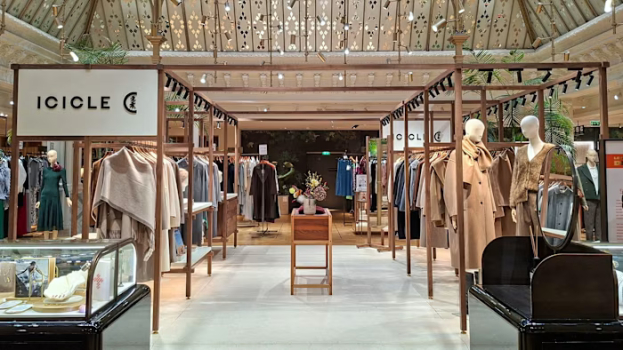
A decade after Italy’s Prada listed in Hong Kong, Chinese high-fashion brand Icicle is now considering a public offering in Paris. This move reflects China’s transformation from a hub of cheap knockoffs into a center of innovation — from BYD electric vehicles and AI startups like DeepSeek to the globally popular Labubu toys, according to the Financial Times.
Homegrown luxury is fueled by government initiatives promoting guochao — the “national trend” — and growing cultural confidence. China chic now spans all markers of status consumption: fashion, jewelry, luxury cars, and fine wines. Hongqi vehicles, once reserved for communist leaders, now ferry the country’s billionaires.
This evolution poses a challenge for European luxury houses. First, Chinese products are competitively priced. In a sluggish economy with tough prospects for young professionals, spending around $500 on a Songmont handbag is a smarter choice than paying ten times that for a European label.
Business models are leaner, too — there’s no need for flagship stores on Milan or Paris’s priciest streets, and mall space is cheaper. Chinese brands are also willing to sacrifice margin: Bernstein estimates retail markups of four to five times the cost of goods sold, roughly half the multiple of European rivals.
Second, Chinese companies emphasize local heritage, incorporating traditional motifs into jewelry and historical design into furniture. This resonates with growing cultural and historical interest — for example, museum attendance over the May holidays rose 17% last year.
Third, domestic success gives Chinese brands a competitive edge abroad. While their international presence is still modest, some have begun to expand: Bosideng operates a London flagship and sells in France, while BYD demonstrates the potential of a Chinese challenger reaching global scale.
Foreign luxury groups have also invested early in Chinese brands. Exor, the Agnelli family holding, acquired Hermes’ stake in Shang Xia in 2020. LVMH owns winery Ao Yun, and Kering, Gucci’s parent, bought jewelry brand Qeelin in 2012.
Chinese companies remain relatively small, but growth is rapid. Laopu Gold, a fast-rising jewelry house, now has a market capitalization of nearly $18 billion — up from under $1 billion in 2024. Including potential acquisition premiums, this easily surpasses the inflation-adjusted price LVMH paid for Tiffany six years ago. European competitors can no longer afford to ignore the rising influence of Chinese luxury.
Follow NEWS.am STYLE on Facebook, Twitter and Instagram

- Rihanna and Francis Kurkdjian discover the notes behind the new J’adore Intense Rihanna and Francis Kurkdjian, Perfume Creative Director at Parfums Christian Dior, go behind the scenes to explore the notes that make up the new J’adore Intense…
- Harmonious looks of Lamine Yamal and Ines Garcia on the red carpet of the Ballon d’Or 2026 During the 70th Ballon d’Or awards ceremony held on October 26 at the London Palladium, football stars were in the spotlight not only for their sporting achievements, but also for the stylish looks they showed on the red carpet…
- Jennifer Lopez’s 57th Birthday Celebrations in Paris Included Outfit Changes and Over 400 Carats of Diamonds The Eiffel Tower had some fierce competition in terms of sparkle with Jennifer Lopez in town, People writes․․․
- Next-Level Luxury: How a Dubai Jewelry Brand Found a Way to Make the Hermès Birkin Even More Expensive Enter Bag Bijoux, a high-jewelry brand launched in 2024 by sisters Ashna and Aria Mehta. The duo created a collection of precious charms designed specifically to slide onto the leather straps of iconic Hermès bags. Prices for these "toys" start at $2,800 and scale up into the seven-figure range for bespoke, custom orders.,,
- Armenian New York Jeweler Alex Moss Covers Controversial $400 AP × Swatch Watch in Diamond “Ice” Armenian jeweler based in New York Alex Moss has reignited buzz around the controversial Swatch × Audemars Piguet collaboration by transforming the viral $400 “Royal Pop” timepiece into a high-jewelry statement piece...




-
18:18, November 7
Richard Branson and Ray Dalio Have No Tolerance for Office Gossip: Why Some Billionaires Are Willing to Fire Employees Over It -
17:33, November 7
Robert Pattinson and Nicholas Hoult Join the Race to Become the Next James Bond -
16:37, November 7
Lavish Birthday at Taxpayers’ Expense: Ivanka Trump’s Security in Morocco Cost $93,000 -
15:29, November 7
Jessica Simpson’s Sexual Renaissance: 46-Year-Old Star Is Head Over Heels for Younger Boyfriend -
14:23, November 7
Oat and Almond Milk Could Put Your Health at Risk, Scientists Warn -
13:23, November 7
Threw a Plate of Spaghetti in Her Face: Bride Explodes After Bridesmaid Refuses to Gain 120 Pounds -
12:21, November 7
Bridgerton Star Sabrina Bartlett Marries Businessman Lachie Stewart in Romantic Tuscan Wedding -
11:18, November 7
Khloe Kardashian’s Ex-Husband Makes More Than $50,000 on OnlyFans in Just Eight Days -
10:30, November 7
Meghan Markle’s Father Led Away in Handcuffs From Nursing Home: He Faces Up to 20 Years in Prison in Child Sexual Abuse Material Case -
23:01, November 6
Kering’s Creative Shake-Up: Pierpaolo Piccioli Exits Balenciaga After Two Other Designers Leave -
22:33, November 6
Mother-in-Law vs Daughter-in-Law: Nicola Peltz Appears to Be Copying Victoria Beckham’s Most Iconic Looks -
21:22, November 6
“Crossed the Line”: Billionaire Brunello Cucinelli Accused of Inappropriate Touching During Photo Shoots with Actresses
All materials

@NEWSam_STYLE
@NEWSam_STYLE
- Archive