


NEWS.am STYLE

NEWS.am STYLE

NEWS.am STYLE

NEWS.am STYLE

The 23rd "Golden Apricot" Yerevan International Film Festival has kicked off
NEWS.am STYLE

NEWS.am STYLE

NEWS.am STYLE

NEWS.am STYLE

Nikos Vertis to perform in Armenia for the 3rd time at the invitation of “ACVA BUILDINGS”
NEWS.am STYLE

NEWS.am STYLE

NEWS.am STYLE
NEWS.am STYLE

NEWS.am STYLE

NEWS.am STYLE

NEWS.am STYLE

NEWS.am STYLE



Christopher Nolan Fires Back at Critics of The Odyssey in Viral Interview
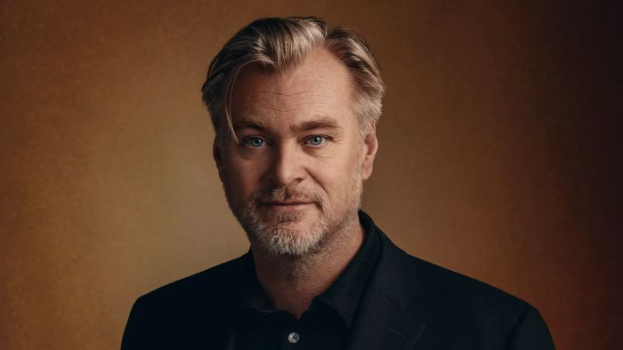
Christopher Nolan's interview with Chinese podcaster and political philosophy lecturer Zhong Shu has sparked widespread discussion online. Moving far beyond the usual press-junket playbook, the conversation in Beijing unfolded into a deep philosophical debate about art, history, the nature of cinema, and the underlying themes of his latest blockbuster, The Odyssey.
When asked by Zhong Shu whether he considers himself a "bard of a civilization in decline" (in contrast to Homer, who wrote for a burgeoning civilization), the director admitted the theme has a strong pull on him: "Homer was writing about an era hundreds of years before his own that seemed to his contemporaries more advanced. They were attempting to reclaim what had been lost. The idea of societal collapse—the Bronze Age Collapse—has always fascinated me. The experience of working on Oppenheimer*, a document about the potential end of the world, carried over directly into my adaptation of* The Odyssey*."*
Addressing the interviewer's question about whether he "Christianized" the ancient epic by introducing the concept of redemption—a notion absent in Ancient Greece—Nolan explained: "I focused heavily on the concept of xenia—Zeus’s law of mutual respect and hospitality. The suitors’ violation of that law in the palace is what ultimately brings about catastrophe. As for redemption, perhaps that is something we, as modern viewers, bring to the story ourselves. It wasn’t a deliberate attempt to Christianize the narrative, but rather a natural conclusion drawn from analyzing what happens when fundamental laws are broken."
Nolan also did not hold back when discussing the current state of casual and amateur film criticism: "There is a fundamental problem in criticism today: people believe that if they unpack the device or technique used to make a story resonate with them—for instance, how a character is made sympathetic—that technique somehow ceases to function or becomes 'invalid.' But that is simply not true. Understanding how the mechanism works does not negate its effectiveness."
The director emphasized that over the past century, Hollywood cinema has forged a universal language of tropes and conventions. Filmmakers can subvert these rules—as Nolan famously did in Memento by using a non-linear timeline while maintaining a traditional three-act structure—yet the core mechanisms of audience engagement remain fundamentally unchanged.
Follow NEWS.am STYLE on Facebook, Twitter and Instagram

- Sydney Sweeney Goes Naked and Covers Her Intimate Areas With Footballs — Fans Go Wild Sydney Sweeney has stripped off again. This time, the actress went naked for an advertisement for sports prediction platform Novig — but her eye-catching figure proved so distracting that viewers found it difficult to focus on the actual ad...
- “Naked Audacity”: Bianca Censori Shocks the Public Again Bianca Censori has once again decided to dramatically reinvent her look...
- 24-Year-Old Mukbang Star Dies After Extreme Eating Twenty-four-year-old mukbang star Ganfang Yingying has died following health problems that were reportedly linked to extreme eating challenges...
- He Called the Mothers of His Children “Breeders”: Elon Musk’s First Wife Opens Up About Their Marriage A new documentary is shedding light on Elon Musk’s private life...
- John Malkovich Cancels Israel Performance After Scandal Over Fabricated Quotes John Malkovich has canceled a planned trip to Israel next year, where he was due to take the stage, after a PR company hired by the organizers attributed statements to the actor that had actually been written by the company itself...




-
12:40, September 10
Sydney Sweeney Goes Naked and Covers Her Intimate Areas With Footballs — Fans Go Wild -
12:19, September 10
“Naked Audacity”: Bianca Censori Shocks the Public Again -
11:38, September 10
24-Year-Old Mukbang Star Dies After Extreme Eating -
11:17, September 10
He Called the Mothers of His Children “Breeders”: Elon Musk’s First Wife Opens Up About Their Marriage -
10:49, September 10
John Malkovich Cancels Israel Performance After Scandal Over Fabricated Quotes -
10:28, September 10
Nicole Kidman Sparks Plastic Surgery Debate Again: 59-Year-Old Actress Suspected of Having Breast Surgery -
23:01, September 9
British Woman Reclaims Guinness World Record by Devouring a Burrito in 30 Seconds -
22:31, September 9
Nevada’s Famous Brothels Hit the Market for $33.9 Million -
21:29, September 9
Ambani Opulence on Full Display: Radhika Merchant Stuns in a $500,000 Patek Philippe -
20:22, September 9
Hypocritical Millionaires vs. Billionaires: Hollywood’s New Trend -
19:38, September 9
iPhone from 1937: A Nearly 90-Year-Old Painting Sparks a Bizarre Conspiracy Theory -
16:29, September 9
The Boy Who Looks Like Boris Johnson: Why Steal Renoir at All?
All materials

@NEWSam_STYLE
@NEWSam_STYLE
- Archive