



NEWS.am STYLE

NEWS.am STYLE

NEWS.am STYLE

NEWS.am STYLE

The 23rd "Golden Apricot" Yerevan International Film Festival has kicked off

NEWS.am STYLE

NEWS.am STYLE

NEWS.am STYLE

NEWS.am STYLE

Nikos Vertis to perform in Armenia for the 3rd time at the invitation of “ACVA BUILDINGS”

NEWS.am STYLE

NEWS.am STYLE

NEWS.am STYLE

NEWS.am STYLE

NEWS.am STYLE

NEWS.am STYLE

NEWS.am STYLE

NEWS.am STYLE


$100 Billion Has Vanished: Is the Era of Shein and Out-of-Control Fast Fashion Finally Coming to an End?
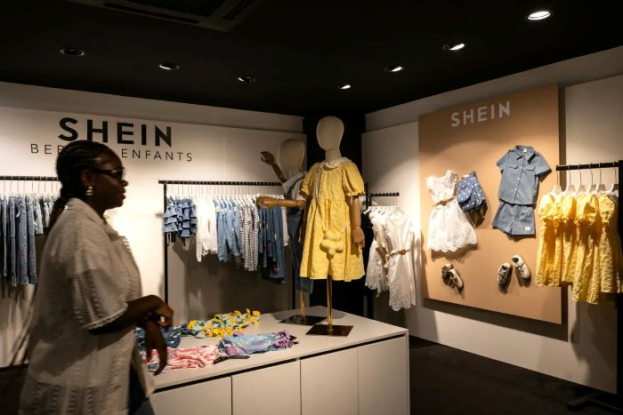
Not long ago, it seemed as though Shein was on a path to global domination. The Chinese fashion giant promised a new era of fast fashion: new items could appear on its website within a matter of hours, while entire outfits could be assembled for less than $10. The model proved so irresistible that it quickly turned into a global addiction, The Independent reports.
In the year ending in March, Shein had more than 273 million active customers who placed over 1 billion orders.
But now, the flawless sheen of the empire is beginning to fade.
On Tuesday, Shein shares fell another 6%. The company, once valued at around $100 billion, is now worth only about a quarter of that following its debut on the Hong Kong Stock Exchange.
And this is far from the Chinese giant’s only problem. Shein’s attempts to pursue listings in New York and London have encountered serious obstacles. U.S. regulators have raised concerns about working conditions across its supply chain, while the proposed London listing, reportedly valued at around £50 billion, has faced questions over the origins of its products and the transparency of its supply chain.
Now the bigger question is: are these simply Shein’s problems — or could they mark the beginning of the end for the entire era of ultra-fast fashion?
The Model That Changed Fashion
Founded in China in 2008 by Chris Xu, Shein began as a small online retailer selling wedding dresses. The company’s spectacular rise came during the pandemic, when millions of consumers shifted to online shopping.
Shein’s revenue surged from $2 billion in 2018 to $15.7 billion in 2021 — an increase of roughly 685%.
The company built its business around a “test and repeat” model: small batches of clothing were quickly tested on consumers, after which the most popular items were produced in much larger quantities. According to The Independent, only around 6% of Shein’s inventory remained in its warehouses for more than 90 days.
Speed became the brand’s ultimate weapon. But that speed came with a darker side.
Shein has repeatedly faced criticism over the environmental and social consequences of its business model and has been accused of copying designs from independent brands. In 2020, the company was also caught up in a controversy over the sale of swastika necklaces, for which it apologized and subsequently removed the items from sale.
Shein later lost a legal battle involving rival Temu after attempting to accuse the platform’s sellers of widespread copyright violations.
Tariffs, Fines and Falling Profits
Another blow came from changes to trade rules in the U.S. and Europe. The removal of exemptions for low-value packages forced Shein to raise prices — precisely when low prices were one of the company’s biggest competitive advantages.
In the first quarter of this year, Shein reported a $99 million loss. During the same period a year earlier, the company had posted a $395 million profit.
But experts believe the problem may be about more than finances.
“This could be a sign that Gen Z’s shopping habits are changing,” says Dr. Rose Marroncelli, a fashion lecturer at Nottingham Trent University.
Young consumers remain highly price-sensitive, but at the same time they are becoming increasingly demanding when it comes to the environmental responsibility of brands.
Governments are also paying greater attention to fast fashion. In the UK, regulators have been given expanded powers to crack down on misleading environmental claims made by companies.
For Shein, this is a particularly painful issue. In 2025, the company was fined €1 million in Italy over misleading claims about the environmental credentials of its products. A month earlier, French regulators had fined the brand €40 million.
Does Gen Z No Longer Want “Disposable Fashion”?
At the same time, consumer culture itself is changing.
In the UK, two-thirds of shoppers bought second-hand goods online in 2024. Platforms such as Vinted and Depop are experiencing a major boom, with Vinted’s revenue exceeding €1 billion last year.
Even the luxury market is increasingly embracing second-hand fashion. Rare and vintage pieces can often be more valuable and desirable than newly released collections.
“Gen Z increasingly values brands that are honest and transparent,” Marroncelli notes.
Attitudes toward old clothes are changing, too. More consumers are choosing to repair garments rather than throw them away. According to Vogue Business, the Netherlands-based United Repair Centre repairs around 55,000 garments a year for more than 35 sportswear brands.
But Fast Fashion Isn’t Going Anywhere
It is still far too early to declare fast fashion dead.
A telling example is Lefties, the budget fashion chain owned by the same parent company as Zara. The brand is expanding aggressively in the UK, where it is going head-to-head with Primark and Shein.
Lefties’ first British store opened in Liverpool and makes extensive use of automation to reduce staffing costs. Its self-checkout systems, for example, can scan an entire shopping basket at once.
This reveals the central paradox of the moment: consumers may want more environmentally responsible fashion, but they still demand low prices, enormous choice and instant purchases.
That is why Shein’s decline does not yet mean the death of fast fashion.
But it could represent a genuine turning point.
A company that once seemed virtually unstoppable is now having to fight on multiple fronts at once: regulators, tariffs, environmental criticism, changing consumer habits and falling profits.
If the old formula was simple — cheaper, faster, more — the industry may now have to find a new one.
Consumers still want fashionable clothes at affordable prices. But increasingly, they are asking brands for two more things: transparency and quality.
Perhaps that is where the era of speed as fashion’s ultimate superpower finally begins to end.
Follow NEWS.am STYLE on Facebook, Twitter and Instagram

- $100 Billion Has Vanished: Is the Era of Shein and Out-of-Control Fast Fashion Finally Coming to an End? Not long ago, it seemed as though Shein was on a path to global domination. The Chinese fashion giant promised a new era of fast fashion: new items could appear on its website within a matter of hours, while entire outfits could be assembled for less than $10. The model proved so irresistible that it quickly turned into a global addiction, The Independent reports...
- Cartier Takes the Mask Off the Tank Américaine: The Iconic Watch Becomes a Skeleton for the First Time Cartier has unveiled the Tank Américaine in a skeletonized version for the first time, exposing the movement that has traditionally remained hidden behind the dial. At the same time, the maison has introduced a new version of the watch featuring a striking gradient burgundy dial...
- Women Beyond the Mold: Sarah Burton Reimagines Givenchy in New Campaign Givenchy has unveiled its Fall/Winter 2026 women’s campaign, bringing creative director Sarah Burton’s new vision for the house to life. Shot in Croatia, the campaign was photographed by iconic photographer Juergen Teller...
- Pucci Returns to Its Roots: Camille Miceli Turns Medieval Horse Racing Into Modern Luxury For several years, Emilio Pucci creative director Camille Miceli has explored the psychedelic and hippie-chic side of the Italian house’s heritage. Now, the designer has turned her attention to a lesser-known chapter of its history...
- Matthieu Blazy Helped Make Chanel the Most Popular Brand on The RealReal According to The RealReal’s 2026 Luxury Resale Report, Chanel topped the list of the platform’s most in-demand brands. A major driving force behind the breakthrough was Matthieu Blazy: his highly sought-after collections for the fashion house, which he joined in late 2024, have made a major impact both online and offline. Searches for the creative director’s name on the site surged by a staggering 10,967 percent over the past year, Robb Report reports...




-
22:30, September 4
$100 Billion Has Vanished: Is the Era of Shein and Out-of-Control Fast Fashion Finally Coming to an End? -
21:16, September 4
The 2026 Ig Nobel Prizes: How to Blow Your Nose, Why Teenagers Smell and the Mystery of Buried Underwear -
20:20, September 4
The Billionaires’ Bunker Has Rules: How the World’s Richest People Live in Florida’s Most Exclusive Enclave -
19:33, September 4
$6.6 Trillion Is Headed to Women: Billionaires’ Wives Poised to Claim the Biggest Wealth Transfer in History -
16:34, September 4
The Ultimate Adventure: Superyachts and Luxury Expedition Ships Take the Ultra-Rich to the Ends of the Earth -
15:43, September 4
An £87 Bra and a £74,000 Birkin: Georgina Rodríguez Stages a Lavish Fashion Parade in Venice -
15:24, September 4
Amouage Pushes Fragrance to the Edge: Two New Scents About Lightning, the Stage and the Will to Survive -
14:36, September 4
Small Rolexes, Big Money: Why Women’s Watches Are Breaking Records on the Secondary Market -
14:13, September 4
No Steering Wheel, No Pedals: Tesla Puts Golden Robotaxis on the Streets of Texas -
13:25, September 4
He Dumped His 73-Year-Old Fiancée for a 25-Year-Old Billionaire Heiress: The Scandalous Aristocrat’s Secret Wedding -
12:46, September 4
Jennifer Aniston’s Inner Circle Doesn’t Trust Her New Boyfriend: “He Seems Like an Opportunist” -
12:22, September 4
Same Age as the Dress: 30-Year-Old Kendall Jenner Takes Venice by Storm in a Gown From Her Birth Year
All materials

@NEWSam_STYLE
@NEWSam_STYLE
- Archive